Shaping Your Outdoors. Surpassing Expectations.

Renton Mulch Installation
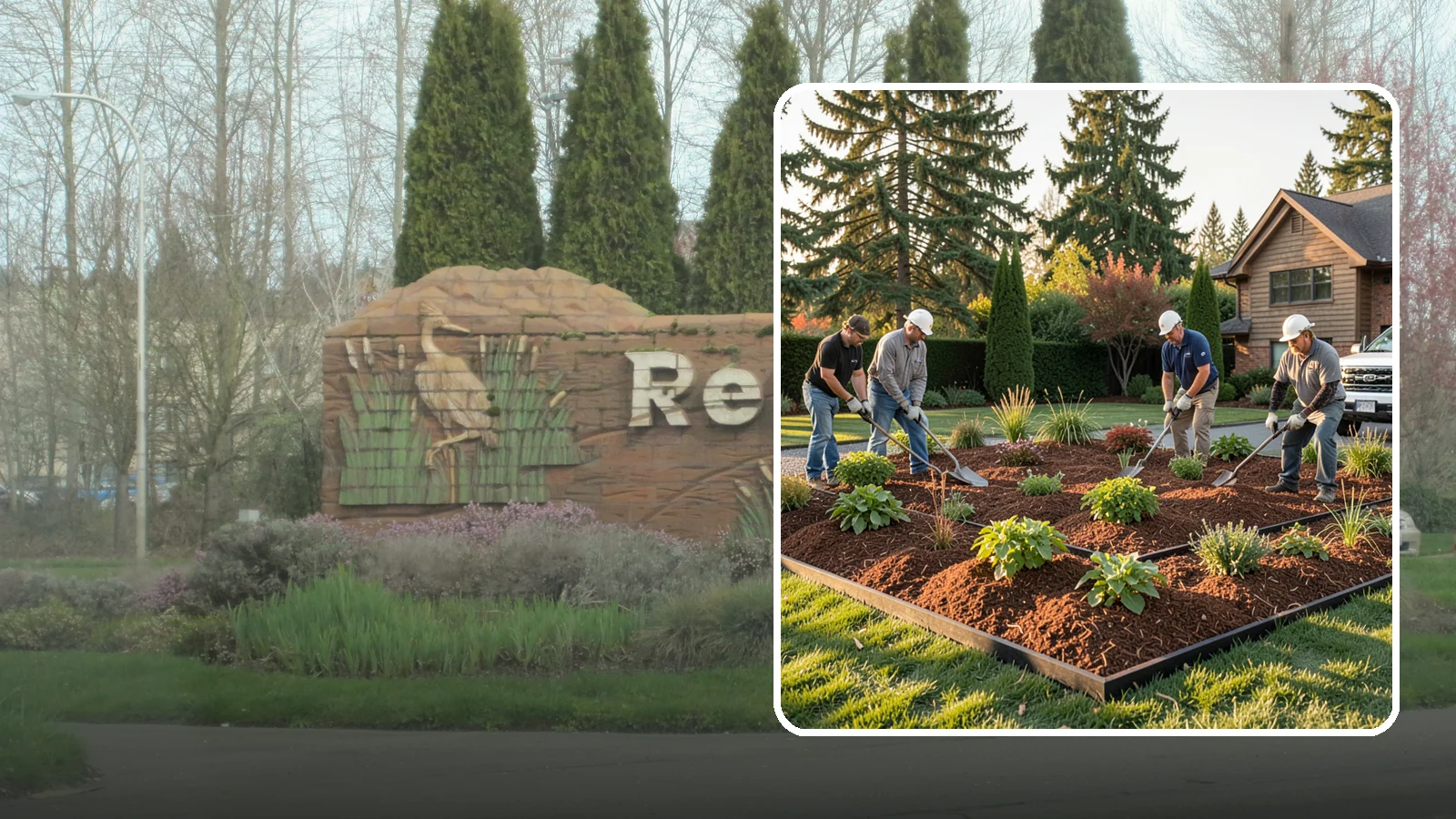
Fresh mulch spread across beds to lock in moisture, block weeds, and give your landscape a clean, finished look.
In Renton, mulch makes the most sense in spring, after the median last frost of March 19, and again before the dry stretch of July and August. Frost can come earlier or later in a given year, so watch the forecast. Mulch laid in late spring helps hold soil moisture going into the driest months.
Washington Landscaping installs mulch in beds, around trees and along planting strips. We have been in business since 2004 and offer free estimates. Call or text 425-433-9444 to talk through your yard.
Planning Your Renton Mulch Installation
Good mulch work starts with the bed, not the bag. Weeds, old mulch and edges all need a look before anything new goes down. Planning this first keeps the finished depth even and the lines clean.
Timing and moisture
Per Daymet data for 2005 to 2025, July averages about 0.54 in of rain and August about 0.93 in. Those are Renton's dry months. A layer of mulch in place before then slows evaporation from the soil, so plantings need less rescue watering. The median last spring frost is March 19, but that is only a median. Frost can arrive earlier or later, so tender plants may still need cover after mulching.
What affects scope
Several things decide how much material and labor a job needs:
The size of the beds and how many there are. The depth you want, since typical beds are topped up to a few inches. Whether old mulch must be removed first. How easily a wheelbarrow can reach the beds. And the type of mulch, such as bark or wood chips, which differ in look and how fast they break down.
Soil drainage matters too. Per the USDA soil survey, about 23% of Renton's rated land is well drained, 65% moderately well drained and 12% poorly drained. That describes the city as a whole, and your own yard may differ. In a slower-draining bed, we keep mulch off plant stems and avoid piling it deep, because soggy mulch can hold too much water against roots and crowns.
What to expect
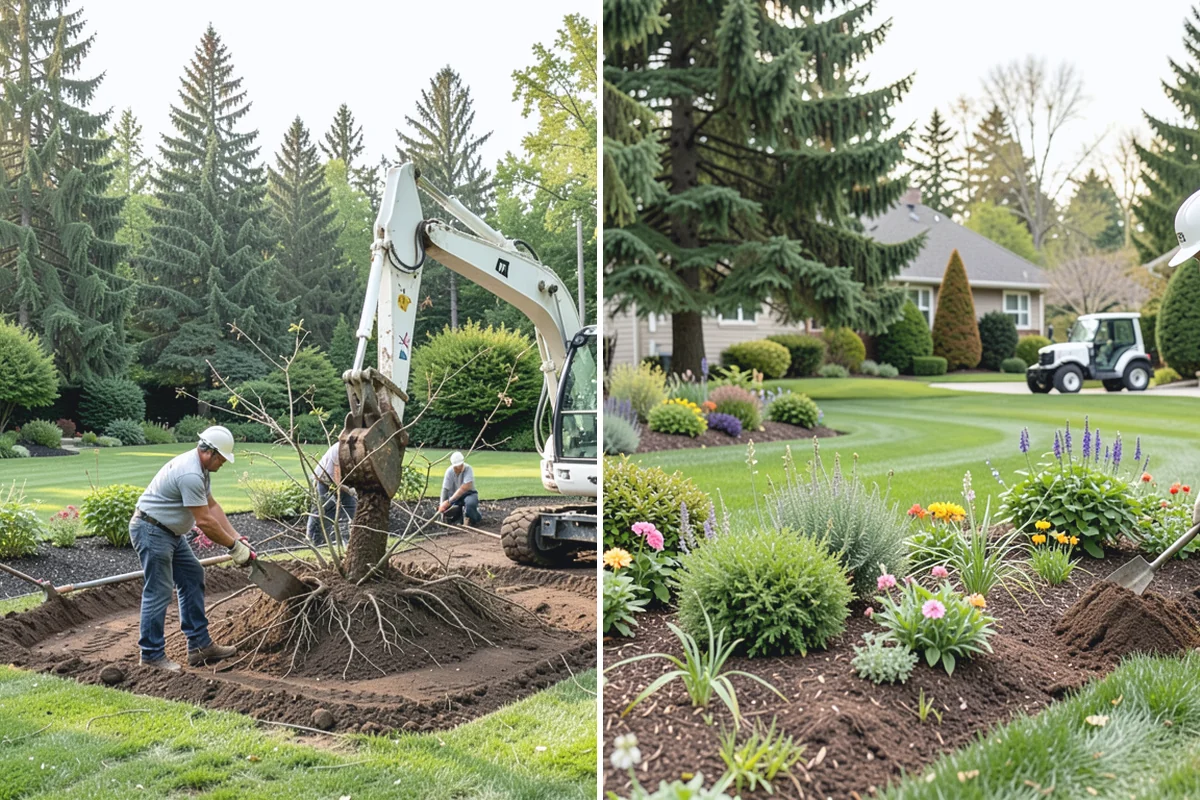
We walk the beds with you, give a free estimate, and agree on the areas and mulch type. On the day, the beds are cleared and edged as needed, then mulch is spread to an even depth and pulled back from trunks and stems. Financing is available subject to credit approval if you want to spread out the cost of a larger job.
One practical tip: before we arrive, push a trowel into your beds. If the soil is dry a few inches down, water deeply the day before. Mulch locks in the moisture that is already there.
Renton yard conditions at a glance
| Frost-free season | about 244 days |
|---|---|
| Tree canopy | 25.2% of the city |
| Days with 0.1 in or more of rain | 109 a year |
| Dry months (under 1.25 in) | July and August |
| Last / first frost (median) | Mar 19 / Nov 17 |
A year in a Renton yard
- Late winter
- Dormant pruning for most deciduous trees and shrubs, before buds break.
- Spring
- Last frost is usually around Mar 19; in 1 year in 10 it comes on or after Apr 4. Plant frost-tender annuals and vegetables after that.
- Early summer
- Check sprinklers and drip lines before July, the start of the dry months here.
- Summer
- July and August average 0.5 in and 0.9 in. Water deeply and less often; mulch beds to hold moisture.
- Fall
- Aerate, overseed and plant trees and shrubs while the soil is warm; first frost is usually around Nov 17. Winterize irrigation before then.
- Winter
- About 29 days a year freeze at night and thaw by day: keep drains, paver joints and wall weep holes clear.
Dates are medians for the city from Daymet 2005-2025; your yard and any given year can differ.
Sources: Daymet daily weather (NASA/ORNL), 2023 USDA Plant Hardiness Zone Map data (PRISM, Oregon State University), USDA SSURGO soil survey, USGS 3DEP elevation, USFS/NLCD tree canopy 2025, US Census ACS 2020-2024.
Renton Mulch Installation

Local Service Information
Renton
A city at the south end of Lake Washington where the Cedar River meets the lake.
Benefits
Locks in soil moisture and cuts watering; Suppresses weeds before they sprout; Insulates roots through PNW temperature swings; Feeds the soil as it breaks down; Instantly clean, finished appearance
Process

Also serving Renton
- Debris Cleanup in Rentonat Washington Tree Services
Get a Free Mulch Installation Estimate in Renton
Tell us about your project. We’ll review your needs and provide a customized, no-obligation proposal.
Request a Free Consultation
Complete the form or call our team to discuss your project.
On-Site Assessment
We’ll review your property, discuss your goals, and recommend an appropriate solution.
Receive a Customized Proposal
Receive a detailed estimate outlining the proposed work and pricing.