Shaping Your Outdoors. Surpassing Expectations.

Renton Rain Garden Installation
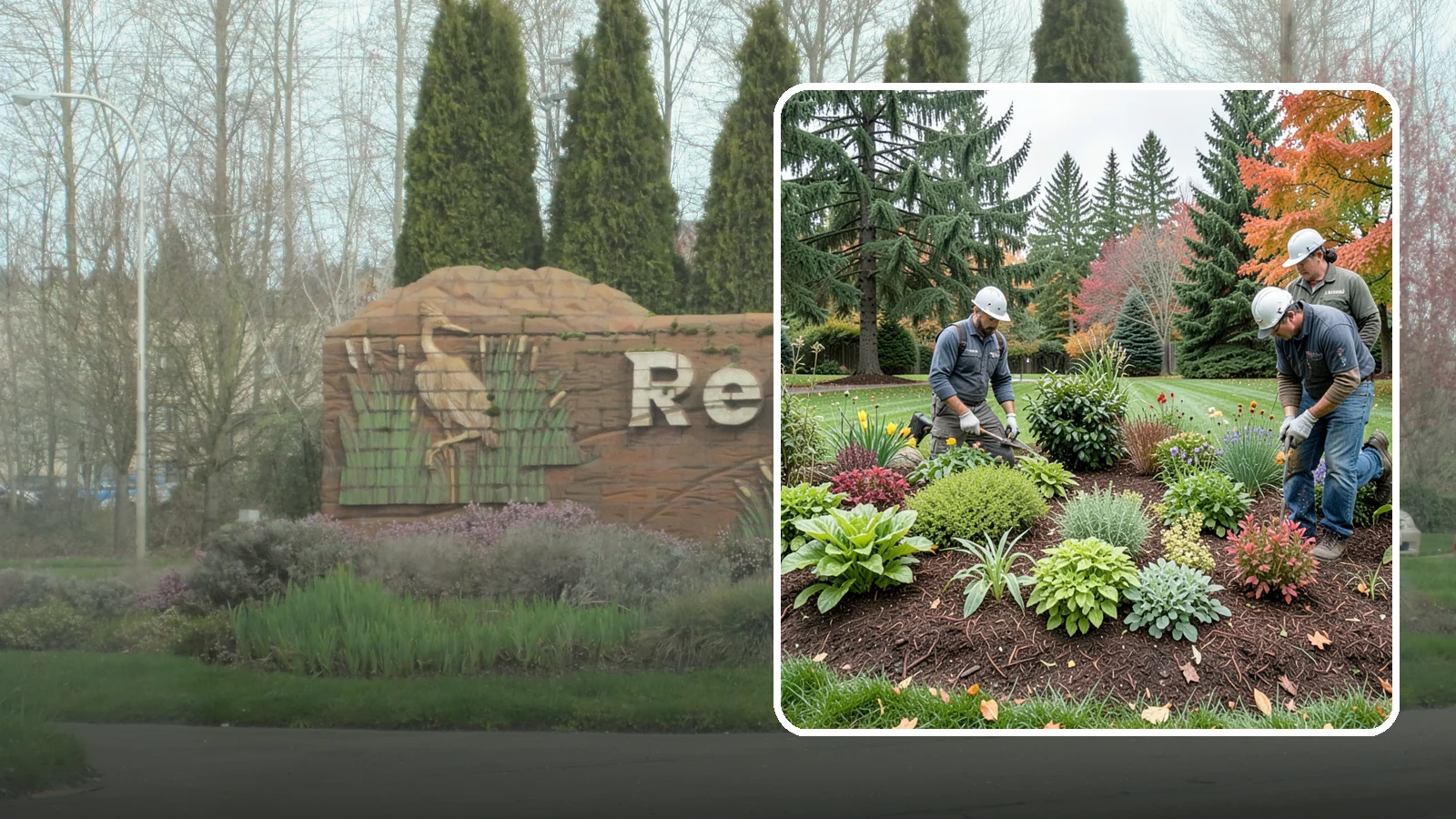
Beautiful rain gardens that capture and filter stormwater runoff while adding habitat and color.
After a heavy rain, water pools beside the driveway or runs off the roof and across the lawn. It may sit by the foundation or carry mulch into the street. Many Renton homeowners start looking at rain gardens for this reason.
A rain garden is a shallow planted basin that collects runoff and lets it soak in. Washington Landscaping, based in Bothell and in business since 2004, installs them. We offer free estimates, and you can call or text 425-433-9444.
How Rain Gardens Work in Renton's Wet Season
Runoff comes from hard surfaces. Roofs, driveways and patios shed water fast, and it has to go somewhere. A rain garden gives it a place to slow down, collect and soak into the ground instead of rushing to a low spot or a storm drain.
Timing matters here. Per Daymet data for 2005 to 2025, about 82% of Renton's yearly precipitation falls from October to April. The yearly total is about 42.4 inches. So the basin will be working through the cool, wet months, and plants need to handle soggy winters. Most of the rain comes as steady, ordinary events. Days with an inch or more average only about 4.8 a year, but those are the days that test an overflow path, so we plan for it.
Soil decides how well the basin drains. Per the USDA soil survey, about 23% of Renton's rated land is well drained, 65% moderately well drained and 12% poorly drained. Those figures describe the city as a whole. Your own yard may differ, even from a neighbor's. Because of that, the first step is looking at how your site drains. In slower soils, a basin may need to be shallower or wider, or amended with a soil mix that drains better.
The work follows a simple order:
We start by locating where the water comes from, usually a downspout or a paved edge, and choosing a spot that sits away from the foundation. We then dig the basin to a level bottom, shape the sides, and set up an inlet and an overflow so extra water leaves safely. Next we fill the basin with a planting mix that drains and add plants. Sedges, rushes and native shrubs are standard choices in the Puget Sound region because they tolerate both wet winters and drier summers. Mulch finishes the surface. New plants need watering through their first dry season.
If the plan involves significant grading or changes near structures, permit needs are checked with the city before work starts. We are licensed, bonded and insured, and financing is available subject to credit approval.
Renton yard conditions at a glance
| Soil drainage (rated land) | 23% well, 65% moderately well, 12% poorly drained |
|---|---|
| Days with 1 in or more of rain | 4.8 a year |
| Share of rain October to April | 82% |
| Land sloping 15% or more | 15% (40% or more: 3.5%) |
| Average yearly precipitation | 42.4 in |
A year in a Renton yard
- Late winter
- Dormant pruning for most deciduous trees and shrubs, before buds break.
- Spring
- Last frost is usually around Mar 19; in 1 year in 10 it comes on or after Apr 4. Plant frost-tender annuals and vegetables after that.
- Early summer
- Check sprinklers and drip lines before July, the start of the dry months here.
- Summer
- July and August average 0.5 in and 0.9 in. Water deeply and less often; mulch beds to hold moisture.
- Fall
- Aerate, overseed and plant trees and shrubs while the soil is warm; first frost is usually around Nov 17. Winterize irrigation before then.
- Winter
- About 29 days a year freeze at night and thaw by day: keep drains, paver joints and wall weep holes clear.
Dates are medians for the city from Daymet 2005-2025; your yard and any given year can differ.
How Renton’s soils drain
- Well drained23%
- Moderately well65%
- Poorly drained12%
Share of rated land in the USDA SSURGO soil survey; built-over ground is not rated. A soil check on your lot tells you what you have.
Sources: Daymet daily weather (NASA/ORNL), 2023 USDA Plant Hardiness Zone Map data (PRISM, Oregon State University), USDA SSURGO soil survey, USGS 3DEP elevation, USFS/NLCD tree canopy 2025, US Census ACS 2020-2024.
Renton Rain Garden Installation

Local Service Information
Renton
A city at the south end of Lake Washington where the Cedar River meets the lake.
Benefits
Captures and filters stormwater; Reduces runoff and pollution; Attractive, colorful garden feature; Creates pollinator and bird habitat; Ideal for the rainy PNW

Process

Also serving Renton
- Construction Management in Rentonat Washington Construction
- Stucco House Washing in Rentonat Washington Pressure Washing
- Roof Overlay in Rentonat Washington Roofing
Get a Free Rain Garden Installation Estimate in Renton
Tell us about your project. We’ll review your needs and provide a customized, no-obligation proposal.
Request a Free Consultation
Complete the form or call our team to discuss your project.
On-Site Assessment
We’ll review your property, discuss your goals, and recommend an appropriate solution.
Receive a Customized Proposal
Receive a detailed estimate outlining the proposed work and pricing.