Shaping Your Outdoors. Surpassing Expectations.

Renton Rhododendron Pruning
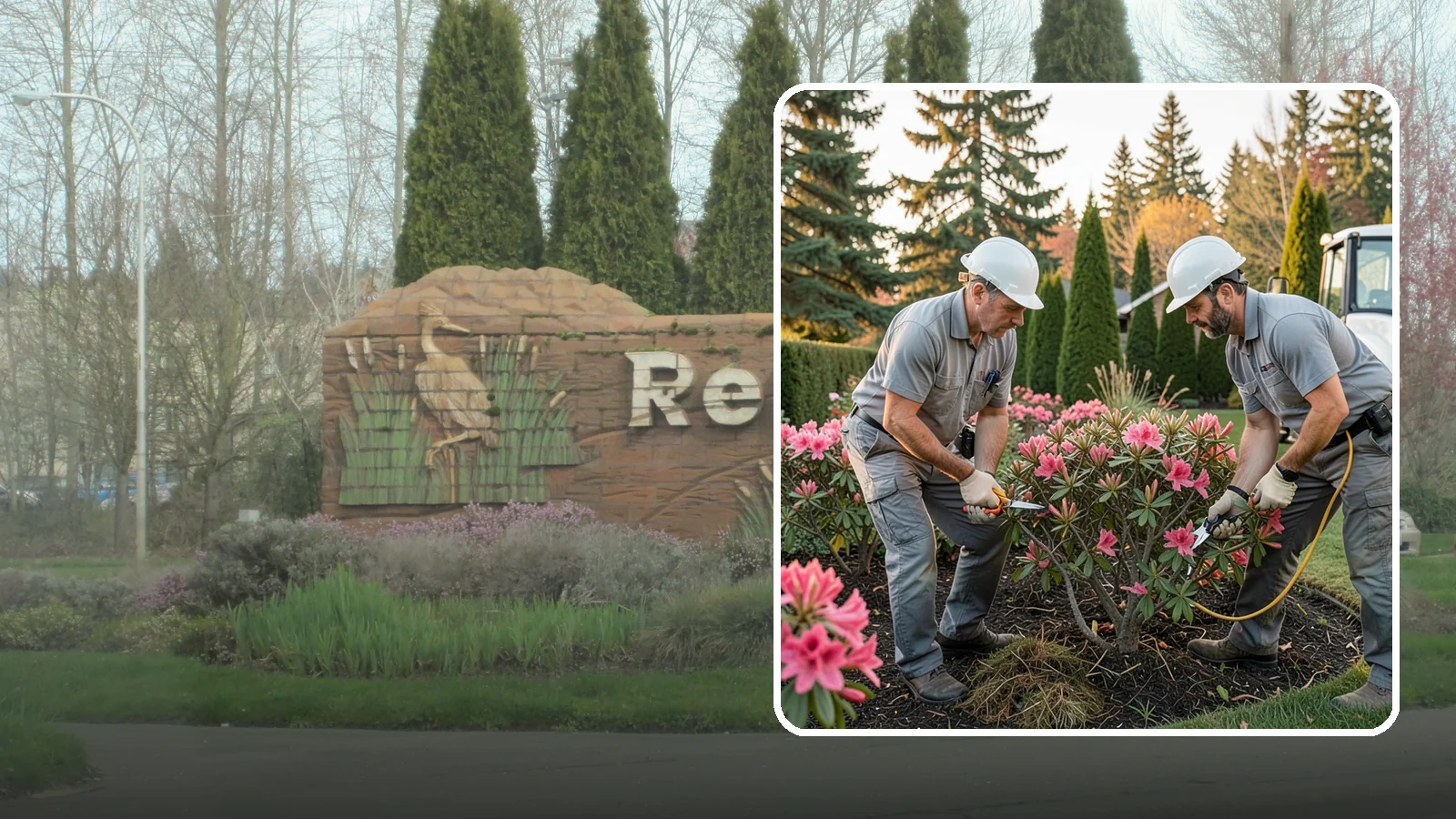
Careful shaping and deadheading of rhododendrons to protect next year’s blooms while controlling size in Puget Sound gardens.
The rhododendron by the front window has gone leggy. Leaves sit only at the branch tips, the middle is bare, and the shrub now blocks the glass or crowds the walkway. Flowering may have thinned out too.
Washington Landscaping prunes rhododendrons for Renton homeowners. An ISA Certified Arborist is on staff. Estimates are free, and you can call or text 425-433-9444 to set up a visit.
Rhododendron Pruning in Renton: Timing, Shade and Soil
Rhododendrons get leggy for simple reasons. They set flower buds on last year's growth, they grow toward light, and they shed older inner leaves over time. If a shrub is never cut back, growth concentrates at the tips and the center empties out. Shade speeds this up because the plant stretches to reach light.
Shade is a real factor here. Per USFS/NLCD 2025 data, tree canopy covers about 25.2% of Renton. That figure describes the city as a whole, and your own yard may have more or less shade. If your rhododendron sits under mature trees, expect more stretching. Some pruning can open the shrub up, and in some cases thinning the nearby canopy is a separate conversation.
Timing matters because of the flower buds. The usual practice is to prune soon after the blooms fade, before new buds form for next year. Cutting later in the season can remove next spring's flowers. Hard cuts on old wood are also best done in late winter to early spring, when the plant can recover. The median last spring frost in Renton is March 19, per Daymet data from 2005 to 2025. Frost can come earlier or later in any given year, so we avoid pushing new growth that a late cold snap could burn.
Soil plays a part too. Per the USDA SSURGO survey, about 23% of Renton's rated land is well drained, 65% moderately well drained and 12% poorly drained. Rhododendrons dislike wet roots. A shrub that looks sparse or yellow may be stressed by drainage, not only by missing pruning. Your yard may differ from the city figures, so we look at the planting site itself.
The work itself is plain. We remove dead and crossing branches first. We then shorten overgrown stems back to a node or a whorl of leaves, where new growth can break. For very overgrown plants, we may stage the work over more than one season instead of cutting everything at once. We also remove spent flower trusses where they are reachable, and we clean up the debris.
Washington Landscaping is licensed, bonded and insured, and the estimate is free.
Renton yard conditions at a glance
| USDA hardiness zone (2023) | 9a (parts 8b to 9a) |
|---|---|
| Last / first frost (median) | Mar 19 / Nov 17 |
| Tree canopy | 25.2% of the city |
| Share of rain October to April | 82% |
| Dry months (under 1.25 in) | July and August |
A year in a Renton yard
- Late winter
- Dormant pruning for most deciduous trees and shrubs, before buds break.
- Spring
- Last frost is usually around Mar 19; in 1 year in 10 it comes on or after Apr 4. Plant frost-tender annuals and vegetables after that.
- Early summer
- Check sprinklers and drip lines before July, the start of the dry months here.
- Summer
- July and August average 0.5 in and 0.9 in. Water deeply and less often; mulch beds to hold moisture.
- Fall
- Aerate, overseed and plant trees and shrubs while the soil is warm; first frost is usually around Nov 17. Winterize irrigation before then.
- Winter
- About 29 days a year freeze at night and thaw by day: keep drains, paver joints and wall weep holes clear.
Dates are medians for the city from Daymet 2005-2025; your yard and any given year can differ.
Sources: Daymet daily weather (NASA/ORNL), 2023 USDA Plant Hardiness Zone Map data (PRISM, Oregon State University), USDA SSURGO soil survey, USGS 3DEP elevation, USFS/NLCD tree canopy 2025, US Census ACS 2020-2024.
Renton Rhododendron Pruning
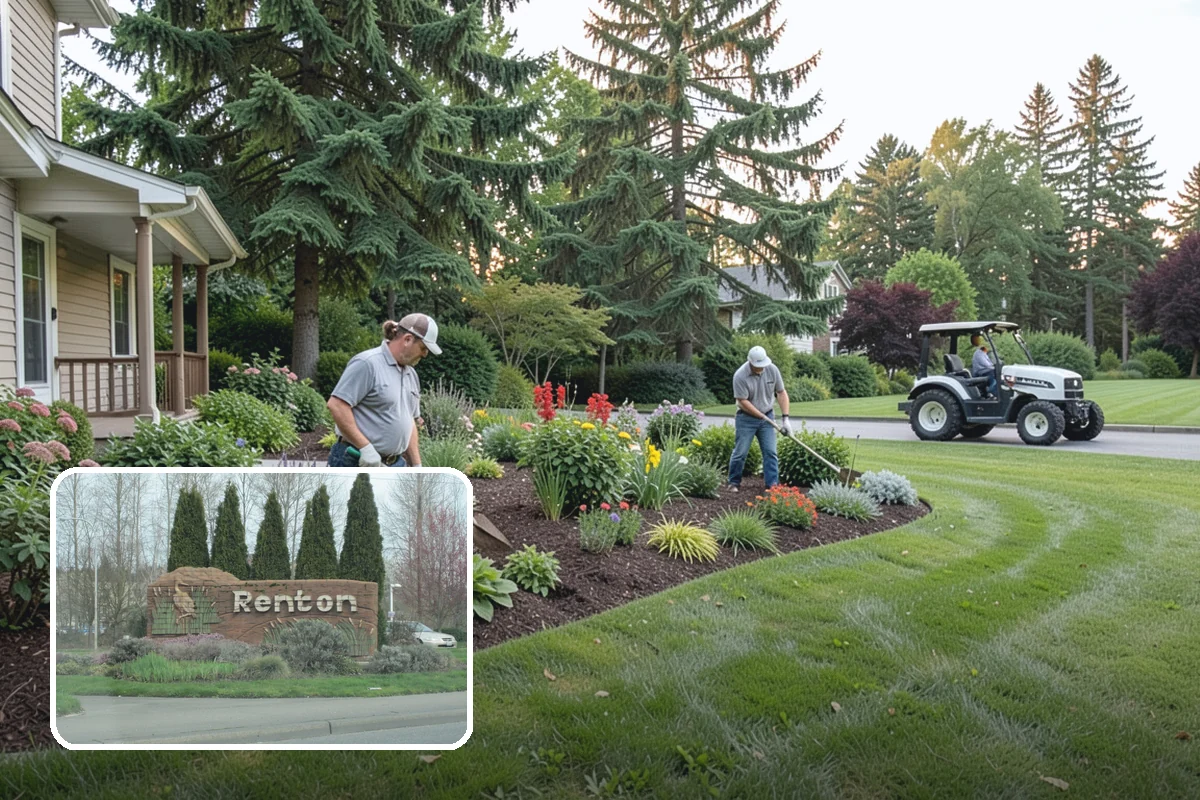
Local Service Information
Renton
A city at the south end of Lake Washington where the Cedar River meets the lake.
Benefits
Protects the following year’s flower display by pruning at the correct time; Improves airflow to reduce mildew and fungal issues common in wet PNW springs; Controls mature size near paths, windows, and foundations; Encourages fuller, bushier growth from dormant buds; Removes dead, weak, and rubbing wood to reduce disease
Process

Also serving Renton
- Hedge trimming in Rentonat Washington Tree Services
Get a Free Rhododendron Pruning Estimate in Renton
Tell us about your project. We’ll review your needs and provide a customized, no-obligation proposal.
Request a Free Consultation
Complete the form or call our team to discuss your project.
On-Site Assessment
We’ll review your property, discuss your goals, and recommend an appropriate solution.
Receive a Customized Proposal
Receive a detailed estimate outlining the proposed work and pricing.