Shaping Your Outdoors. Surpassing Expectations.

Renton Stone Wall Installation
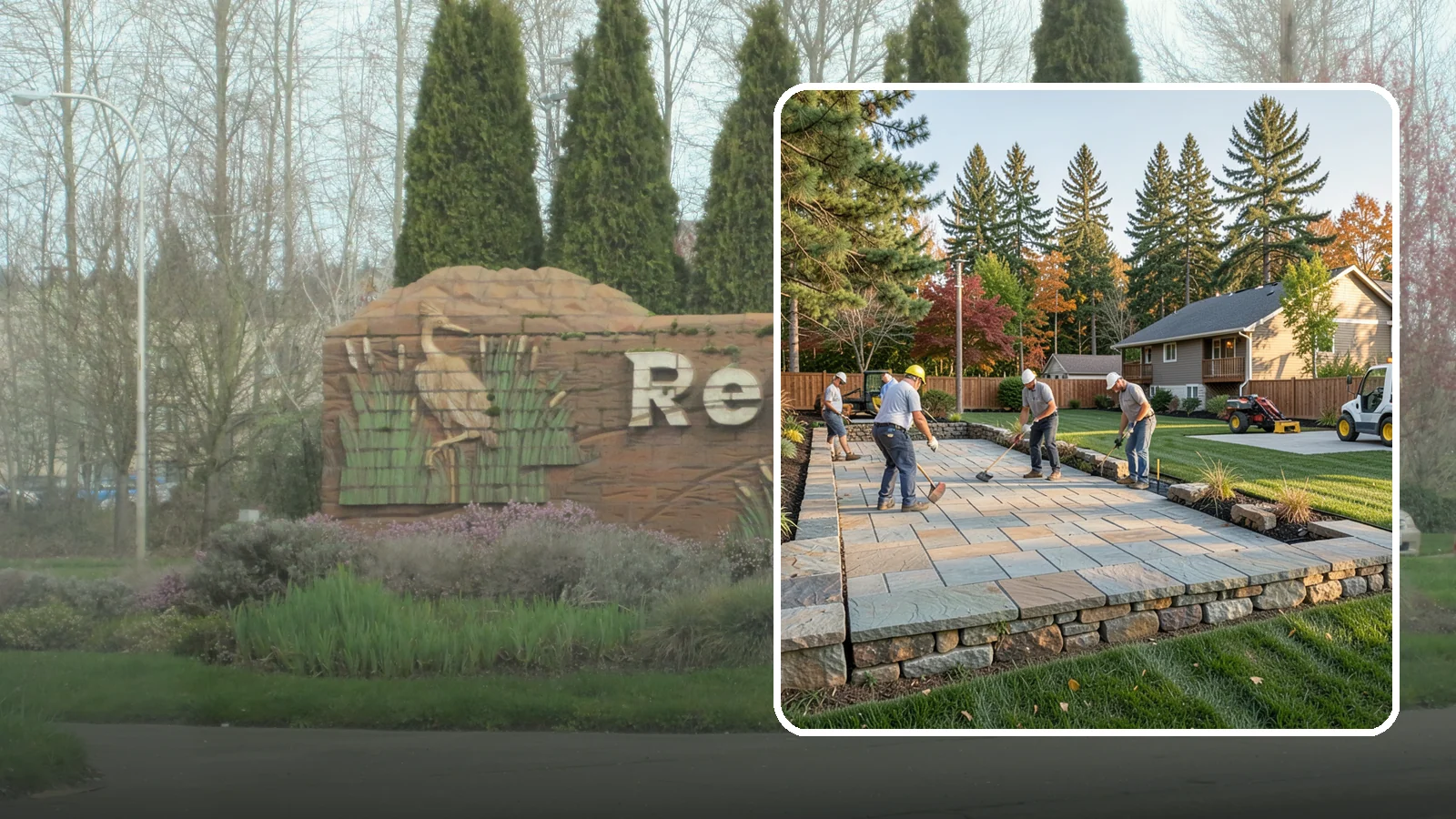
We construct natural stone walls that combine timeless appearance with the drainage needed for wet-climate durability.
Maybe the lawn slides toward the driveway after every heavy rain. Maybe a slope behind the house is too steep to mow, or soil keeps washing onto a walkway. These are common reasons Renton homeowners start looking at a stone wall.
A well-built wall holds soil in place, levels a usable area and gives a slope a clear edge. Washington Landscaping, based in Bothell, WA, installs stone walls as part of its hardscaping work. This page explains what shapes a wall in Renton and how the work goes.
How Renton's slopes and freeze-thaw shape a stone wall
A retaining wall has one job: resist the push of soil, especially wet soil. Water is the real cause of most failures. Soil that holds water gets heavy, and that weight pushes on the wall. So drainage matters as much as the stone itself.
Slope is the first local factor. Per USGS 3DEP elevation data, about 15% of Renton's land slopes 15% or more. That describes the city as a whole, and your own yard may be flatter or steeper. If your yard sits on one of those steeper areas, a wall may need to be taller or set in tiers. Taller walls put more load on the structure and call for more careful engineering. Permit needs for walls and grading are checked with the city before work starts, so we do not assume the answer in advance.
The second factor is freeze and thaw. Daymet data shows about 29 days a year in Renton when temperatures freeze at night and thaw by day. Water in and behind a wall expands when it freezes. Over repeated cycles, that can shift stones and open joints. The standard defense is a compacted gravel base below the wall, free-draining gravel backfill behind it, and a drain pipe that carries water out to a safe point. These parts are buried and you will not see them later, but they decide how well the wall holds up.
Climate also guides planting around the wall. Renton is USDA zone 9a, with an average coldest winter night of about 20.4 F, and parts of the city range from 8b to 9a. Frost can still come earlier or later than the medians suggest in any given year. Plants placed above or below the wall should suit that range.
The work itself starts with a site visit to look at the slope, the soil and where water flows. From there the steps are usually excavation, a compacted base, stone laid in courses with backfill and drainage added as it rises, then a finished cap and cleanup. Hardscaping work carries a 1-year workmanship warranty. Estimates are free, and you can call or text 425-433-9444 to set up a visit.
Renton yard conditions at a glance
| Days that freeze at night and thaw by day | 29 a year |
|---|---|
| Land sloping 15% or more | 15% (40% or more: 3.5%) |
| Days with 0.1 in or more of rain | 109 a year |
| Soil drainage (rated land) | 23% well, 65% moderately well, 12% poorly drained |
| Elevation range | 15 to 516 ft |
A year in a Renton yard
- Late winter
- Dormant pruning for most deciduous trees and shrubs, before buds break.
- Spring
- Last frost is usually around Mar 19; in 1 year in 10 it comes on or after Apr 4. Plant frost-tender annuals and vegetables after that.
- Early summer
- Check sprinklers and drip lines before July, the start of the dry months here.
- Summer
- July and August average 0.5 in and 0.9 in. Water deeply and less often; mulch beds to hold moisture.
- Fall
- Aerate, overseed and plant trees and shrubs while the soil is warm; first frost is usually around Nov 17. Winterize irrigation before then.
- Winter
- About 29 days a year freeze at night and thaw by day: keep drains, paver joints and wall weep holes clear.
Dates are medians for the city from Daymet 2005-2025; your yard and any given year can differ.
How Renton’s soils drain
- Well drained23%
- Moderately well65%
- Poorly drained12%
Share of rated land in the USDA SSURGO soil survey; built-over ground is not rated. A soil check on your lot tells you what you have.
Sources: Daymet daily weather (NASA/ORNL), 2023 USDA Plant Hardiness Zone Map data (PRISM, Oregon State University), USDA SSURGO soil survey, USGS 3DEP elevation, USFS/NLCD tree canopy 2025, US Census ACS 2020-2024.
Renton Stone Wall Installation
Local Service Information
Renton
A city at the south end of Lake Washington where the Cedar River meets the lake.
Benefits
Timeless natural stone appearance that ages gracefully; Integrated drainage protects retaining applications; Freeze-thaw-conscious construction resists movement; Durable materials suited to wet Northwest conditions; Custom fitting for a solid, hand-crafted result

Process
Also serving Renton
- Concrete Curb Installation in Rentonat Washington Construction
- Concrete Brightening in Rentonat Washington Pressure Washing
Get a Free Stone Wall Installation Estimate in Renton
Tell us about your project. We’ll review your needs and provide a customized, no-obligation proposal.
Request a Free Consultation
Complete the form or call our team to discuss your project.
On-Site Assessment
We’ll review your property, discuss your goals, and recommend an appropriate solution.
Receive a Customized Proposal
Receive a detailed estimate outlining the proposed work and pricing.