Shaping Your Outdoors. Surpassing Expectations.

Renton Storm Cleanup
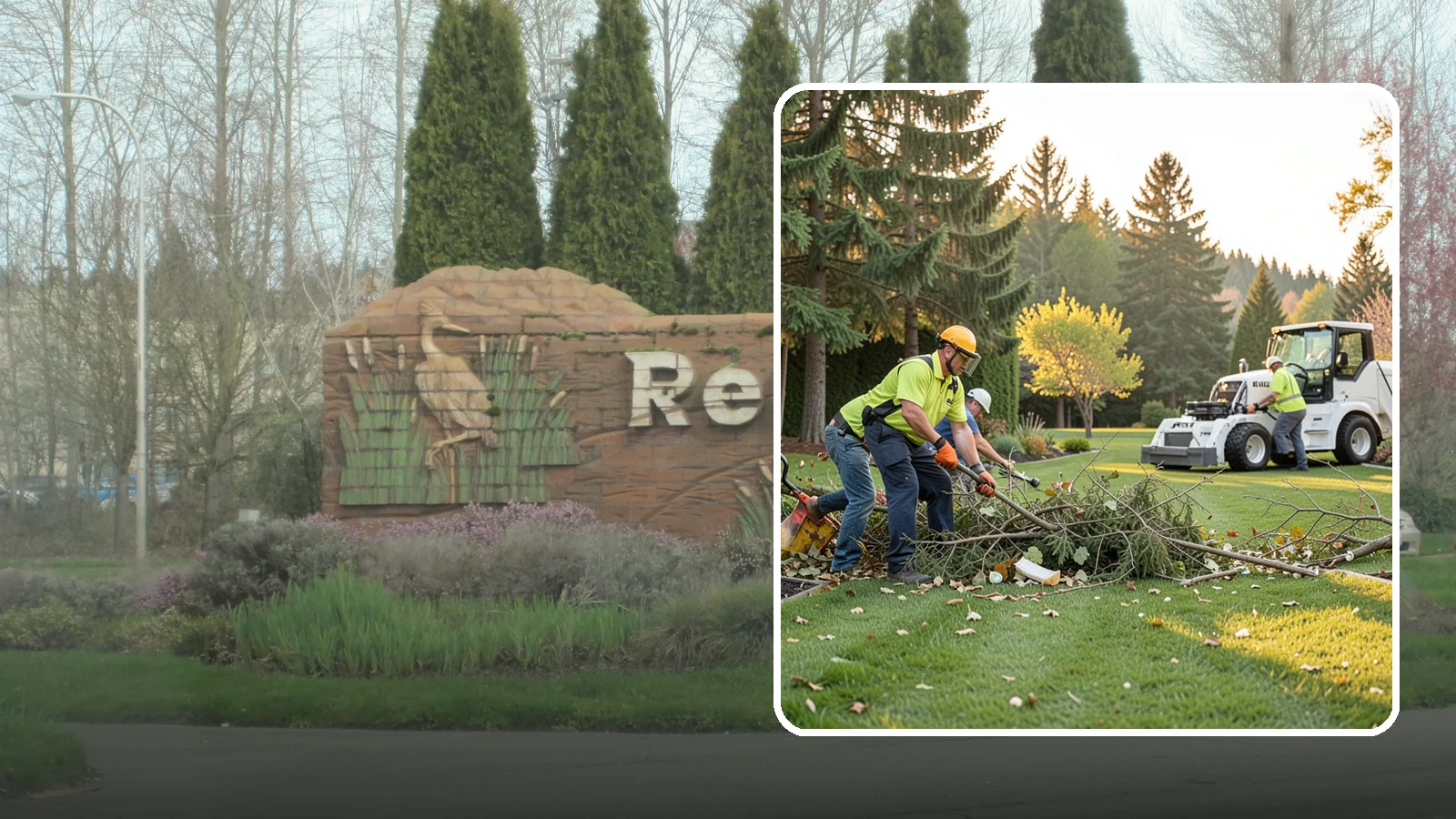
Fast cleanup of storm debris – downed branches, blown-down mess, and damage – to restore your property.
You step outside after a windstorm and find limbs across the lawn, a split branch hanging over the driveway, or a small tree leaning against the fence. In Renton, that is a common sight after a hard fall or winter storm.
Washington Landscaping handles storm cleanup, from clearing fallen debris to sorting out which damaged trees can stay. An ISA Certified Arborist is on staff, so hazardous limbs get a professional look. Estimates are free, and you can call or text 425-433-9444.
Why storm damage happens in Renton, WA yards
Most storm damage starts with wind acting on trees that are already stressed. Saturated soil loosens root hold. Heavy, wet foliage adds weight. Old wounds, dead branches and weak forks then give way first.
Renton has a good deal of tree cover. Per USFS/NLCD 2025 data, canopy covers about 25.2% of the city. More trees means more limbs that can come down in a storm. That figure describes the city as a whole, so your own yard may have much more or much less overhead.
Rain is the other piece. Daymet records for 2005 to 2025 show about 42.4 inches a year in Renton, but only about 4.8 days a year with an inch or more. So the soil is often wet, and a few heavy days can add a lot of water at once. The wettest single day in that period brought 3 inches, on November 6, 2006. Soil soaked by days of rain is when shallow-rooted trees are most likely to lean or tip. Those are medians and records, not a forecast for any given year.
The work usually begins with a walk through the yard to find hazards. Anything hanging, cracked or leaning over a house, a driveway or a power line should be treated first. Our arborist can look at damaged trees and tell you whether a tree needs pruning, further monitoring or removal. Do not climb or cut near utility lines yourself. Call the utility.
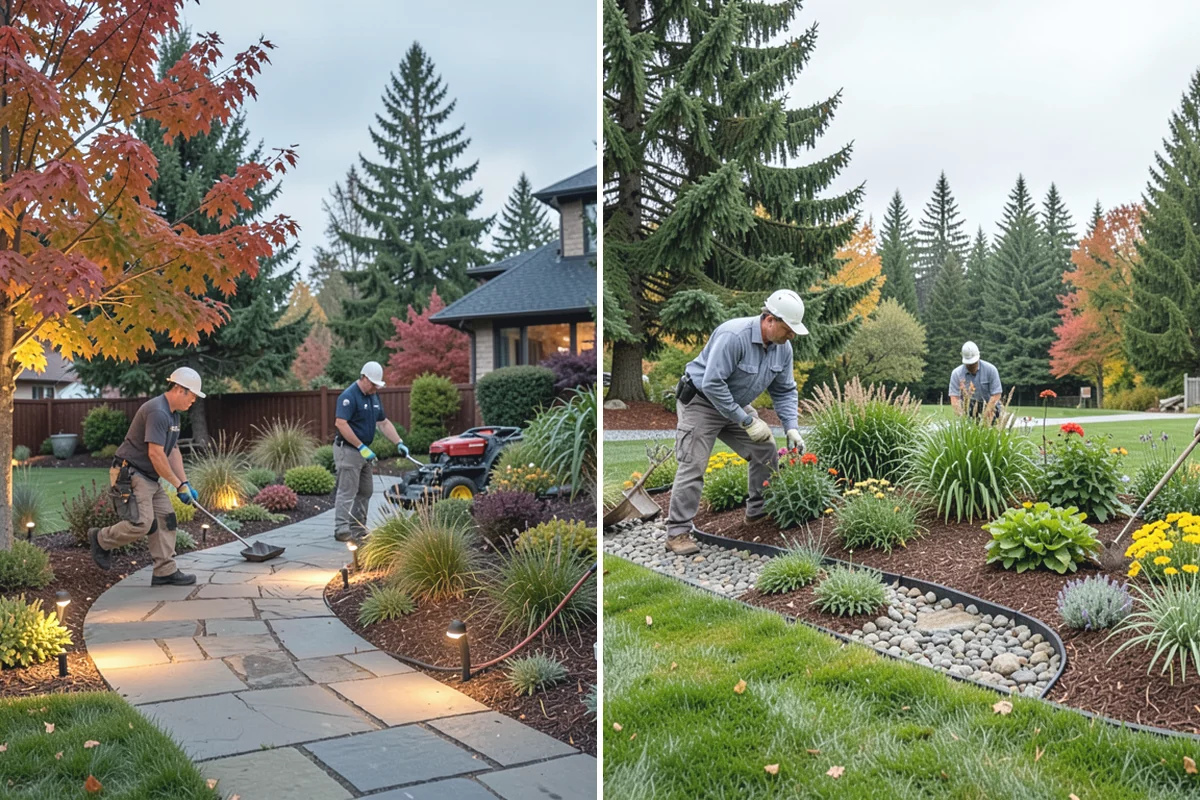
After that, crews cut fallen limbs and trunks to manageable pieces, clear them from lawns, beds and paths, and haul away the debris. Beds and shrubs crushed by branches can be cleaned up and trimmed back so they recover. If a fallen tree has pulled up a root plate, the hole and loose soil may need attention so the area drains well and is safe to walk.
If the damage is more than you expected, ask about financing, which is available subject to credit approval. We are licensed, bonded and insured to $2M.
Renton yard conditions at a glance
| Tree canopy | 25.2% of the city |
|---|---|
| Land sloping 15% or more | 15% (40% or more: 3.5%) |
| Soil drainage (rated land) | 23% well, 65% moderately well, 12% poorly drained |
| Share of rain October to April | 82% |
A year in a Renton yard
- Late winter
- Dormant pruning for most deciduous trees and shrubs, before buds break.
- Spring
- Last frost is usually around Mar 19; in 1 year in 10 it comes on or after Apr 4. Plant frost-tender annuals and vegetables after that.
- Early summer
- Check sprinklers and drip lines before July, the start of the dry months here.
- Summer
- July and August average 0.5 in and 0.9 in. Water deeply and less often; mulch beds to hold moisture.
- Fall
- Aerate, overseed and plant trees and shrubs while the soil is warm; first frost is usually around Nov 17. Winterize irrigation before then.
- Winter
- About 29 days a year freeze at night and thaw by day: keep drains, paver joints and wall weep holes clear.
Dates are medians for the city from Daymet 2005-2025; your yard and any given year can differ.
How Renton’s soils drain
- Well drained23%
- Moderately well65%
- Poorly drained12%
Share of rated land in the USDA SSURGO soil survey; built-over ground is not rated. A soil check on your lot tells you what you have.
Sources: Daymet daily weather (NASA/ORNL), 2023 USDA Plant Hardiness Zone Map data (PRISM, Oregon State University), USDA SSURGO soil survey, USGS 3DEP elevation, USFS/NLCD tree canopy 2025, US Census ACS 2020-2024.
Renton Storm Cleanup
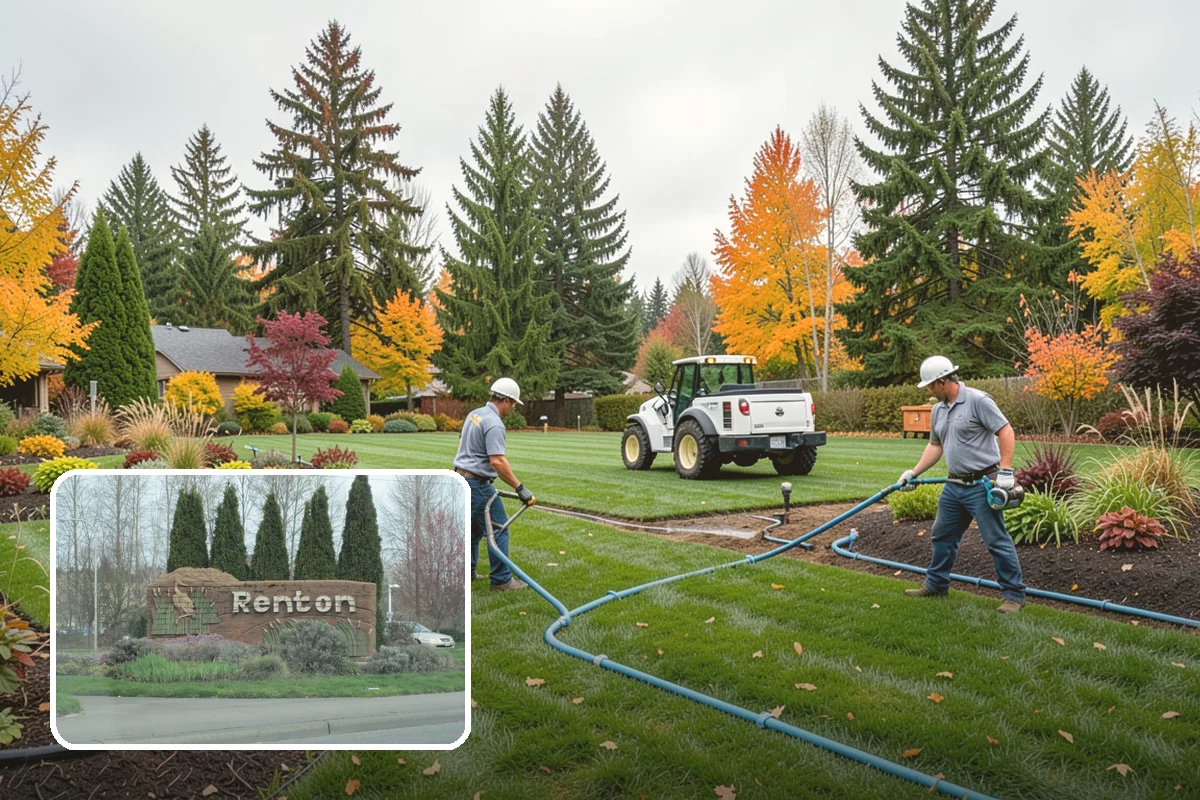
Local Service Information
Renton
A city at the south end of Lake Washington where the Cedar River meets the lake.
Benefits
Fast response after storms; Clears fallen limbs and debris; Prioritizes hazards and access; Removes damaged plant material; Prevents secondary damage
Process
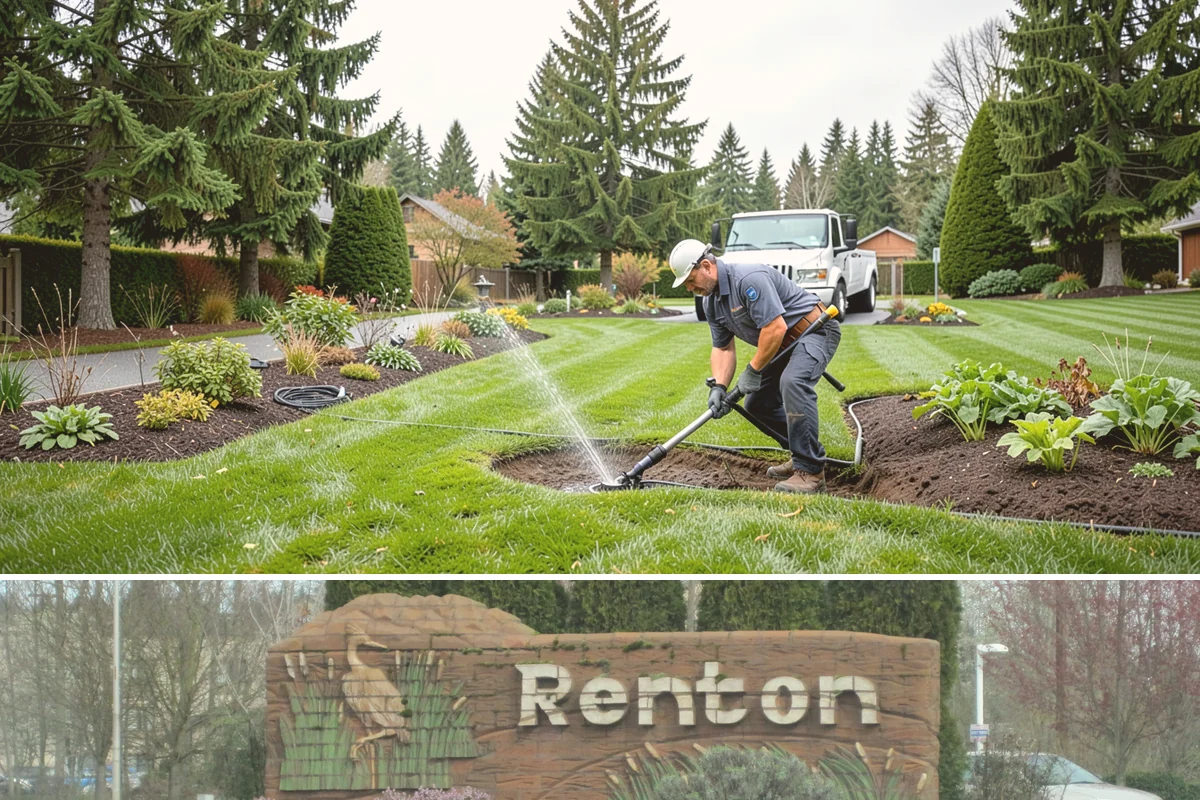
Also serving Renton
- Lumber milling in Rentonat Washington Tree Services
- Winter Property Monitoring in Rentonat Washington Snow Removal
Get a Free Storm Cleanup Estimate in Renton
Tell us about your project. We’ll review your needs and provide a customized, no-obligation proposal.
Request a Free Consultation
Complete the form or call our team to discuss your project.
On-Site Assessment
We’ll review your property, discuss your goals, and recommend an appropriate solution.
Receive a Customized Proposal
Receive a detailed estimate outlining the proposed work and pricing.