Shaping Your Outdoors. Surpassing Expectations.

Roy Azalea Pruning
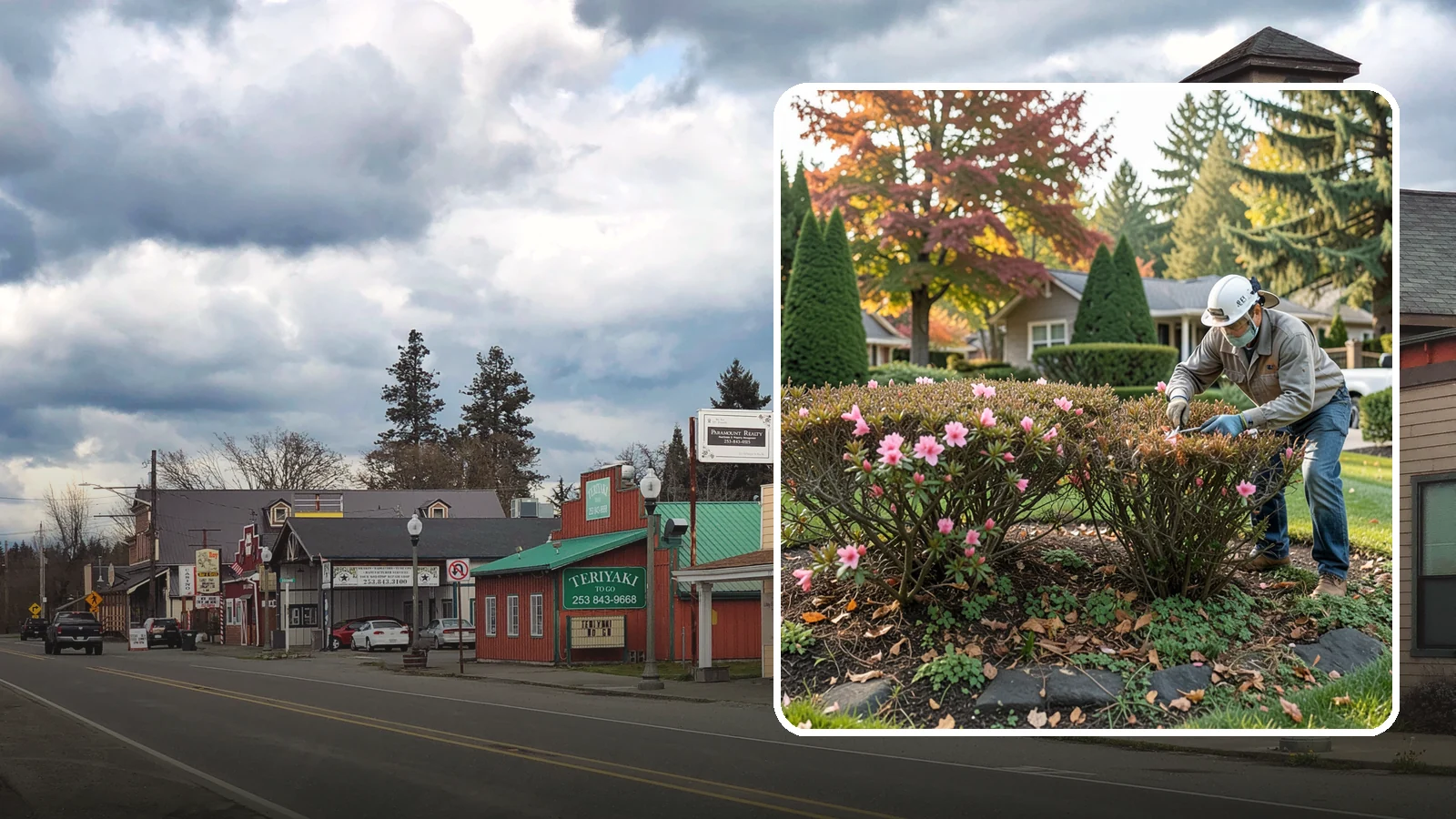
Light post-bloom shaping of evergreen and deciduous azaleas to preserve bud set and maintain a dense, tidy form.
This service is for Roy homeowners whose azaleas have grown leggy, crowded a window or walkway, or stopped blooming well. It also suits yards where shrubs sit under tall trees and have stretched toward the light, or where old plants have thick, bare centers and need a plan to bring them back.
Washington Landscaping has been in business since 2004 and has an ISA Certified Arborist on staff. We can look at how your azaleas are growing, talk through the options, and give you a free estimate. Call or text 425-433-9444 to start.
Azalea pruning options for Roy yards and local conditions
Homeowners usually choose between three approaches. The right one depends on the plant's age, its size and how much it has outgrown its spot.
- Light shaping: trim stray branches and spent flower clusters to keep a healthy shrub tidy.
- Thinning: remove some of the oldest stems at the base and cut crossing branches to open up the plant to light and air.
- Renewal pruning: cut an overgrown shrub back hard, or in stages over two to three years, to rebuild fresh growth.
Timing matters more than the method
Azaleas set next year's flower buds soon after they bloom. The standard practice in the Puget Sound region is to prune right after flowering ends, in late spring. Cut later and you remove the buds. Light shaping can be done at other times, but you give up some flowers.
Renewal pruning is best done in stages. It keeps the plant from losing too much foliage at once. It also lets you see which stems sprout back before you cut further.
What Roy conditions favor
The median last spring frost in Roy is April 4, per Daymet data for 2005 to 2025. That is a median, so frost can come earlier or later in a given year. Heavy pruning that pushes tender new growth just before a late frost can cause damage. Waiting until after bloom, and after frost danger has passed, is the safer choice.
Per the USDA soil survey, about 96% of Roy's rated land is well drained. Azaleas still like even moisture, so a well-drained yard may need more attention to mulch and summer watering after a hard cut-back. Your own yard may differ from the city as a whole, and a low spot could drain poorly.
Tree canopy covers about 18% of Roy, per USFS/NLCD 2025. Azaleas under shade trees often grow long and sparse as they reach for light. Thinning usually helps more than shearing in those spots.
If you are unsure which approach fits, we can look at the shrubs with you before any work starts.
Roy yard conditions at a glance
| USDA hardiness zone (2023) | 8b |
|---|---|
| Last / first frost (median) | Apr 4 / Nov 8 |
| Tree canopy | 18% of the city |
| Share of rain October to April | 83% |
| Dry months (under 1.25 in) | July and August |
A year in a Roy yard
- Late winter
- Dormant pruning for most deciduous trees and shrubs, before buds break.
- Spring
- Last frost is usually around Apr 4; in 1 year in 10 it comes on or after Apr 20. Plant frost-tender annuals and vegetables after that.
- Early summer
- Check sprinklers and drip lines before July, the start of the dry months here.
- Summer
- July and August average 0.5 in and 0.9 in. Water deeply and less often; mulch beds to hold moisture.
- Fall
- Aerate, overseed and plant trees and shrubs while the soil is warm; first frost is usually around Nov 8. Winterize irrigation before then.
- Winter
- About 43 days a year freeze at night and thaw by day: keep drains, paver joints and wall weep holes clear.
Dates are medians for the city from Daymet 2005-2025; your yard and any given year can differ.
Sources: Daymet daily weather (NASA/ORNL), 2023 USDA Plant Hardiness Zone Map data (PRISM, Oregon State University), USDA SSURGO soil survey, USGS 3DEP elevation, USFS/NLCD tree canopy 2025, US Census ACS 2020-2024.
Roy Azalea Pruning
Local Service Information
Roy
A very small city on the prairies of rural south Pierce County.
Benefits
Preserves next spring’s flower buds by pruning at the right moment; Maintains a compact, dense form ideal for borders and foundations; Reduces lace bug and petal blight pressure through better airflow; Renews aging deciduous azaleas by removing old canes; Keeps plants proportioned to their space
Process

Azalea Pruning in nearby areas
Also serving Roy
- Shrub pruning in Royat Washington Tree Services
Get a Free Azalea Pruning Estimate in Roy
Tell us about your project. We’ll review your needs and provide a customized, no-obligation proposal.
Request a Free Consultation
Complete the form or call our team to discuss your project.
On-Site Assessment
We’ll review your property, discuss your goals, and recommend an appropriate solution.
Receive a Customized Proposal
Receive a detailed estimate outlining the proposed work and pricing.