Shaping Your Outdoors. Surpassing Expectations.

Roy Cherry Tree Pruning
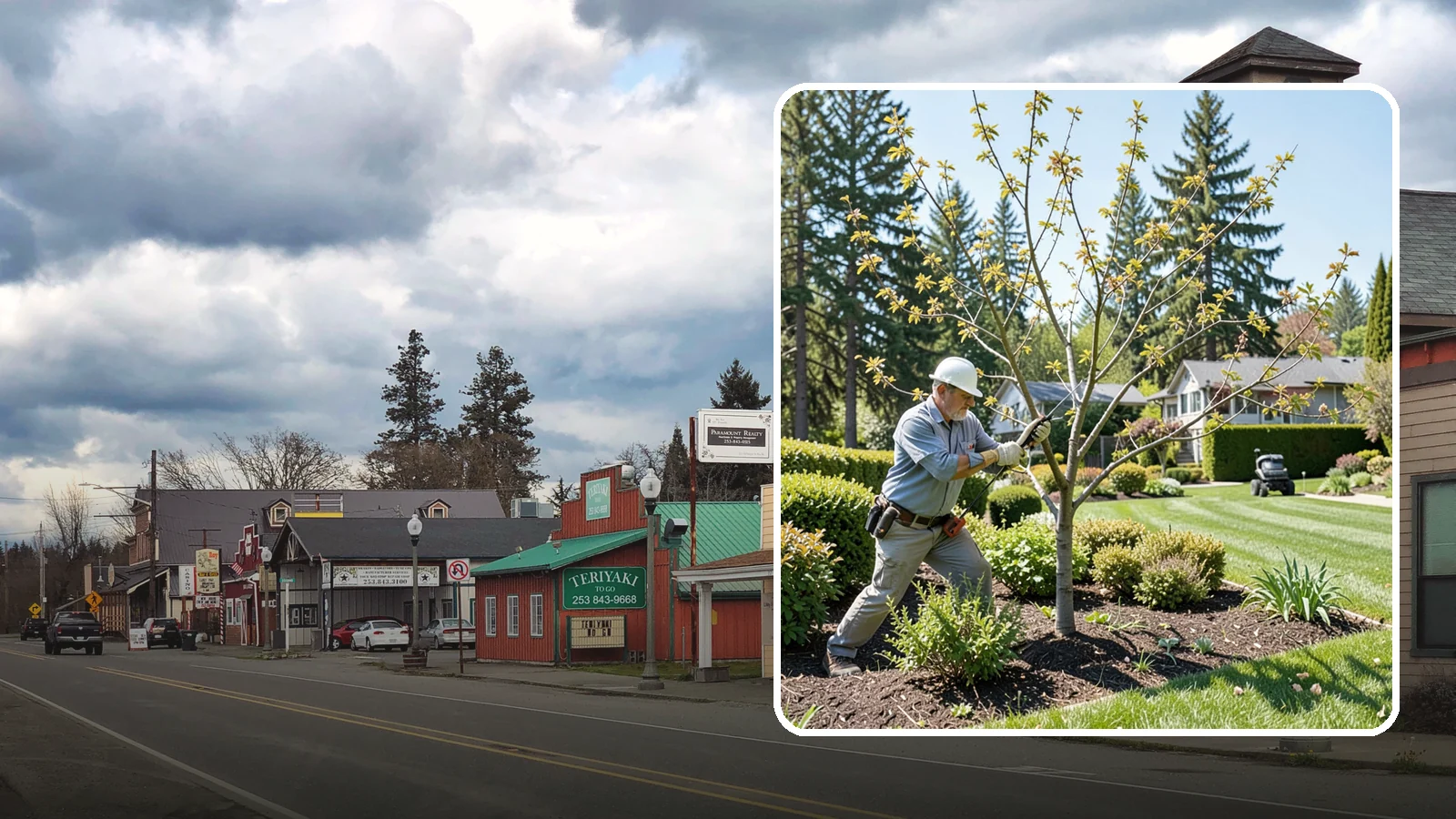
Pruning for ornamental and fruiting cherries that protects health and encourages bloom.
Your cherry tree has gone wild. Water sprouts crowd the top, branches cross in the middle, and the fruit, if any, sits out of reach. Or you may have spotted dead twigs, oozing sap, or limbs rubbing together.
Pruning fixes much of this when it is done at the right time and in the right way. Washington Landscaping has an ISA Certified Arborist on staff, and we offer free estimates for cherry tree pruning in Roy.
Cherry Tree Pruning Timing and Method in Roy, WA
Cherries are touchy about pruning. Large cuts heal slowly, and open wounds let in bacterial canker and other diseases. Those diseases spread most easily when branches are wet and the weather is cool.
Why timing matters in Roy
Per Daymet data from 2005 to 2025, about 83% of Roy's yearly precipitation falls from October to April. That means the usual dormant-season window for pruning is also the wettest part of the year. Cutting in a long wet spell gives disease more chances to enter fresh wounds. Many growers in the Puget Sound region prune cherries in summer for this reason, after harvest and during drier weather.
The same data shows July and August are Roy's dry months. July averages about 0.51 in of rain and August about 0.91 in. Those weeks are a sensible target for most structural cuts, since cuts have a better chance to dry and callus before the rains return. Weather varies from year to year, so we watch the forecast rather than the calendar alone.
Frost and light trimming
The median last spring frost in Roy is April 4. That is a median, so frost can come earlier or later in a given year. Hard pruning before a late frost can stimulate tender new growth that cold then damages. It is one more reason to avoid heavy cuts in early spring.
What the work looks like
We begin by looking at the whole tree. Dead, broken, and diseased wood comes out first. Then we thin crossing and crowded branches so light and air reach the interior, which helps fruit ripen and leaves dry faster. We also reduce height gradually when a tree has grown too tall to harvest or maintain. We avoid removing too much in one visit, because heavy cutting pushes vigorous, weak sprouts.
Every tree is different, and your yard's drainage, sun, and the tree's age all affect the plan. Call or text 425-433-9444 to set up a free estimate.
Roy yard conditions at a glance
| USDA hardiness zone (2023) | 8b |
|---|---|
| Last / first frost (median) | Apr 4 / Nov 8 |
| Tree canopy | 18% of the city |
| Share of rain October to April | 83% |
| Dry months (under 1.25 in) | July and August |
A year in a Roy yard
- Late winter
- Dormant pruning for most deciduous trees and shrubs, before buds break.
- Spring
- Last frost is usually around Apr 4; in 1 year in 10 it comes on or after Apr 20. Plant frost-tender annuals and vegetables after that.
- Early summer
- Check sprinklers and drip lines before July, the start of the dry months here.
- Summer
- July and August average 0.5 in and 0.9 in. Water deeply and less often; mulch beds to hold moisture.
- Fall
- Aerate, overseed and plant trees and shrubs while the soil is warm; first frost is usually around Nov 8. Winterize irrigation before then.
- Winter
- About 43 days a year freeze at night and thaw by day: keep drains, paver joints and wall weep holes clear.
Dates are medians for the city from Daymet 2005-2025; your yard and any given year can differ.
Sources: Daymet daily weather (NASA/ORNL), 2023 USDA Plant Hardiness Zone Map data (PRISM, Oregon State University), USDA SSURGO soil survey, USGS 3DEP elevation, USFS/NLCD tree canopy 2025, US Census ACS 2020-2024.
Roy Cherry Tree Pruning

Local Service Information
Roy
A very small city on the prairies of rural south Pierce County.
Benefits
Better light and air to reduce disease; Healthier trees in the wet PNW; Deadwood removed; Shaped for bloom or fruit; Light, clean, well-timed cuts
Process
Cherry Tree Pruning in nearby areas
Also serving Roy
- Roof clearance pruning in Royat Washington Tree Services
Get a Free Cherry Tree Pruning Estimate in Roy
Tell us about your project. We’ll review your needs and provide a customized, no-obligation proposal.
Request a Free Consultation
Complete the form or call our team to discuss your project.
On-Site Assessment
We’ll review your property, discuss your goals, and recommend an appropriate solution.
Receive a Customized Proposal
Receive a detailed estimate outlining the proposed work and pricing.