Shaping Your Outdoors. Surpassing Expectations.

Ruston Crape Myrtle Pruning
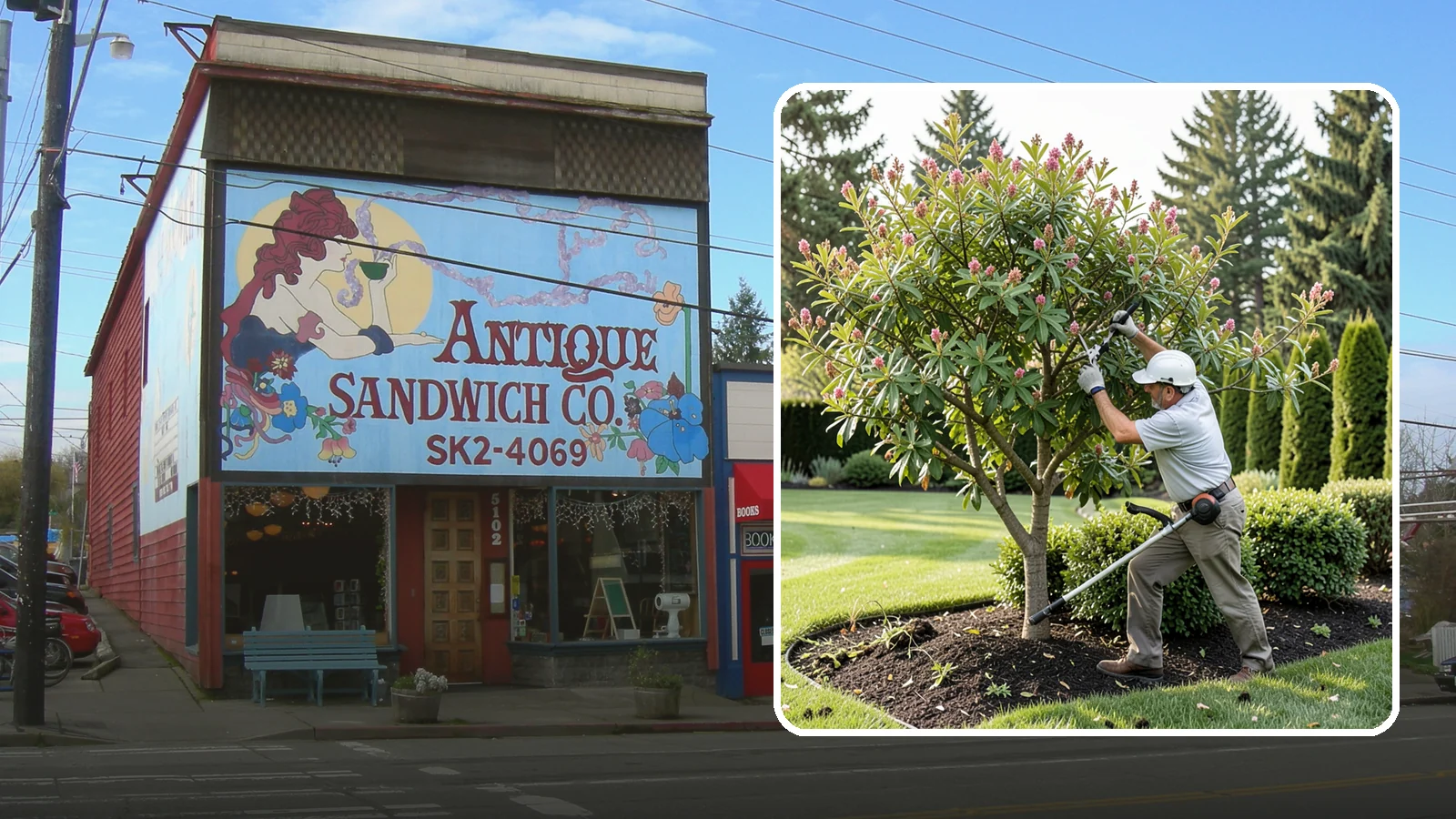
Proper crape myrtle pruning that avoids “crape murder” and preserves natural form and bloom.
Your crape myrtle has thick, stubby knuckles at the ends of its branches. Or the branches are crossing, the center is crowded, and the blooms look smaller than they used to. Many Ruston homeowners start looking for help at this point.
Washington Landscaping prunes crape myrtles with an ISA Certified Arborist on staff. The aim is to open up the structure, remove weak or rubbing wood, and keep the natural shape. This page explains what causes the problems and how Ruston's climate affects the timing.
Pruning Crape Myrtles in Ruston: Timing, Cuts and Climate
Most crape myrtle problems come from one habit: cutting every branch back to the same height each year. This is often called topping. It forces dense clusters of weak shoots from the cut ends. Those shoots flop under the weight of the blooms, and the knuckles grow larger each year. Good pruning goes the other way. It removes whole branches back to a main stem or the base, and leaves the graceful, vase-like form alone.
How Ruston's climate affects the work
Ruston sits in USDA zone 9a, where the average coldest winter night is about 20.7 F. That is mild enough for crape myrtles to do well, but a hard cold snap can still damage tips. Before cutting, it helps to wait and see what actually died back. Frost-free days run about 245 on average, from around Mar 18 to Nov 17. These are medians, so frost can come earlier or later in a given year. Pruning is usually done in late winter, while the tree is dormant, and before new growth pushes out in spring. Cutting right before a late frost invites tip damage on fresh shoots, so the timing is worth watching.
Summer is dry here. July averages about 0.46 in of rain and August about 0.81 in. A tree that was pruned heavily will lose leaf area and may struggle in those months. Light, selective cuts keep the tree's canopy and make it easier to handle a dry stretch. A newly pruned tree may still need regular watering in July and August.
What the work looks like
The arborist looks at the whole tree first. Then the cuts usually go in this order: dead and broken wood, crossing or rubbing branches, and suckers at the base. Next, a few interior branches may be thinned to let in light and air. Cuts are made cleanly at a branch union, not at an arbitrary point. Pencil-thin twigs at the tips are generally left alone.
Call or text 425-433-9444 to ask about a free estimate. The company is licensed, bonded and insured ($2M).
Ruston yard conditions at a glance
| USDA hardiness zone (2023) | 9a |
|---|---|
| Last / first frost (median) | Mar 18 / Nov 17 |
| Tree canopy | 17.9% of the city |
| Share of rain October to April | 84% |
| Dry months (under 1.25 in) | July and August |
A year in a Ruston yard
- Late winter
- Dormant pruning for most deciduous trees and shrubs, before buds break.
- Spring
- Last frost is usually around Mar 18; in 1 year in 10 it comes on or after Apr 4. Plant frost-tender annuals and vegetables after that.
- Early summer
- Check sprinklers and drip lines before July, the start of the dry months here.
- Summer
- July and August average 0.5 in and 0.8 in. Water deeply and less often; mulch beds to hold moisture.
- Fall
- Aerate, overseed and plant trees and shrubs while the soil is warm; first frost is usually around Nov 17. Winterize irrigation before then.
- Winter
- About 28 days a year freeze at night and thaw by day: keep drains, paver joints and wall weep holes clear.
Dates are medians for the city from Daymet 2005-2025; your yard and any given year can differ.
Sources: Daymet daily weather (NASA/ORNL), 2023 USDA Plant Hardiness Zone Map data (PRISM, Oregon State University), USDA SSURGO soil survey, USGS 3DEP elevation, USFS/NLCD tree canopy 2025, US Census ACS 2020-2024.
Ruston Crape Myrtle Pruning
Local Service Information
Ruston
A very small city on Commencement Bay surrounded by Tacoma and Point Defiance.
Benefits
Avoids damaging topping / crape murder; Preserves natural vase form and bark; Deadwood and suckers removed; Strong structure and abundant bloom; Naturally elegant, healthy tree
Process

Crape Myrtle Pruning in nearby areas
Also serving Ruston
- Vista pruning in Rustonat Washington Tree Services
Get a Free Crape Myrtle Pruning Estimate in Ruston
Tell us about your project. We’ll review your needs and provide a customized, no-obligation proposal.
Request a Free Consultation
Complete the form or call our team to discuss your project.
On-Site Assessment
We’ll review your property, discuss your goals, and recommend an appropriate solution.
Receive a Customized Proposal
Receive a detailed estimate outlining the proposed work and pricing.