Shaping Your Outdoors. Surpassing Expectations.

Ruston Laurel Hedge Trimming
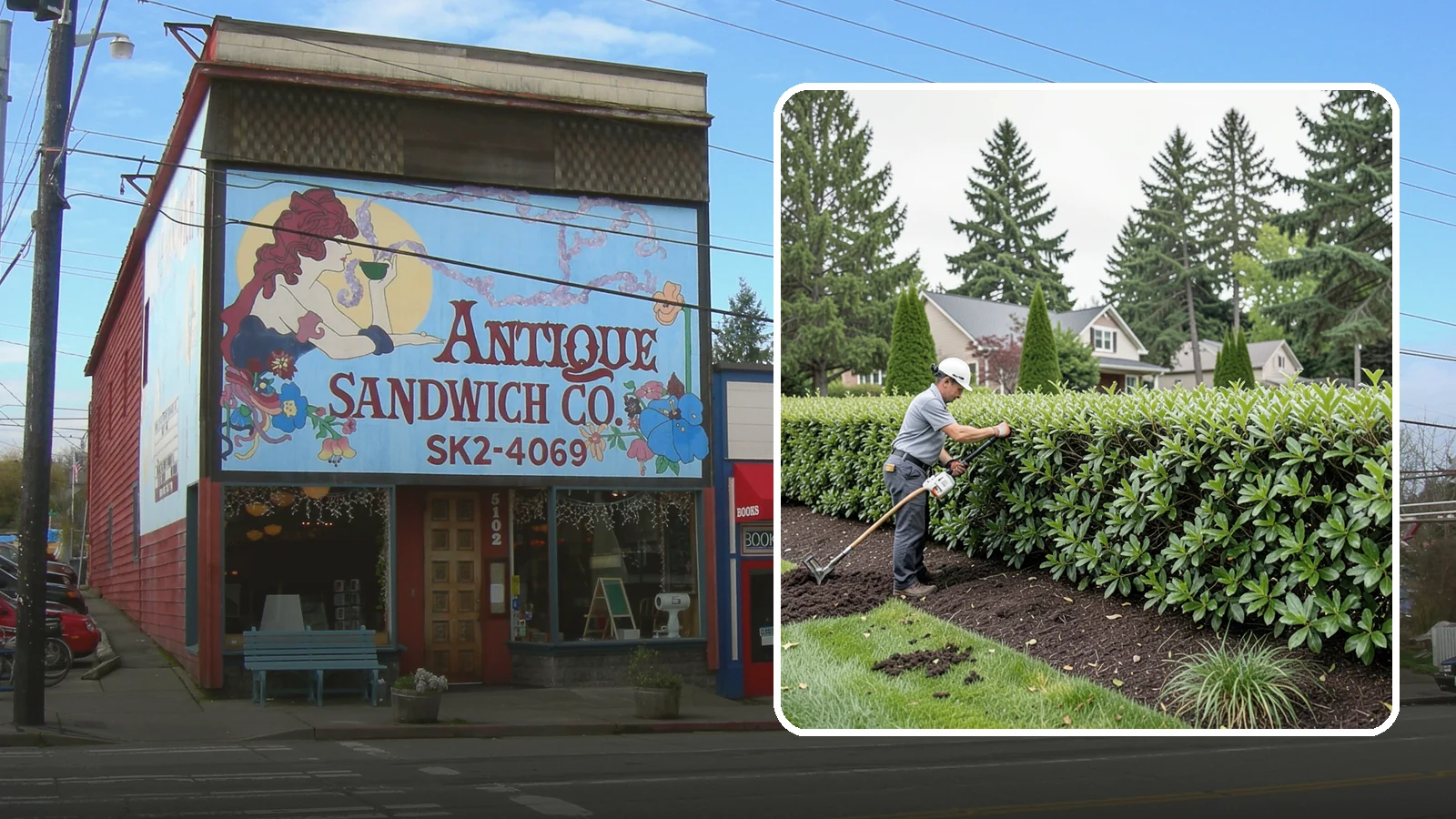
All-purpose laurel hedge trimming that controls fast broadleaf growth and restores clean, dense screening across your property line.
The laurel hedge along your property line has put on long, stiff shoots. The sides bulge, the top is uneven, and the hedge now crowds the walkway or leans toward the neighbor's yard. Bare, leafless wood may show inside where light no longer reaches.
Laurel hedge trimming in Ruston brings the hedge back to a clean, even shape and a size you can manage. Washington Landscaping has an ISA Certified Arborist on staff, which helps when a hedge has grown large or needs more than a light trim. Call or text 425-433-9444 for a free estimate.
How Laurel Hedge Trimming Works in Ruston, WA
Laurel grows fast and pushes out new shoots all season. Left alone, the outer leaves shade the inner branches. Those inner branches drop their leaves, and the hedge ends up as a thin green shell over bare wood. Regular trimming keeps light reaching deeper into the plant.
Ruston's frost-free growing season runs about 245 days, from about March 18 to November 17. That is a median from Daymet data for 2005 to 2025, so frost can come earlier or later in a given year. A long growing season means laurel has many weeks to put on growth. Many hedges need more than one cut a year to hold their shape.
Timing also depends on moisture. July and August are the dry months here, with averages of about 0.46 inches and 0.81 inches of rain. Fresh cuts leave the plant with less leaf area, and a heavy cut in a dry spell can stress it. For that reason, we usually plan heavier shaping outside the driest weeks. A hedge in a dry summer should also get regular deep watering after it is cut.
Tree canopy covers about 17.9% of Ruston, per USFS and NLCD data for 2025. That describes the city as a whole, and your yard may differ. If your hedge sits under or beside larger trees, it may get less light. Shaded laurel tends to grow leggy and thin on the lower sides, so we look at how much sun each side receives before deciding how to cut.
The work itself is plain. We trim to a line that is slightly narrower at the top than the base, so the lower leaves still get light. We cut back to sound growth where we can, and we clear the clippings. Laurel has large leaves, so we prefer cutting stems cleanly rather than shearing leaves in half, which leaves brown edges. If the hedge is badly overgrown, we talk through a staged reduction before any hard cutting.
We are licensed, bonded and insured, and estimates are free. Call or text 425-433-9444 to talk through your hedge.
Ruston yard conditions at a glance
| USDA hardiness zone (2023) | 9a |
|---|---|
| Last / first frost (median) | Mar 18 / Nov 17 |
| Tree canopy | 17.9% of the city |
| Share of rain October to April | 84% |
| Dry months (under 1.25 in) | July and August |
A year in a Ruston yard
- Late winter
- Dormant pruning for most deciduous trees and shrubs, before buds break.
- Spring
- Last frost is usually around Mar 18; in 1 year in 10 it comes on or after Apr 4. Plant frost-tender annuals and vegetables after that.
- Early summer
- Check sprinklers and drip lines before July, the start of the dry months here.
- Summer
- July and August average 0.5 in and 0.8 in. Water deeply and less often; mulch beds to hold moisture.
- Fall
- Aerate, overseed and plant trees and shrubs while the soil is warm; first frost is usually around Nov 17. Winterize irrigation before then.
- Winter
- About 28 days a year freeze at night and thaw by day: keep drains, paver joints and wall weep holes clear.
Dates are medians for the city from Daymet 2005-2025; your yard and any given year can differ.
Sources: Daymet daily weather (NASA/ORNL), 2023 USDA Plant Hardiness Zone Map data (PRISM, Oregon State University), USDA SSURGO soil survey, USGS 3DEP elevation, USFS/NLCD tree canopy 2025, US Census ACS 2020-2024.
Ruston Laurel Hedge Trimming

Local Service Information
Ruston
A very small city on Commencement Bay surrounded by Tacoma and Point Defiance.
Benefits
Reclaims fences, paths, and sightlines from overgrowth; Keeps the base full with a light-admitting taper; Reduces disease by opening interior airflow; Preserves whole leaves on visible faces; Restores a clean, uniform screening line

Process

Laurel Hedge Trimming in nearby areas
Also serving Ruston
- Building clearance pruning in Rustonat Washington Tree Services
Get a Free Laurel Hedge Trimming Estimate in Ruston
Tell us about your project. We’ll review your needs and provide a customized, no-obligation proposal.
Request a Free Consultation
Complete the form or call our team to discuss your project.
On-Site Assessment
We’ll review your property, discuss your goals, and recommend an appropriate solution.
Receive a Customized Proposal
Receive a detailed estimate outlining the proposed work and pricing.