Shaping Your Outdoors. Surpassing Expectations.

Ruston Playground Turf Installation
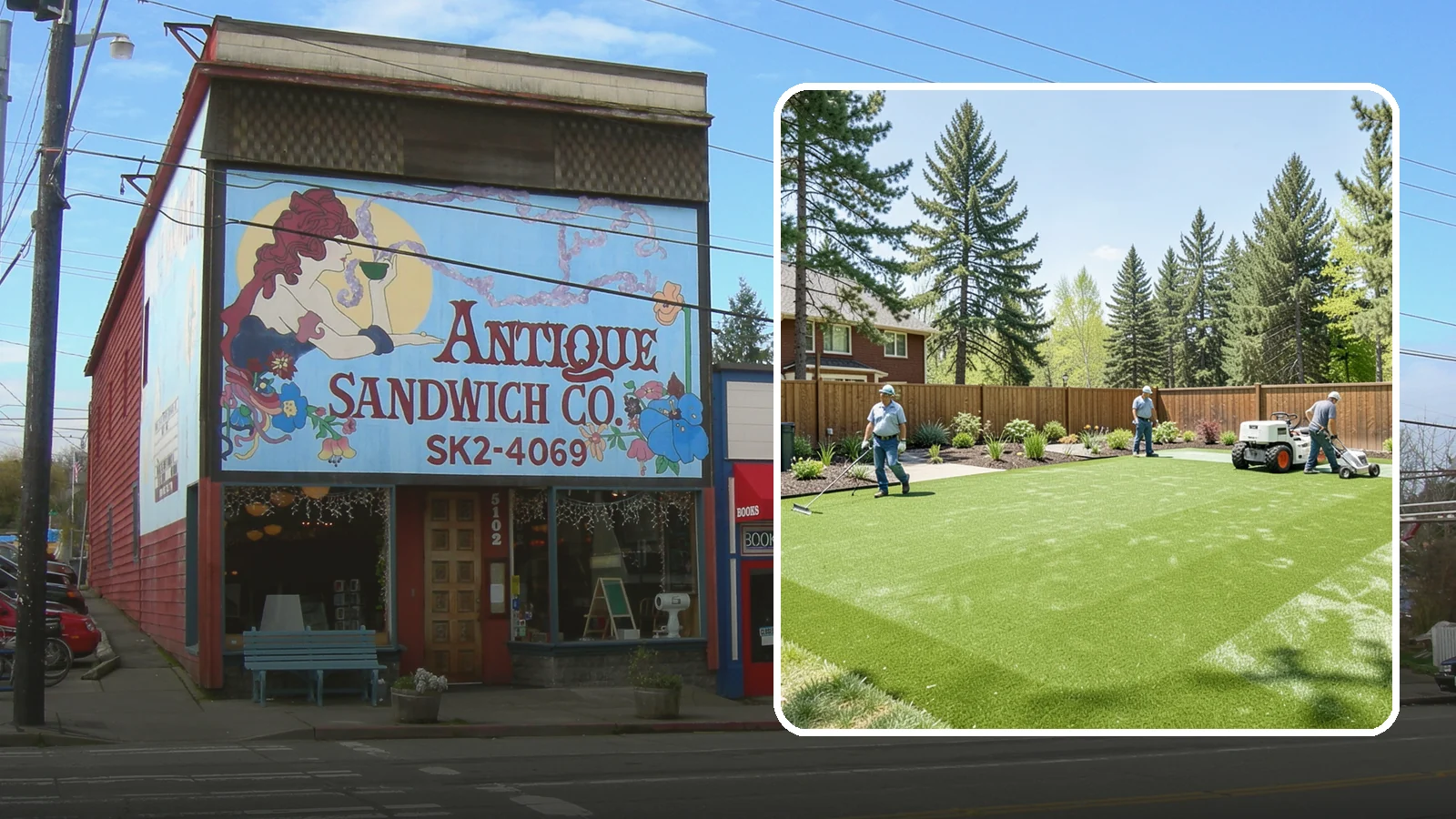
Safe, cushioned playground turf with impact padding for a soft, clean, all-weather play surface.
For playground turf in Ruston, the dry stretch of July and August is the easiest window to work in. Per Daymet data for 2005-2025, July averages about 0.46 in of rain and August about 0.81 in. Dry ground is easier to grade, compact and edge, and the base stays in the shape we leave it.
Planning can start well before that. Washington Landscaping, licensed, bonded and insured ($2M), offers free estimates, so you can settle on layout, materials and timing in spring and be ready when the ground dries out.
Planning Playground Turf in Ruston, Pierce County
Playground turf is a surface installed over a prepared base, so most of the work is underneath what you see. Planning starts with where the play equipment sits, how kids move around it, and where water will go after rain.
Drainage and the base
Ruston gets measurable rain, about 107 days a year with 0.1 in or more (Daymet, 2005-2025). A play area needs to shed that water or it stays soft and muddy. Per the USDA soil survey, about 83% of Ruston's rated land is moderately well drained, 11% is well drained and 6% is poorly drained. That describes the city as a whole. Your own yard may differ, especially if it has a low corner or compacted fill, so we look at the actual spot before deciding how deep the base should be and whether it needs added drainage.
What affects scope
Several things change the size of the job:
The area to be covered and its shape. Existing grass, roots or old surfacing that must be removed. Slope and how much grading is needed. How the edges are finished against lawn, beds or a fence. Whether swings, slides or a play structure need turf cut around posts. If a wall or major grading is part of the plan, permit needs are checked with the city before work starts.
What to expect
The work usually runs in stages: clear the area, grade it, build and compact the base, lay the turf, secure the seams and edges, then finish the perimeter. Dry weather in July and August helps the base stay firm while the turf goes down. You get a free estimate first, and financing is available subject to credit approval if you want to spread out the cost.
Practical tip: before we visit, walk the yard after a hard rain and note where water pools. Photos of those spots help us plan the base and drainage for your actual ground.
Ruston yard conditions at a glance
| Dry months (under 1.25 in) | July and August |
|---|---|
| Days with 0.1 in or more of rain | 107 a year |
| Soil drainage (rated land) | 11% well, 83% moderately well, 6% poorly drained |
| Tree canopy | 17.9% of the city |
A year in a Ruston yard
- Late winter
- Dormant pruning for most deciduous trees and shrubs, before buds break.
- Spring
- Last frost is usually around Mar 18; in 1 year in 10 it comes on or after Apr 4. Plant frost-tender annuals and vegetables after that.
- Early summer
- Check sprinklers and drip lines before July, the start of the dry months here.
- Summer
- July and August average 0.5 in and 0.8 in. Water deeply and less often; mulch beds to hold moisture.
- Fall
- Aerate, overseed and plant trees and shrubs while the soil is warm; first frost is usually around Nov 17. Winterize irrigation before then.
- Winter
- About 28 days a year freeze at night and thaw by day: keep drains, paver joints and wall weep holes clear.
Dates are medians for the city from Daymet 2005-2025; your yard and any given year can differ.
How Ruston’s soils drain
- Well drained11%
- Moderately well83%
- Poorly drained6%
Share of rated land in the USDA SSURGO soil survey; built-over ground is not rated. A soil check on your lot tells you what you have.
Sources: Daymet daily weather (NASA/ORNL), 2023 USDA Plant Hardiness Zone Map data (PRISM, Oregon State University), USDA SSURGO soil survey, USGS 3DEP elevation, USFS/NLCD tree canopy 2025, US Census ACS 2020-2024.
Ruston Playground Turf Installation

Local Service Information
Ruston
A very small city on Commencement Bay surrounded by Tacoma and Point Defiance.
Benefits
Soft, cushioned surface for falls; Meets playground safety standards; Clean and usable in any weather; No mud, no mowing; Durable for heavy play

Process
Playground Turf Installation in nearby areas
Also serving Ruston
- Pergola Construction in Rustonat Washington Construction
Get a Free Playground Turf Installation Estimate in Ruston
Tell us about your project. We’ll review your needs and provide a customized, no-obligation proposal.
Request a Free Consultation
Complete the form or call our team to discuss your project.
On-Site Assessment
We’ll review your property, discuss your goals, and recommend an appropriate solution.
Receive a Customized Proposal
Receive a detailed estimate outlining the proposed work and pricing.