Shaping Your Outdoors. Surpassing Expectations.

Ruston Tree Planting
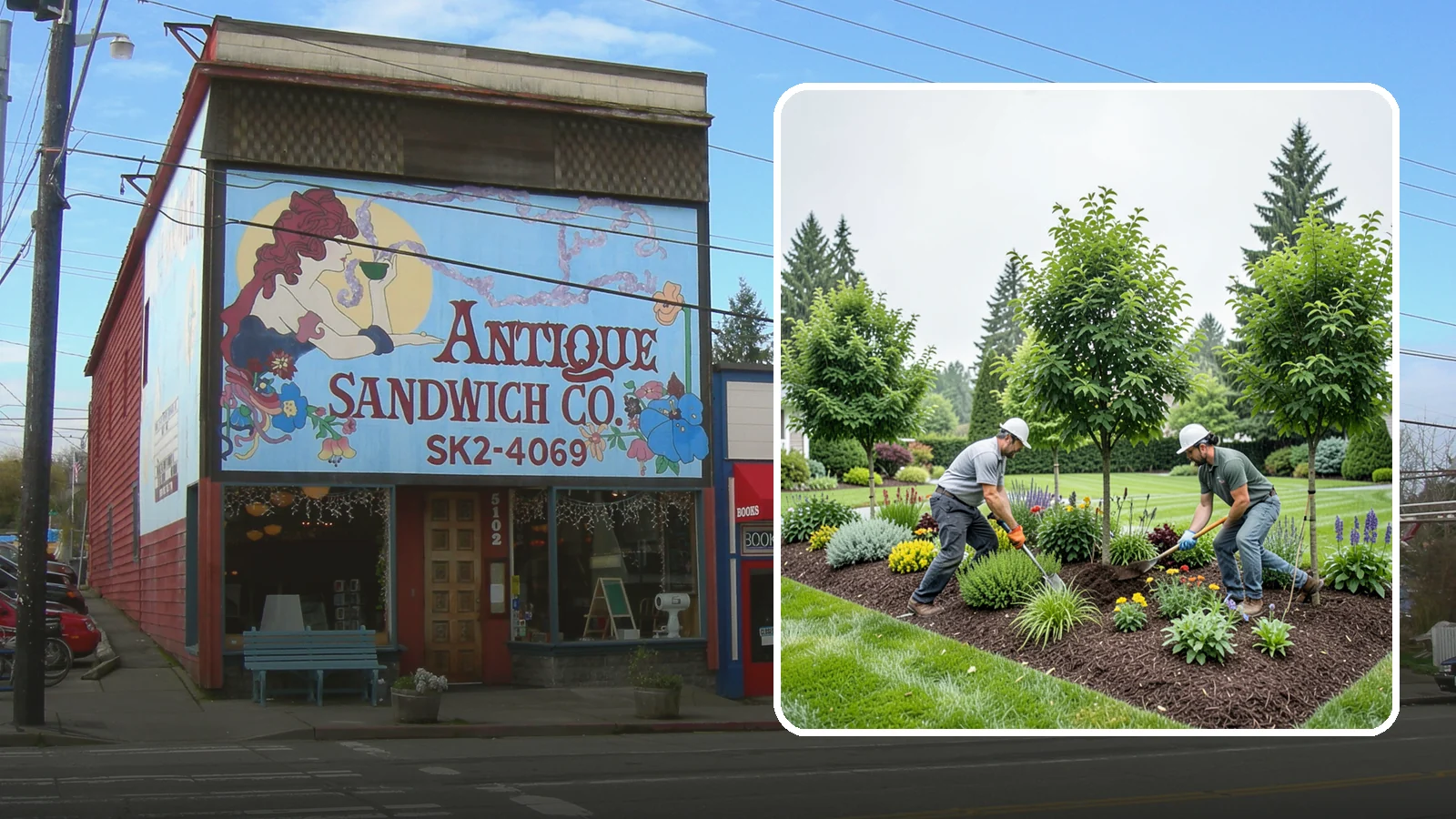
We plant healthy, well-sited trees that flourish in Puget Sound’s mild, rainy climate.
When is the right time to plant a tree in Ruston? For most trees, fall or early spring works well, because roots can settle in before the dry months. Ruston's average rainfall drops below 1.25 inches in July and August, so a tree planted in late spring has to get through that stretch with little help from the sky.
Washington Landscaping plants trees for Ruston homeowners and has an ISA Certified Arborist on staff. We can help you choose a species, pick a spot, and plan the watering that follows. Estimates are free.
Planting Trees in Ruston: Drainage, Dry Summers and Cold
A tree is a long-term addition to your yard, so a few local details are worth checking before the first hole is dug.
Check your drainage first
Per the USDA soil survey, about 83% of Ruston's rated land is moderately well drained, about 11% is well drained, and about 6% is poorly drained. Those numbers describe the city as a whole. Your own yard may differ, especially near a low spot, a downspout, or compacted fill. Poorly drained ground can hold water around the roots, and many species dislike that. We look at how water behaves on your lot, then match the tree and planting spot to it. In wetter ground, that can mean choosing a tolerant species or planting slightly high.
Plan for July and August
Daymet data for 2005 to 2025 shows July averaging about 0.46 inches of rain and August about 0.81 inches. A young tree has a small root ball and cannot reach deep moisture yet. That makes the first summers the critical period. Expect to water deeply and regularly, and a layer of mulch kept back from the trunk helps hold moisture. Planting in fall lets roots establish while the ground is cooler and wetter, which eases that first dry season.
Cold hardiness in zone 9a
The 2023 USDA map places Ruston in zone 9a, where the average coldest winter night is about 20.7 F. That is an average, and a given winter can run colder. Most common Puget Sound landscape trees fit this range, but it is still worth confirming a species' rating, particularly for less common or borderline choices.
When we plan a planting, we typically go over:
- Mature height and spread against nearby structures and wires
- Sun exposure and how your yard drains
- Species suited to zone 9a
- A watering plan for the first dry summers
Call or text 425-433-9444 to set up a free estimate. Financing is available, subject to credit approval.
Ruston yard conditions at a glance
| USDA hardiness zone (2023) | 9a |
|---|---|
| Last / first frost (median) | Mar 18 / Nov 17 |
| Late last frost (1 year in 10) | on or after Apr 4 |
| Frost-free season | about 245 days |
| Dry months (under 1.25 in) | July and August |
| Soil drainage (rated land) | 11% well, 83% moderately well, 6% poorly drained |
A year in a Ruston yard
- Late winter
- Dormant pruning for most deciduous trees and shrubs, before buds break.
- Spring
- Last frost is usually around Mar 18; in 1 year in 10 it comes on or after Apr 4. Plant frost-tender annuals and vegetables after that.
- Early summer
- Check sprinklers and drip lines before July, the start of the dry months here.
- Summer
- July and August average 0.5 in and 0.8 in. Water deeply and less often; mulch beds to hold moisture.
- Fall
- Aerate, overseed and plant trees and shrubs while the soil is warm; first frost is usually around Nov 17. Winterize irrigation before then.
- Winter
- About 28 days a year freeze at night and thaw by day: keep drains, paver joints and wall weep holes clear.
Dates are medians for the city from Daymet 2005-2025; your yard and any given year can differ.
How Ruston’s soils drain
- Well drained11%
- Moderately well83%
- Poorly drained6%
Share of rated land in the USDA SSURGO soil survey; built-over ground is not rated. A soil check on your lot tells you what you have.
Sources: Daymet daily weather (NASA/ORNL), 2023 USDA Plant Hardiness Zone Map data (PRISM, Oregon State University), USDA SSURGO soil survey, USGS 3DEP elevation, USFS/NLCD tree canopy 2025, US Census ACS 2020-2024.
Ruston Tree Planting
Local Service Information
Ruston
A very small city on Commencement Bay surrounded by Tacoma and Point Defiance.
Benefits
Expert species selection matched to your microclimate; Proper root-flare depth that prevents long-term decline; Improved drainage prep for heavy Northwest clay; Increased property value and curb appeal; Establishment guidance so your tree survives its first summer
Process
Tree Planting in nearby areas
Also serving Ruston
- Tree planting in Rustonat Washington Tree Services
Get a Free Tree Planting Estimate in Ruston
Tell us about your project. We’ll review your needs and provide a customized, no-obligation proposal.
Request a Free Consultation
Complete the form or call our team to discuss your project.
On-Site Assessment
We’ll review your property, discuss your goals, and recommend an appropriate solution.
Receive a Customized Proposal
Receive a detailed estimate outlining the proposed work and pricing.