Shaping Your Outdoors. Surpassing Expectations.

Sammamish Cobblestone Installation
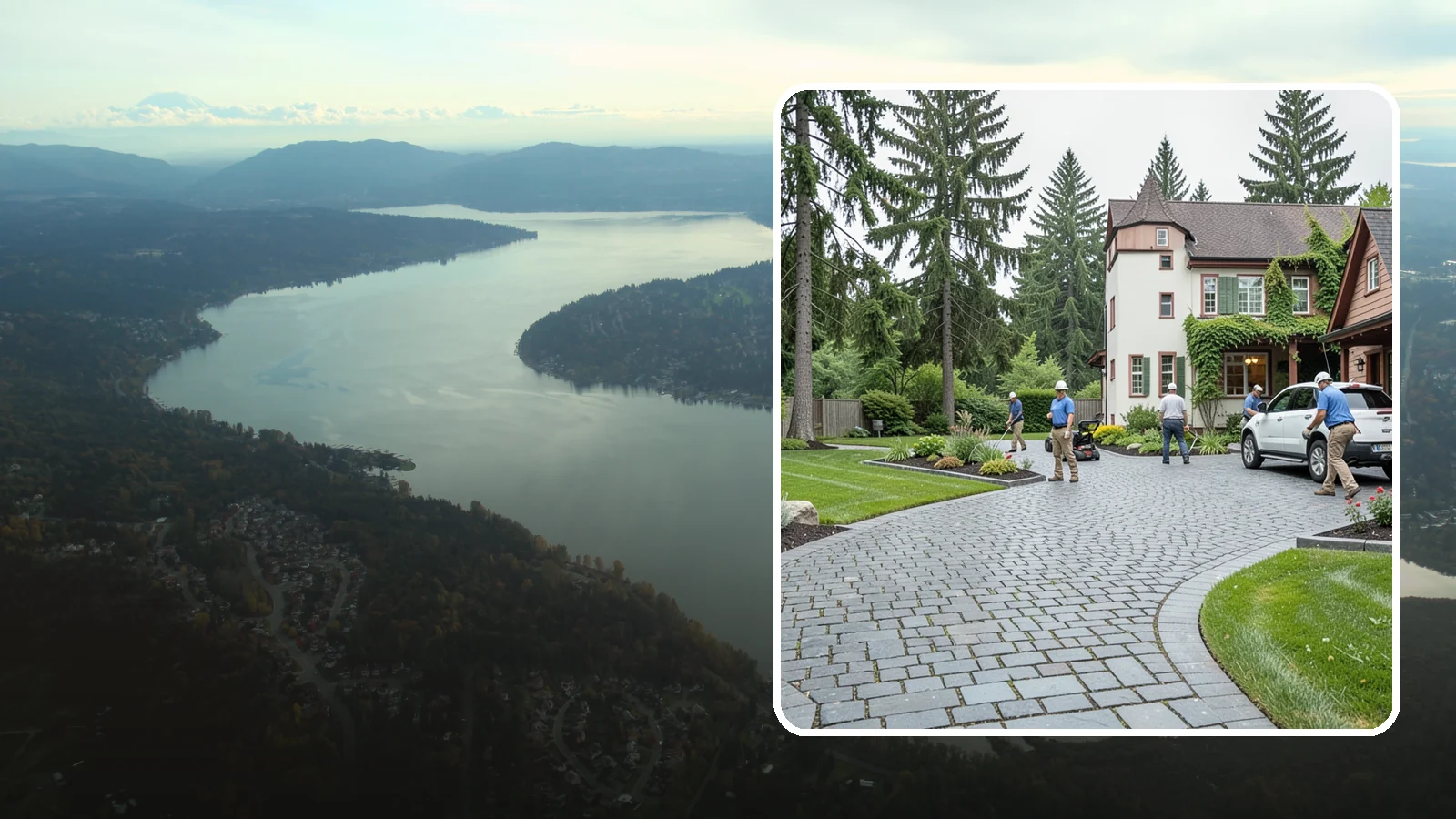
Rugged granite or basalt cobblestones set for old-world driveways, borders, and accents that endure decades of Northwest weather.
You may be looking at a worn concrete walkway, a driveway apron that has cracked, or a patio edge that looks plain next to the house. Cobblestone is one way to replace those surfaces with something that has texture, character and a clear pattern.
Washington Landscaping installs cobblestone for Sammamish homeowners who want a durable surface and an honest picture of the work. Below we explain what causes cobblestone to fail, how local weather affects the choice, and how a proper installation is built from the ground up. Estimates are free.
How Sammamish Weather Shapes Cobblestone Installation
Most cobblestone problems start below the stones. Stones that sink, tilt or open wide joints usually sit on a base that was too thin, poorly compacted or unable to drain. The stone itself rarely fails first.
Water is the main cause. Sammamish sees about 128 days a year with 0.1 inch or more of rain, per Daymet data for 2005 to 2025. That is a lot of wet days. If water collects under a paver or cobble surface, it softens the soil and shifts the base. A good installation plans for this. The surface is sloped slightly away from the house, and the base is built with compacted crushed rock that lets water pass through instead of holding it.
Freezing adds a second stress. Per Daymet, about 34 days a year in Sammamish freeze at night and thaw by day. Each cycle can expand water trapped in joints or in the base. Over time, that lifts stones and loosens edges. The count is for the city as a whole, and your yard may differ, since shaded or low spots hold moisture longer. Still, 34 cycles a year is enough that drainage and a well-compacted base matter more than the look of the stone.
The USDA lists Sammamish in zone 8b, with an average coldest winter night of about 19.8 F, and parts of the city run from 8b to 9a. That means hard, deep freezes are not the usual pattern. Moisture and repeated thaw cycles are the bigger concern for a hardscape.
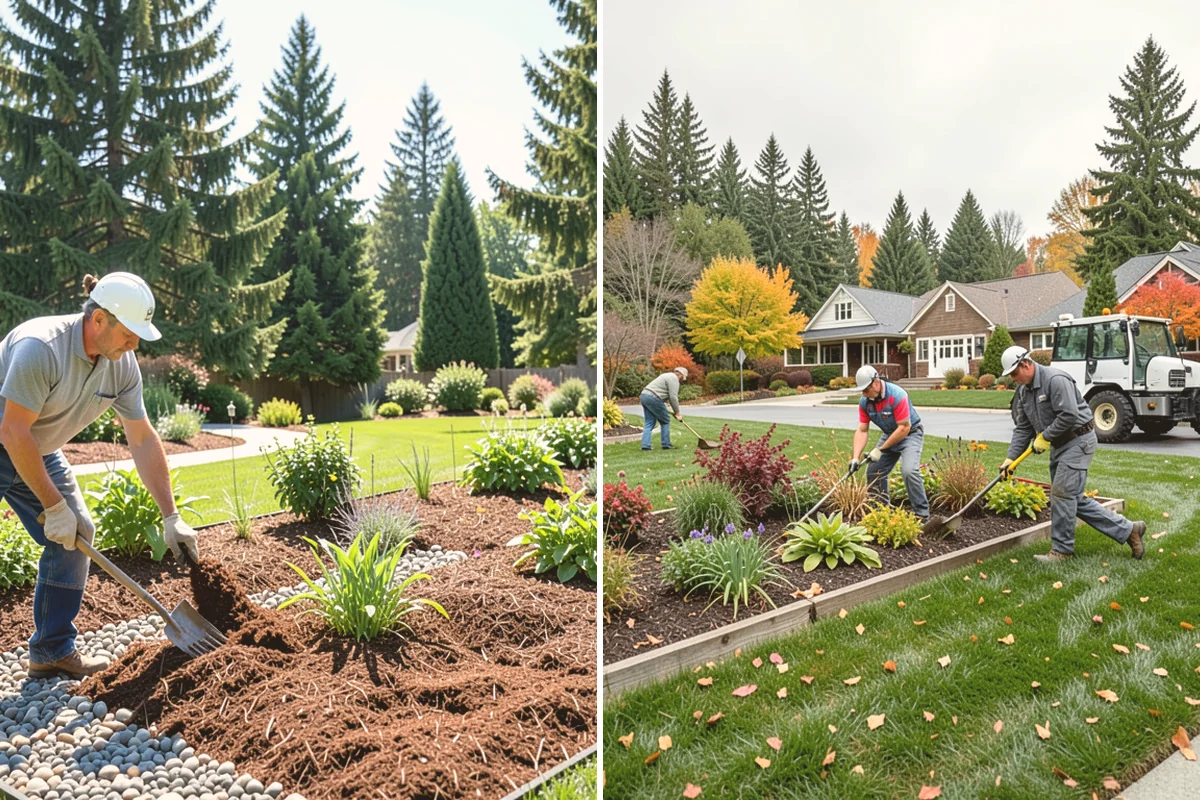
The work itself follows a set order. We mark the layout and excavate to the needed depth. We then add and compact the base in layers, set a bedding layer, and place the cobblestones in the chosen pattern. Joints are filled and the surface is compacted so it locks together. Edges are restrained so the field does not spread over time. If the project involves grading, a wall or a structure, permit needs are checked with the city before work starts.
Our hardscaping work carries a 1-year workmanship warranty. Financing is available subject to credit approval.
Sammamish yard conditions at a glance
| Days that freeze at night and thaw by day | 34 a year |
|---|---|
| Land sloping 15% or more | 19% (40% or more: 3%) |
| Days with 0.1 in or more of rain | 128 a year |
| Soil drainage (rated land) | 24% well, 72% moderately well, 4% poorly drained |
| Elevation range | 29 to 572 ft |
A year in a Sammamish yard
- Late winter
- Dormant pruning for most deciduous trees and shrubs, before buds break.
- Spring
- Last frost is usually around Mar 24; in 1 year in 10 it comes on or after Apr 10. Plant frost-tender annuals and vegetables after that.
- Early summer
- Check sprinklers and drip lines before July, the start of the dry months here.
- Summer
- July and August average 0.7 in and 1.2 in. Water deeply and less often; mulch beds to hold moisture.
- Fall
- Aerate, overseed and plant trees and shrubs while the soil is warm; first frost is usually around Nov 14. Winterize irrigation before then.
- Winter
- About 34 days a year freeze at night and thaw by day: keep drains, paver joints and wall weep holes clear.
Dates are medians for the city from Daymet 2005-2025; your yard and any given year can differ.
How Sammamish’s soils drain
- Well drained24%
- Moderately well72%
- Poorly drained4%
Share of rated land in the USDA SSURGO soil survey; built-over ground is not rated. A soil check on your lot tells you what you have.
Sources: Daymet daily weather (NASA/ORNL), 2023 USDA Plant Hardiness Zone Map data (PRISM, Oregon State University), USDA SSURGO soil survey, USGS 3DEP elevation, USFS/NLCD tree canopy 2025, US Census ACS 2020-2024.
Sammamish Cobblestone Installation
Local Service Information
Sammamish
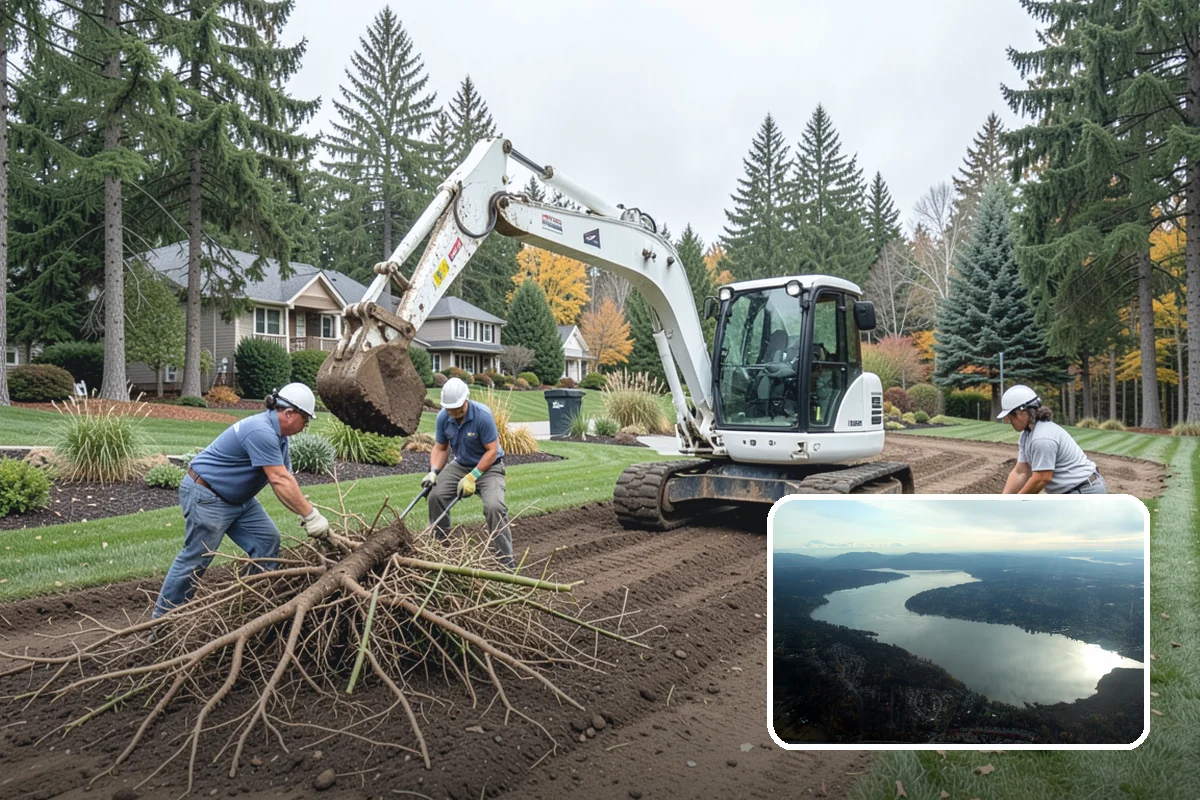
A residential plateau city on the east side of Lake Sammamish.
Benefits
Exceptional durability that lasts for generations; Handles vehicle loads on driveways and aprons; Rough faces provide traction on wet grades; Timeless, high-end European character; Ideal for borders, edging, and accent bands
Process

Also serving Sammamish
- Flagstone Patio Installation in Sammamishat Washington Construction
- Patio Algae Removal in Sammamishat Washington Pressure Washing
Get a Free Cobblestone Installation Estimate in Sammamish
Tell us about your project. We’ll review your needs and provide a customized, no-obligation proposal.
Request a Free Consultation
Complete the form or call our team to discuss your project.
On-Site Assessment
We’ll review your property, discuss your goals, and recommend an appropriate solution.
Receive a Customized Proposal
Receive a detailed estimate outlining the proposed work and pricing.