Shaping Your Outdoors. Surpassing Expectations.

Sammamish Container Gardening
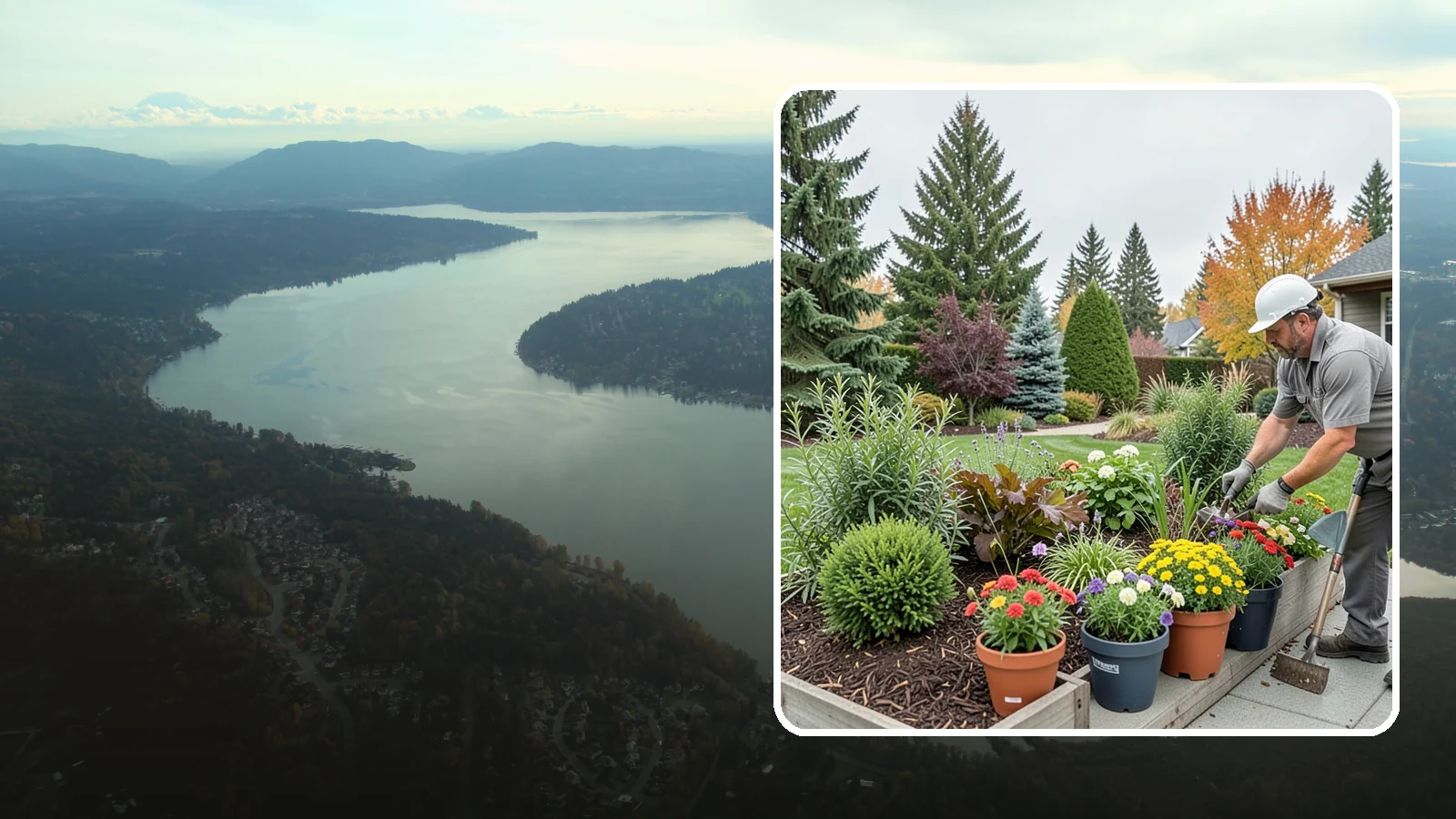
Designed container plantings that bring color and greenery to patios, entries, and small spaces.
In Sammamish, container gardening makes the most sense in spring, once the soil and nights have warmed, and again in early fall for cool-season color. Pots can also go in earlier if you are ready to move them. The first fall frost arrives on a median date of Nov 14 (Daymet, 2005-2025), so tender plants have a long run.
Washington Landscaping, based in Bothell, plans and plants containers for patios, entries and decks. This page explains how we plan a project, what changes the scope, and what to expect once work begins.
Planning Container Gardens in Sammamish, WA
Start with where the pots will sit. Note how many hours of sun the spot gets, how much wind it sees, and whether a hose is nearby. These details decide which plants will work far more than style does.
Plants and hardiness
Sammamish is USDA zone 8b, with an average coldest winter night of about 19.8 F (2023 USDA map). Parts of the city range from 8b to 9a, so your own yard may differ. Plants in containers are more exposed to cold than plants in the ground, because the roots sit above the soil line. A perennial that is fine in a bed may need a sheltered spot or a move against the house in winter. Frost dates are medians, so frost can come earlier or later in a given year. Keep covers handy in late October and November.
What affects scope
Scope depends on the number and size of containers, the material (glazed ceramic, resin, metal or wood), and the soil volume each needs. Larger pots hold moisture longer and buffer roots from temperature swings. Drainage holes matter in our wet winters, and raising pots on feet keeps water from pooling beneath them. Decorative displays with several seasons of color take more planning than a single focal pot. Irrigation also changes the job. Drip lines or a simple timer are worth discussing if you have many pots.
Watering in the dry months
July and August are the driest months here, with about 0.71 in and 1.21 in of rain on average (Daymet, 2005-2025). Containers dry out much faster than garden beds, so expect to water most pots every day or two in a warm spell. Plan the plant mix around that, or choose drought-tolerant plants for pots you will not reach often.
What to expect
We start with a free estimate, where we look at the space and talk through your goals. Then we agree on containers, plants and soil. Planting is usually quick compared with the planning. Financing is available subject to credit approval, and we are licensed, bonded and insured. Call or text 425-433-9444.
One practical tip: set each pot where you plan to keep it before filling it. Full containers are heavy and hard to move.
Sammamish yard conditions at a glance
| USDA hardiness zone (2023) | 8b (parts 8b to 9a) |
|---|---|
| Last / first frost (median) | Mar 24 / Nov 14 |
| Late last frost (1 year in 10) | on or after Apr 10 |
| Frost-free season | about 231 days |
| Dry months (under 1.25 in) | July and August |
| Soil drainage (rated land) | 24% well, 72% moderately well, 4% poorly drained |
A year in a Sammamish yard
- Late winter
- Dormant pruning for most deciduous trees and shrubs, before buds break.
- Spring
- Last frost is usually around Mar 24; in 1 year in 10 it comes on or after Apr 10. Plant frost-tender annuals and vegetables after that.
- Early summer
- Check sprinklers and drip lines before July, the start of the dry months here.
- Summer
- July and August average 0.7 in and 1.2 in. Water deeply and less often; mulch beds to hold moisture.
- Fall
- Aerate, overseed and plant trees and shrubs while the soil is warm; first frost is usually around Nov 14. Winterize irrigation before then.
- Winter
- About 34 days a year freeze at night and thaw by day: keep drains, paver joints and wall weep holes clear.
Dates are medians for the city from Daymet 2005-2025; your yard and any given year can differ.
How Sammamish’s soils drain
- Well drained24%
- Moderately well72%
- Poorly drained4%
Share of rated land in the USDA SSURGO soil survey; built-over ground is not rated. A soil check on your lot tells you what you have.
Sources: Daymet daily weather (NASA/ORNL), 2023 USDA Plant Hardiness Zone Map data (PRISM, Oregon State University), USDA SSURGO soil survey, USGS 3DEP elevation, USFS/NLCD tree canopy 2025, US Census ACS 2020-2024.
Sammamish Container Gardening

Local Service Information
Sammamish
A residential plateau city on the east side of Lake Sammamish.
Benefits
Brings greenery to patios and small spaces; Designed for balance and visual impact; Matched to your light and style; Seasonal refreshes keep it looking sharp; Perfect for renters and tight spaces
Process
Also serving Sammamish
- Privacy screen planting in Sammamishat Washington Tree Services
Get a Free Container Gardening Estimate in Sammamish
Tell us about your project. We’ll review your needs and provide a customized, no-obligation proposal.
Request a Free Consultation
Complete the form or call our team to discuss your project.
On-Site Assessment
We’ll review your property, discuss your goals, and recommend an appropriate solution.
Receive a Customized Proposal
Receive a detailed estimate outlining the proposed work and pricing.