Shaping Your Outdoors. Surpassing Expectations.

Sammamish Flowering Cherry Pruning
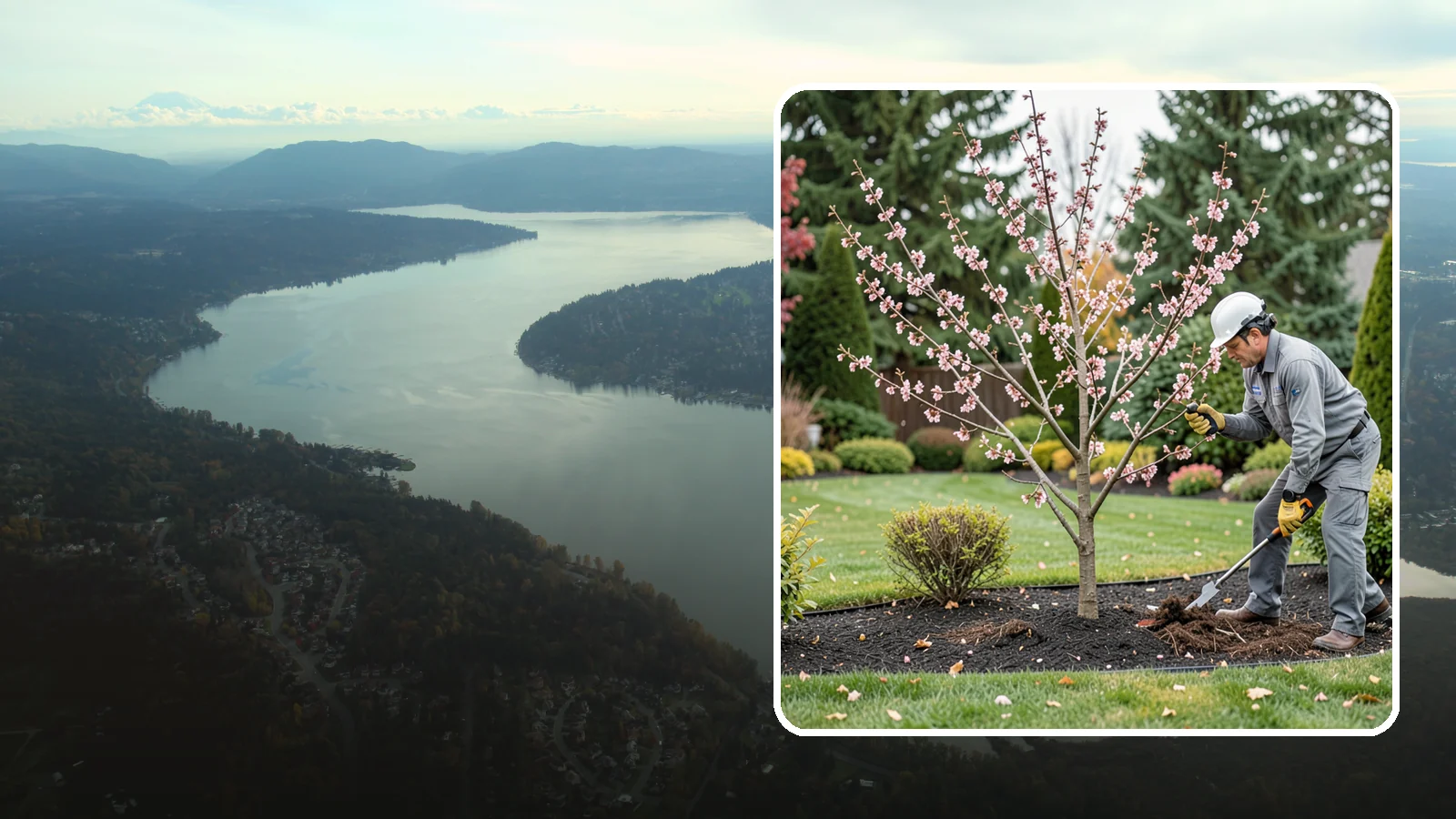
Gentle pruning for ornamental flowering cherries that protects the spring show and tree health.
For flowering cherries in Sammamish, the best pruning window is usually right after the blossoms fade in spring, or in summer once new growth has hardened. The median last spring frost here falls on Mar 24, so early spring can still bring cold snaps. Cuts made in cold, wet weather leave wounds that heal slowly.
Washington Landscaping has an ISA Certified Arborist on staff who can look at your tree and advise on timing and cuts. Call or text 425-433-9444 to ask about a free estimate.
Pruning Flowering Cherries in Sammamish: Timing and Planning
Flowering cherries bloom on wood formed the year before. Heavy pruning in winter or early spring removes flower buds. Pruning just after bloom keeps most of the display and gives the tree a full growing season to close its wounds.
Planning around frost
Per Daymet data for 2005 to 2025, the median date of the last spring frost (32 F) in Sammamish is Mar 24. In 1 spring in 10, the last frost comes on or after Apr 10. These are medians and frost can come earlier or later in a given year. Plan to prune after bloom, and do not rush into a cold, wet stretch. Cherries are also prone to disease entering through wounds, so dry weather is the better choice for cuts.
What affects the scope
Scope depends on the tree itself. Size and height matter most, since a tall tree may need climbing or lift access. Age and condition matter too. A tree with dead wood, crossing limbs, or old poorly made cuts needs more work than a young, well-shaped one. Access to the tree, nearby power lines, structures and how much debris must be hauled away also change the job.
Your USDA hardiness zone is 8b, with parts of the city ranging from 8b to 9a. Most flowering cherries handle that range well. Your own yard may differ from the city as a whole, and a tree in a cold, shaded spot may show more winter damage to prune out.
What to expect
A visit starts with a look at the tree's structure. Pruning usually removes dead, damaged and rubbing branches first. Then it thins crowded growth so light and air reach the interior. Good pruning keeps the tree's natural shape. Cuts are made at the branch collar, and flush cuts and topping are avoided. Large cuts are kept to a minimum because cherries heal slowly. We offer free estimates, so you can see the plan before work starts.
Practical tip: in late winter, mark or photograph the branches you want to keep for bloom, then walk the tree again after flowering. It is much easier to see what to remove once the petals have dropped.
Sammamish yard conditions at a glance
| USDA hardiness zone (2023) | 8b (parts 8b to 9a) |
|---|---|
| Last / first frost (median) | Mar 24 / Nov 14 |
| Tree canopy | 40.6% of the city |
| Share of rain October to April | 80% |
| Dry months (under 1.25 in) | July and August |
A year in a Sammamish yard
- Late winter
- Dormant pruning for most deciduous trees and shrubs, before buds break.
- Spring
- Last frost is usually around Mar 24; in 1 year in 10 it comes on or after Apr 10. Plant frost-tender annuals and vegetables after that.
- Early summer
- Check sprinklers and drip lines before July, the start of the dry months here.
- Summer
- July and August average 0.7 in and 1.2 in. Water deeply and less often; mulch beds to hold moisture.
- Fall
- Aerate, overseed and plant trees and shrubs while the soil is warm; first frost is usually around Nov 14. Winterize irrigation before then.
- Winter
- About 34 days a year freeze at night and thaw by day: keep drains, paver joints and wall weep holes clear.
Dates are medians for the city from Daymet 2005-2025; your yard and any given year can differ.
Sources: Daymet daily weather (NASA/ORNL), 2023 USDA Plant Hardiness Zone Map data (PRISM, Oregon State University), USDA SSURGO soil survey, USGS 3DEP elevation, USFS/NLCD tree canopy 2025, US Census ACS 2020-2024.
Sammamish Flowering Cherry Pruning
Local Service Information
Sammamish
A residential plateau city on the east side of Lake Sammamish.
Benefits
Protects the spring bloom display; Light, well-timed cuts after flowering; Better air circulation and health; Deadwood and suckers removed; Graceful form maintained

Process

Also serving Sammamish
- Vista pruning in Sammamishat Washington Tree Services
Get a Free Flowering Cherry Pruning Estimate in Sammamish
Tell us about your project. We’ll review your needs and provide a customized, no-obligation proposal.
Request a Free Consultation
Complete the form or call our team to discuss your project.
On-Site Assessment
We’ll review your property, discuss your goals, and recommend an appropriate solution.
Receive a Customized Proposal
Receive a detailed estimate outlining the proposed work and pricing.