Shaping Your Outdoors. Surpassing Expectations.

Sammamish Forsythia Pruning
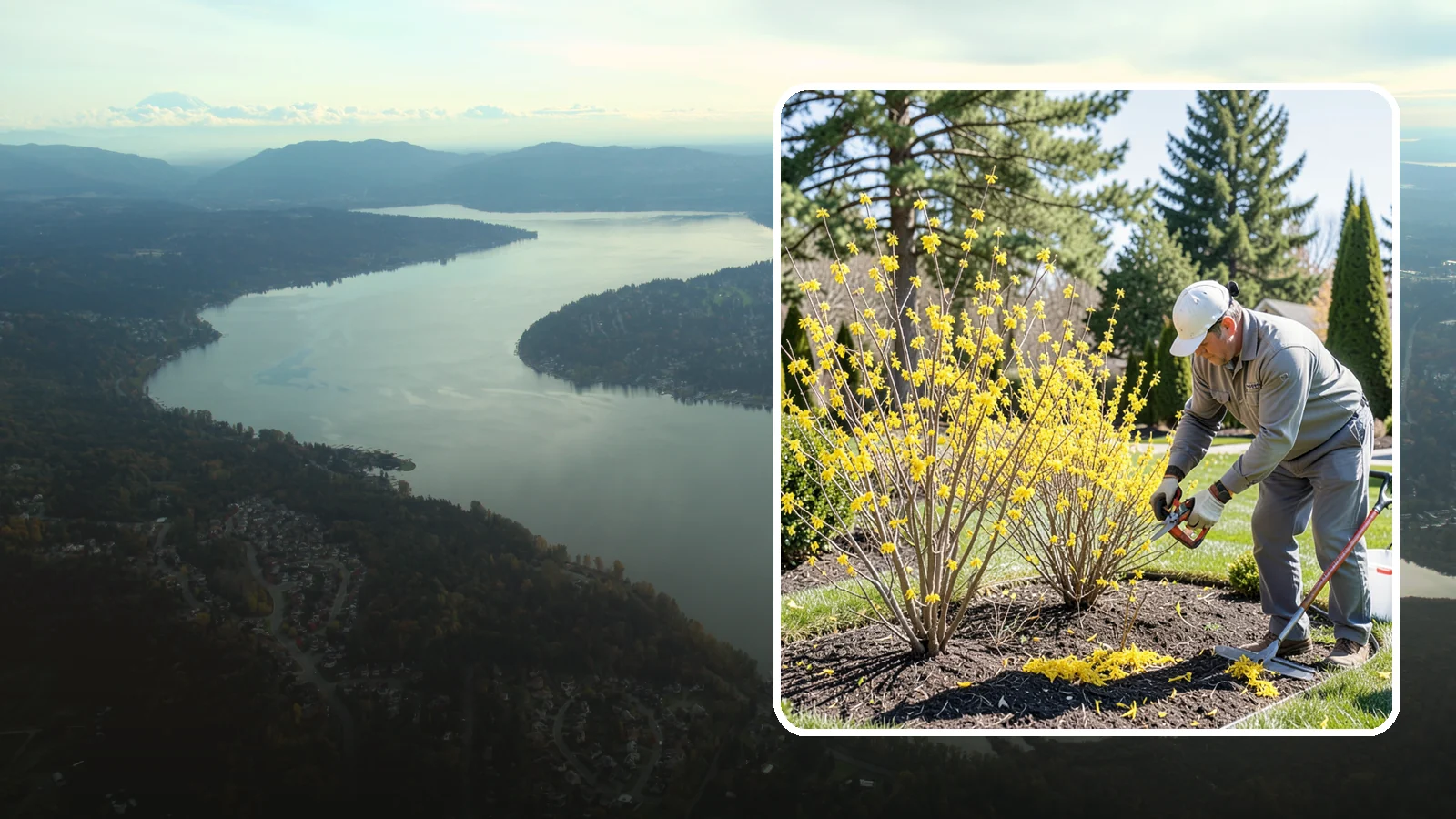
Post-bloom renewal pruning of forsythia to remove old canes, control size, and protect next spring’s golden flowers.
The best time to prune forsythia in Sammamish is right after it finishes blooming, usually in spring. Forsythia sets its flower buds on last year's wood, so pruning in late summer, fall or winter removes the next show of yellow flowers.
Washington Landscaping prunes forsythia to control size, thin crowded stems and renew tired shrubs. Our team includes an ISA Certified Arborist. Call or text 425-433-9444 for a free estimate.
Planning Forsythia Pruning in Sammamish, WA
Start with the calendar. In Sammamish the median last spring frost (32 F) falls on Mar 24, per Daymet data for 2005-2025. Forsythia often blooms around then or earlier. Frost can come earlier or later in a given year, so bloom time shifts. The cue to watch is the shrub itself. When the yellow fades, pruning can begin.
What affects the scope
The main factor is how overgrown the shrub is. A plant that has been trimmed lightly each year needs only a tidy-up. A neglected one with thick, tangled, bare-centered stems needs renewal work.
Standard practice for renewal is to remove about a third of the oldest, thickest stems at the base each year. Cutting them to the ground opens the center to light and pushes up fresh canes. Over about three years, the whole shrub is renewed without losing every flower in one season.
Other things shape the job:
Location matters. A hedge along a fence line, a shrub near a walkway and a specimen on a slope all call for different cuts. Access also matters, since tight side yards take longer to work and haul out of.
Hardiness is rarely a concern. Sammamish is USDA zone 8b per the 2023 map, with parts of the city ranging from 8b to 9a, and forsythia is a tough shrub in that range. Your own yard may differ, but winter cold seldom limits pruning decisions here. Timing and shape matter more.
What to expect
We cut to a branch junction or to the ground rather than shearing the tops flat. Shearing leaves a dense shell of growth with a bare interior and a stiff look. Natural, arching form is the goal for forsythia. After pruning, expect a plainer shrub for a few weeks. New shoots usually fill in through the growing season, which runs about 231 days here, from about Mar 24 to Nov 14 (median, Daymet 2005-2025). Branches pruned in spring have a long stretch to regrow and set next year's buds.
We haul away the cuttings unless you ask otherwise, and we can check scope on site during a free estimate.
Practical tip: take a photo of the shrub in bloom. Once the leaves come in, it is hard to remember which stems carried flowers and which are thin or dead.
Sammamish yard conditions at a glance
| USDA hardiness zone (2023) | 8b (parts 8b to 9a) |
|---|---|
| Last / first frost (median) | Mar 24 / Nov 14 |
| Tree canopy | 40.6% of the city |
| Share of rain October to April | 80% |
| Dry months (under 1.25 in) | July and August |
A year in a Sammamish yard
- Late winter
- Dormant pruning for most deciduous trees and shrubs, before buds break.
- Spring
- Last frost is usually around Mar 24; in 1 year in 10 it comes on or after Apr 10. Plant frost-tender annuals and vegetables after that.
- Early summer
- Check sprinklers and drip lines before July, the start of the dry months here.
- Summer
- July and August average 0.7 in and 1.2 in. Water deeply and less often; mulch beds to hold moisture.
- Fall
- Aerate, overseed and plant trees and shrubs while the soil is warm; first frost is usually around Nov 14. Winterize irrigation before then.
- Winter
- About 34 days a year freeze at night and thaw by day: keep drains, paver joints and wall weep holes clear.
Dates are medians for the city from Daymet 2005-2025; your yard and any given year can differ.
Sources: Daymet daily weather (NASA/ORNL), 2023 USDA Plant Hardiness Zone Map data (PRISM, Oregon State University), USDA SSURGO soil survey, USGS 3DEP elevation, USFS/NLCD tree canopy 2025, US Census ACS 2020-2024.
Sammamish Forsythia Pruning
Local Service Information
Sammamish
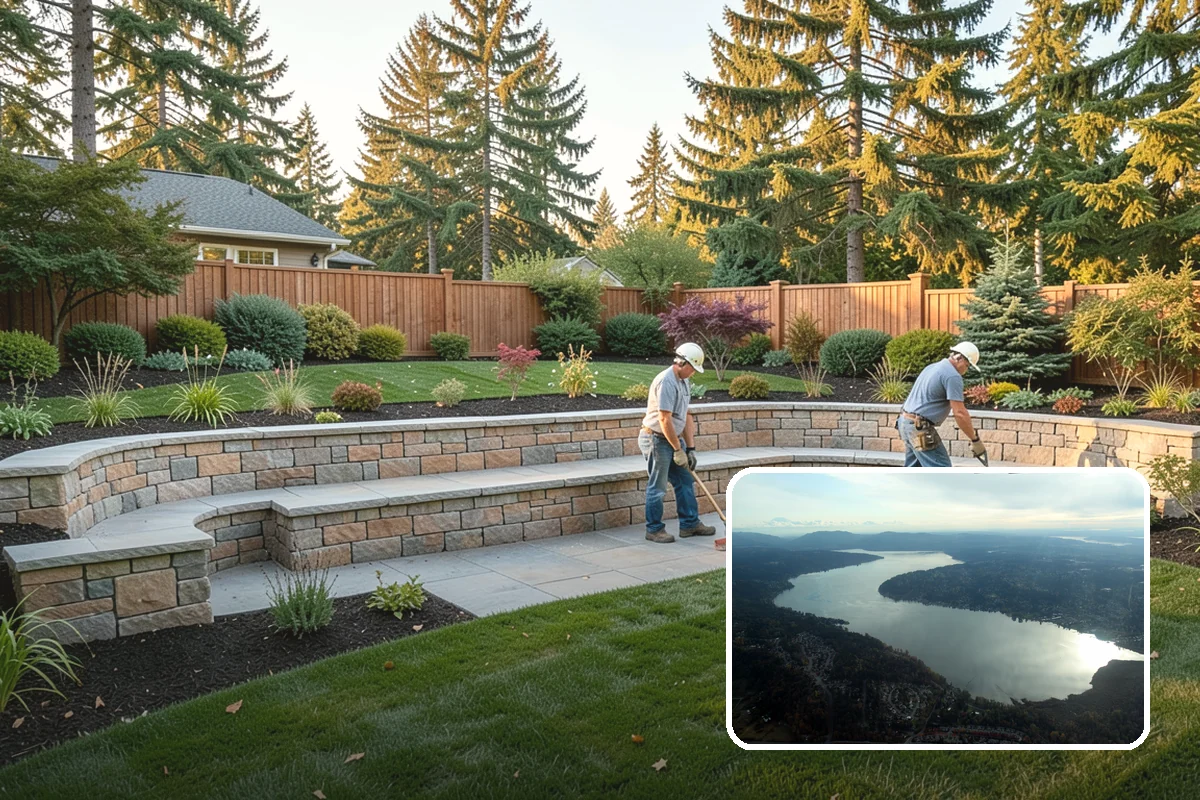
A residential plateau city on the east side of Lake Sammamish.
Benefits
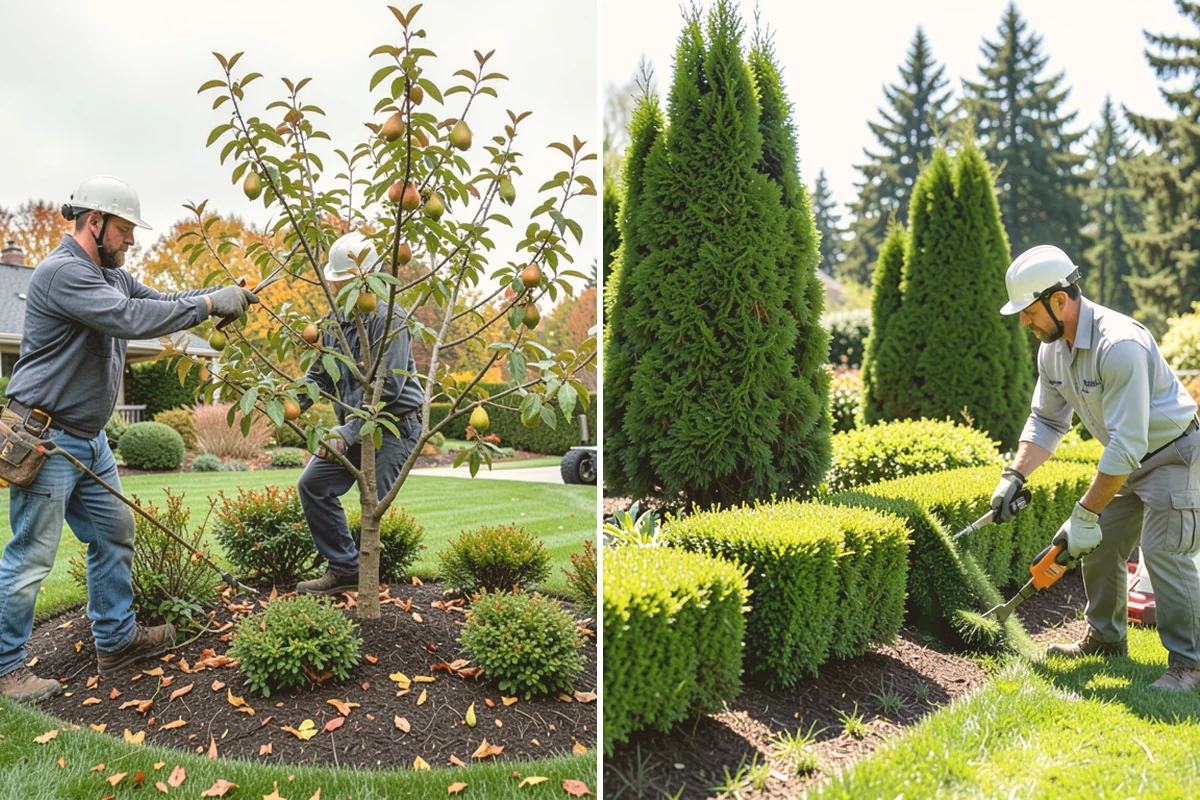
Protects next spring’s golden blooms by pruning right after flowering; Renews the shrub by removing the oldest canes at the base; Prevents the tangled, overgrown habit of neglected plants; Maintains a graceful arching form instead of a sheared blob; Improves airflow and overall plant vigor
Process
Also serving Sammamish
- Shrub pruning in Sammamishat Washington Tree Services
Get a Free Forsythia Pruning Estimate in Sammamish
Tell us about your project. We’ll review your needs and provide a customized, no-obligation proposal.
Request a Free Consultation
Complete the form or call our team to discuss your project.
On-Site Assessment
We’ll review your property, discuss your goals, and recommend an appropriate solution.
Receive a Customized Proposal
Receive a detailed estimate outlining the proposed work and pricing.