Shaping Your Outdoors. Surpassing Expectations.

Sammamish French Drain Installation
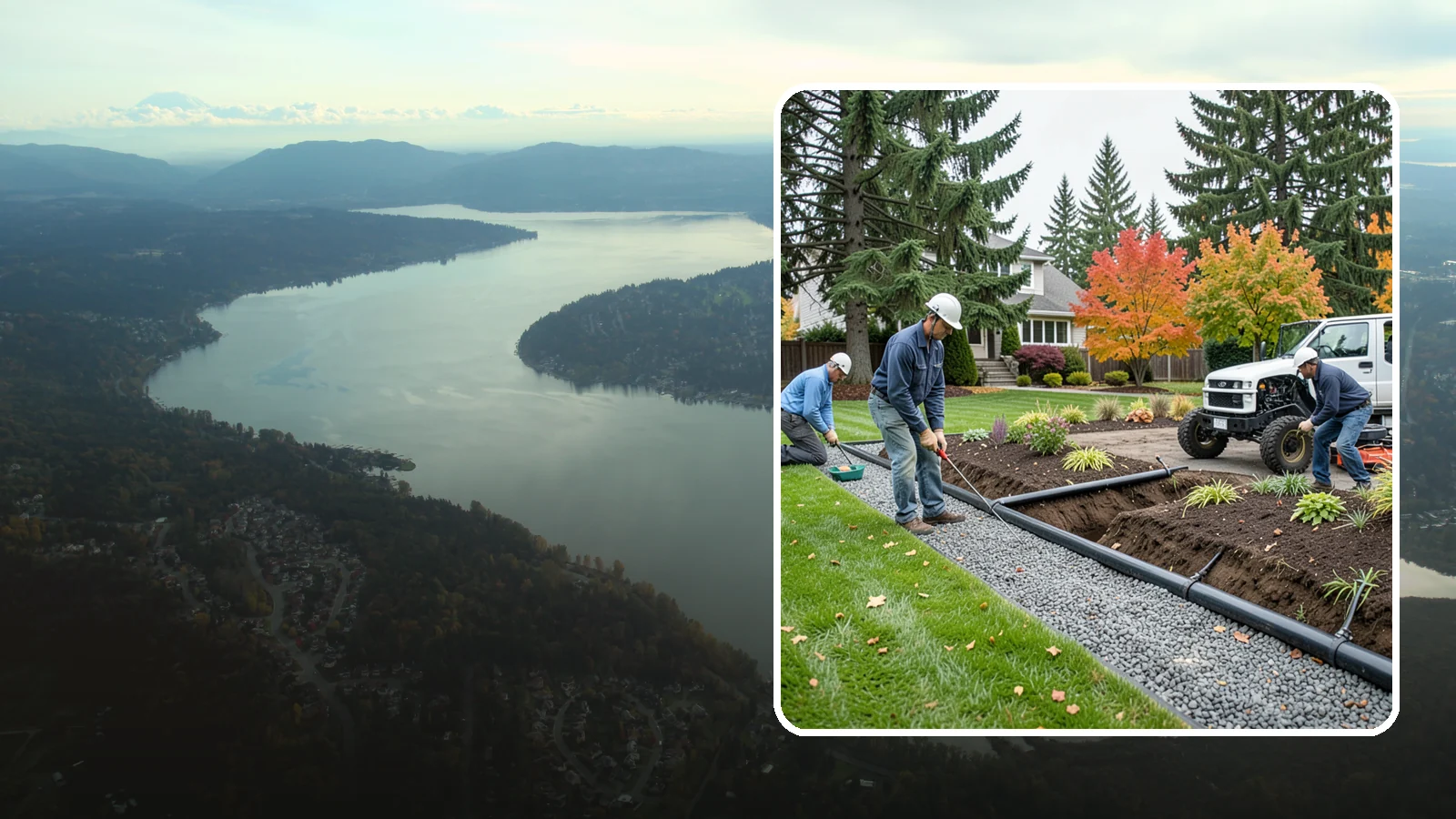
Gravel-and-pipe French drains that collect and carry subsurface water away from wet, soggy areas.
Water pools in the lawn a day after the rain stops. The crawlspace smells damp, or a patch beside the patio stays soggy while the rest of the yard dries out. These are the usual reasons homeowners start looking at a French drain.
A French drain is a buried, sloped trench with perforated pipe in gravel. It gives extra water a path to leave. Washington Landscaping has installed drainage since 2004, and we can look at your yard and talk through options with a free estimate.
How French Drains Fit Drainage Conditions in Sammamish
Standing water usually has a simple cause. Rain or runoff arrives faster than the soil can absorb it, and the water has nowhere to go. Compacted ground, a flat spot, a downspout that empties near the house, or a slope that sends water toward a wall can all do this.
Local numbers give some context. Per the USDA soil survey, poorly drained soils cover about 4% of Sammamish's rated land. That figure describes the city as a whole. Most of the rated land is not in that category, so a wet yard here may come from grading, roof runoff or a compacted layer rather than the native soil. Your own yard may differ from the city figure, which is why we look at the site itself.
Rain pattern matters too. Daymet records for 2005 to 2025 show about 52 inches of rain a year in Sammamish. Only about 5.8 days a year bring an inch or more. About 128 days bring 0.1 inch or more. For a yard, that means frequent, steady wetting more than a few big storms. A spot that never fully dries between rains is a good sign a drain may help.
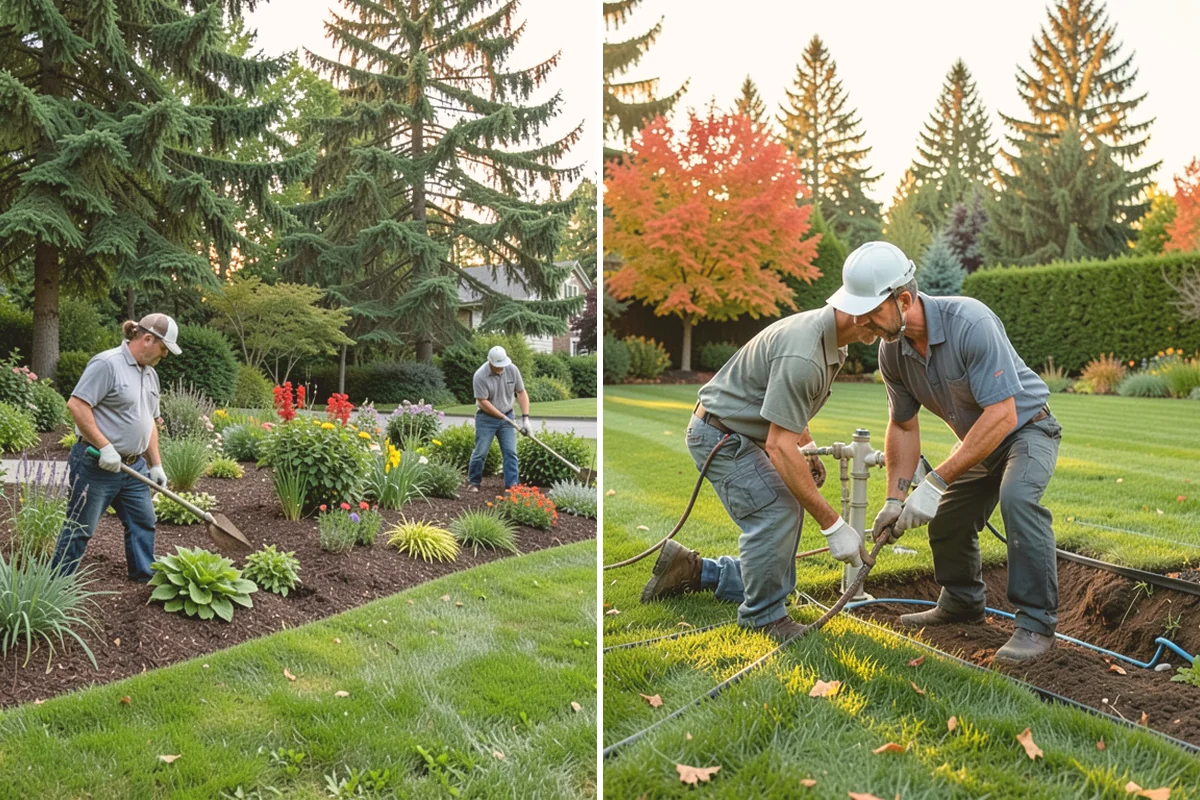
The work itself is straightforward. We first find where the water collects and where it can safely go. Then we dig a trench with a steady downhill slope, line it with filter fabric, set perforated pipe in clean gravel, and cover it. The fabric keeps fine soil out of the gravel. The outlet matters as much as the trench, so the pipe has to end somewhere that does not create a new problem for you or a neighbor.
If the plan involves grading changes or structures, we check permit needs with the city before work starts. We are licensed, bonded and insured, and financing is available subject to credit approval. To set up a free estimate, call or text 425-433-9444.
Sammamish yard conditions at a glance
| Soil drainage (rated land) | 24% well, 72% moderately well, 4% poorly drained |
|---|---|
| Days with 1 in or more of rain | 5.8 a year |
| Share of rain October to April | 80% |
| Land sloping 15% or more | 19% (40% or more: 3%) |
| Average yearly precipitation | 52 in |
A year in a Sammamish yard
- Late winter
- Dormant pruning for most deciduous trees and shrubs, before buds break.
- Spring
- Last frost is usually around Mar 24; in 1 year in 10 it comes on or after Apr 10. Plant frost-tender annuals and vegetables after that.
- Early summer
- Check sprinklers and drip lines before July, the start of the dry months here.
- Summer
- July and August average 0.7 in and 1.2 in. Water deeply and less often; mulch beds to hold moisture.
- Fall
- Aerate, overseed and plant trees and shrubs while the soil is warm; first frost is usually around Nov 14. Winterize irrigation before then.
- Winter
- About 34 days a year freeze at night and thaw by day: keep drains, paver joints and wall weep holes clear.
Dates are medians for the city from Daymet 2005-2025; your yard and any given year can differ.
How Sammamish’s soils drain
- Well drained24%
- Moderately well72%
- Poorly drained4%
Share of rated land in the USDA SSURGO soil survey; built-over ground is not rated. A soil check on your lot tells you what you have.
Sources: Daymet daily weather (NASA/ORNL), 2023 USDA Plant Hardiness Zone Map data (PRISM, Oregon State University), USDA SSURGO soil survey, USGS 3DEP elevation, USFS/NLCD tree canopy 2025, US Census ACS 2020-2024.
Sammamish French Drain Installation
Local Service Information
Sammamish
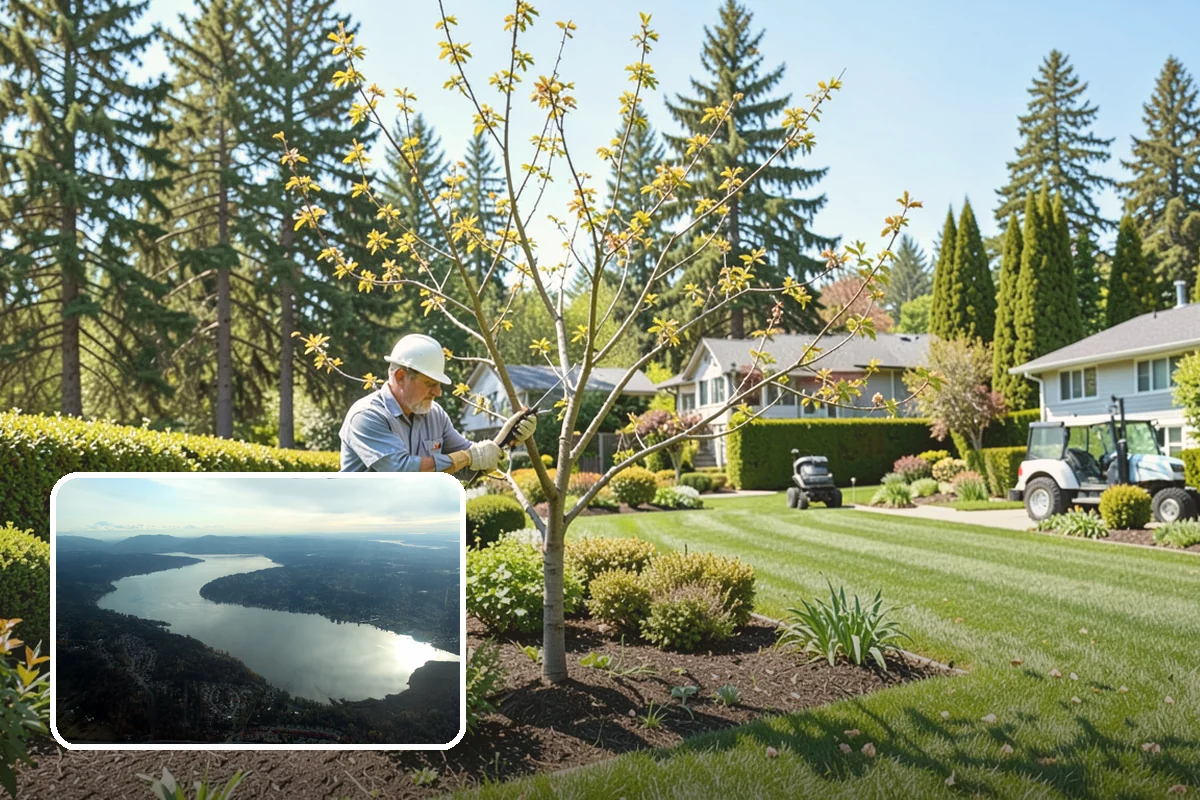
A residential plateau city on the east side of Lake Sammamish.
Benefits
Solves chronic soggy and wet areas; Collects and carries subsurface water; Filter fabric prevents silt clogging; Routed to a safe outfall; Long-lasting, low-maintenance fix
Process
Also serving Sammamish
- Slab Foundation Installation in Sammamishat Washington Construction
Get a Free French Drain Installation Estimate in Sammamish
Tell us about your project. We’ll review your needs and provide a customized, no-obligation proposal.
Request a Free Consultation
Complete the form or call our team to discuss your project.
On-Site Assessment
We’ll review your property, discuss your goals, and recommend an appropriate solution.
Receive a Customized Proposal
Receive a detailed estimate outlining the proposed work and pricing.