Shaping Your Outdoors. Surpassing Expectations.

Sammamish Hydrangea Pruning
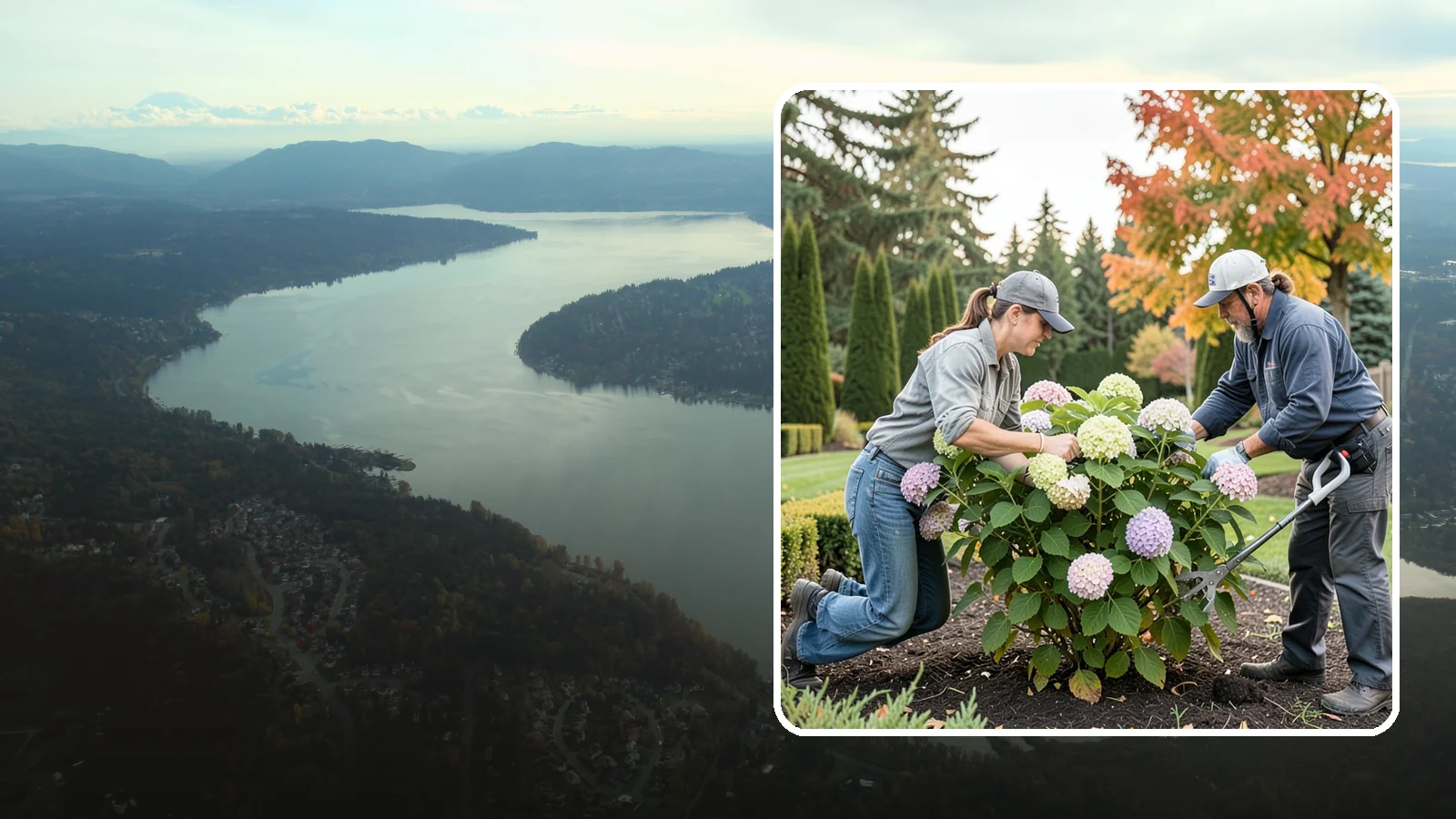
Type-specific hydrangea pruning that matches each variety’s bloom-wood habit to maximize flowering in the Northwest.
Your hydrangea has gone leggy, or it leafed out in spring but gave you few blooms last summer. Maybe the stems are tangled, with dead wood mixed in with the live. Most of the time the cause is the timing or the type of cut, not the plant itself.
Washington Landscaping prunes hydrangeas in Sammamish with a clear plan for each variety. We have an ISA Certified Arborist on staff, and estimates are free. Call or text 425-433-9444 to set up a visit.
Pruning Hydrangeas in Sammamish: Timing, Frost and Variety
Poor flowering after pruning usually comes down to one question: does your hydrangea bloom on old wood or new wood? Bigleaf and oakleaf types set flower buds on last year's stems. Cut them hard in late winter and you remove the blooms before they open. Panicle and smooth hydrangeas bloom on new growth, so they handle a late-winter cut well. We start by identifying which kind you have, because the right cut depends on it.
Why frost timing matters here
Sammamish sits in USDA zone 8b, with parts of the city running from 8b to 9a. The average coldest winter night is about 19.8 F. Your own yard may be warmer or colder than that, depending on slope, shelter and exposure. Frost dates are medians, so a given year can differ.
Two numbers shape the schedule. In 1 spring in 10, the last frost comes on or after Apr 10 (Daymet, 2005-2025). That is why we don't rush to cut back old-wood types early. Swollen buds and new shoots are easy to damage, and frost can still arrive after they start to grow. Old stems also give some protection to the buds below them. The median first fall frost is Nov 14. Heavy pruning late in the season can push tender growth that has little time to harden off, so we keep fall work light.
What the work looks like
For old-wood hydrangeas, we remove dead stems and any damaged tips once new buds show which wood is alive. We also thin a few of the oldest canes at the base to open up the shrub. For new-wood types, we cut back to a healthy framework in late winter and shorten stems to a set height. Throughout, we make clean cuts just above a bud or branch junction. We don't shear the plant into a ball, since that tends to make a dense outer layer with few blooms.
If you are unsure what type you have, or the plant has been cut wrongly for years, we can plan a recovery over a couple of seasons instead of one drastic cut. Washington Landscaping is licensed, bonded and insured, and we offer free estimates.
Sammamish yard conditions at a glance
| USDA hardiness zone (2023) | 8b (parts 8b to 9a) |
|---|---|
| Last / first frost (median) | Mar 24 / Nov 14 |
| Tree canopy | 40.6% of the city |
| Share of rain October to April | 80% |
| Dry months (under 1.25 in) | July and August |
A year in a Sammamish yard
- Late winter
- Dormant pruning for most deciduous trees and shrubs, before buds break.
- Spring
- Last frost is usually around Mar 24; in 1 year in 10 it comes on or after Apr 10. Plant frost-tender annuals and vegetables after that.
- Early summer
- Check sprinklers and drip lines before July, the start of the dry months here.
- Summer
- July and August average 0.7 in and 1.2 in. Water deeply and less often; mulch beds to hold moisture.
- Fall
- Aerate, overseed and plant trees and shrubs while the soil is warm; first frost is usually around Nov 14. Winterize irrigation before then.
- Winter
- About 34 days a year freeze at night and thaw by day: keep drains, paver joints and wall weep holes clear.
Dates are medians for the city from Daymet 2005-2025; your yard and any given year can differ.
Sources: Daymet daily weather (NASA/ORNL), 2023 USDA Plant Hardiness Zone Map data (PRISM, Oregon State University), USDA SSURGO soil survey, USGS 3DEP elevation, USFS/NLCD tree canopy 2025, US Census ACS 2020-2024.
Sammamish Hydrangea Pruning

Local Service Information
Sammamish
A residential plateau city on the east side of Lake Sammamish.
Benefits
Maximizes bloom count by pruning each type according to its bloom wood; Prevents the classic mistake of cutting off next season’s flowers; Controls size while maintaining strong stems that resist flopping; Removes winter-killed and weak wood for a cleaner plant; Improves flower size on new-wood varieties through renewal cuts

Process
Also serving Sammamish
- Shrub pruning in Sammamishat Washington Tree Services
Get a Free Hydrangea Pruning Estimate in Sammamish
Tell us about your project. We’ll review your needs and provide a customized, no-obligation proposal.
Request a Free Consultation
Complete the form or call our team to discuss your project.
On-Site Assessment
We’ll review your property, discuss your goals, and recommend an appropriate solution.
Receive a Customized Proposal
Receive a detailed estimate outlining the proposed work and pricing.