Shaping Your Outdoors. Surpassing Expectations.

Sammamish Lawn Dethatching
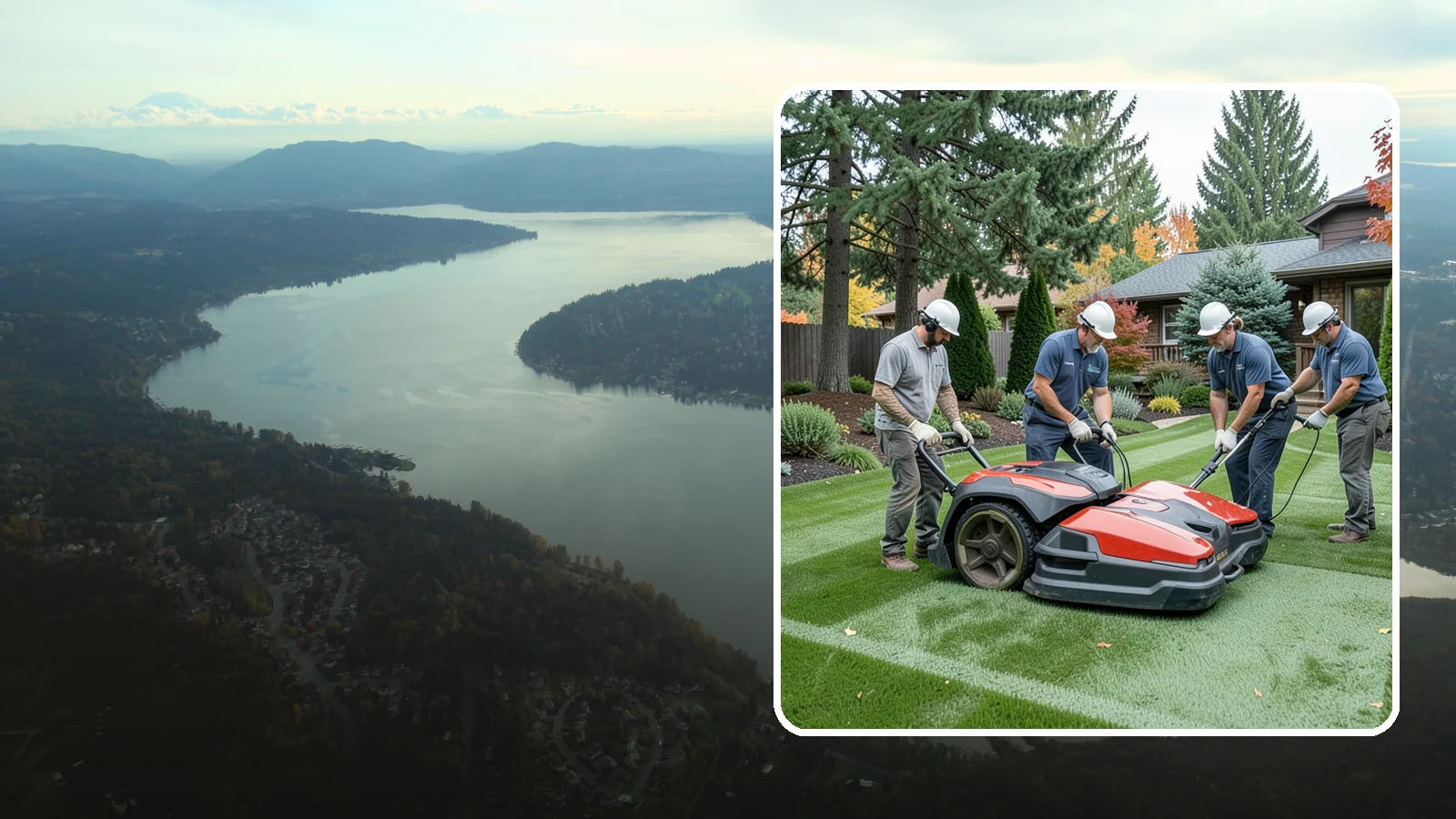
Dethatching that removes the built-up layer of dead grass smothering your lawn.
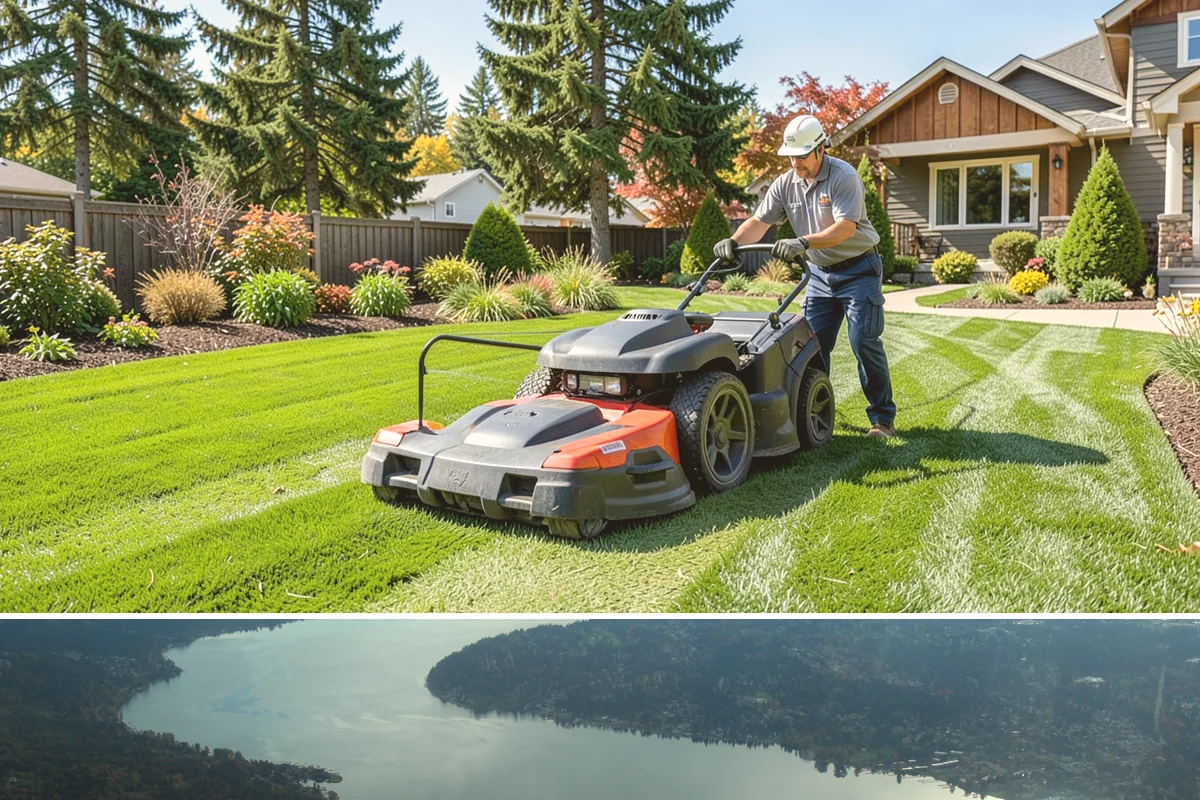
Lawn dethatching is for Sammamish yards where the grass feels spongy underfoot, water pools or runs off instead of soaking in, or the lawn looks thin even though you water and feed it. It also suits lawns that have gone several seasons without any raking or aeration.
Thatch is the layer of dead stems and roots that builds up between the soil and the green blades. Washington Landscaping, based in Bothell, can look at your lawn and tell you whether thatch is the real problem. Estimates are free.
Dethatching Options for Sammamish Lawns
Not every lawn needs the same approach. The right choice depends on how thick the thatch is, how much shade the lawn gets, and when you want to do the work.
Three common approaches
- Hand raking: A stiff dethatching rake works for small lawns or a thin layer of thatch. It is slow, but it is gentle on the grass.
- Power rake or dethatching machine: Spinning tines or blades pull up thatch across a larger area. This suits lawns with a thick, matted layer.
- Core aeration instead of, or after, dethatching: If the real issue is compacted soil, pulling plugs may help more than removing thatch. Some lawns need both.
What local conditions favor
Tree canopy covers about 40.6% of Sammamish, per USFS/NLCD 2025. That figure describes the city as a whole, and your yard may have more or less shade. Under heavy shade, grass is already stressed. A hard power rake can thin it further, so a lighter pass or hand raking is often the safer choice there. Shady lawns also tend to collect needles and leaves, which add to the mat and are worth clearing regularly.
Rain matters too. Sammamish sees about 128 days a year with 0.1 inch or more of rain (Daymet, 2005-2025). Wet weather keeps thatch damp, and a soggy lawn is easy to tear up. We would wait for the soil to firm up before running a machine over it.
Timing
The median last spring frost in Sammamish is March 24 (Daymet, 2005-2025). Frost can come earlier or later in any given year. Cool-season grasses recover best when they are actively growing, so dethatching in early fall or after the lawn greens up in spring is standard practice in the Puget Sound region. Avoid the work during summer heat or a dry spell.
After dethatching, expect a rough, brownish look for a while. Overseeding and light feeding often follow. Call or text 425-433-9444 to talk through which approach fits your lawn.
Sammamish yard conditions at a glance
| Soil drainage (rated land) | 24% well, 72% moderately well, 4% poorly drained |
|---|---|
| Dry months (under 1.25 in) | July and August |
| Frost-free season | about 231 days |
| Tree canopy | 40.6% of the city |
| Days with 0.1 in or more of rain | 128 a year |
A year in a Sammamish yard
- Late winter
- Dormant pruning for most deciduous trees and shrubs, before buds break.
- Spring
- Last frost is usually around Mar 24; in 1 year in 10 it comes on or after Apr 10. Plant frost-tender annuals and vegetables after that.
- Early summer
- Check sprinklers and drip lines before July, the start of the dry months here.
- Summer
- July and August average 0.7 in and 1.2 in. Water deeply and less often; mulch beds to hold moisture.
- Fall
- Aerate, overseed and plant trees and shrubs while the soil is warm; first frost is usually around Nov 14. Winterize irrigation before then.
- Winter
- About 34 days a year freeze at night and thaw by day: keep drains, paver joints and wall weep holes clear.
Dates are medians for the city from Daymet 2005-2025; your yard and any given year can differ.
How Sammamish’s soils drain
- Well drained24%
- Moderately well72%
- Poorly drained4%
Share of rated land in the USDA SSURGO soil survey; built-over ground is not rated. A soil check on your lot tells you what you have.
Sources: Daymet daily weather (NASA/ORNL), 2023 USDA Plant Hardiness Zone Map data (PRISM, Oregon State University), USDA SSURGO soil survey, USGS 3DEP elevation, USFS/NLCD tree canopy 2025, US Census ACS 2020-2024.
Sammamish Lawn Dethatching
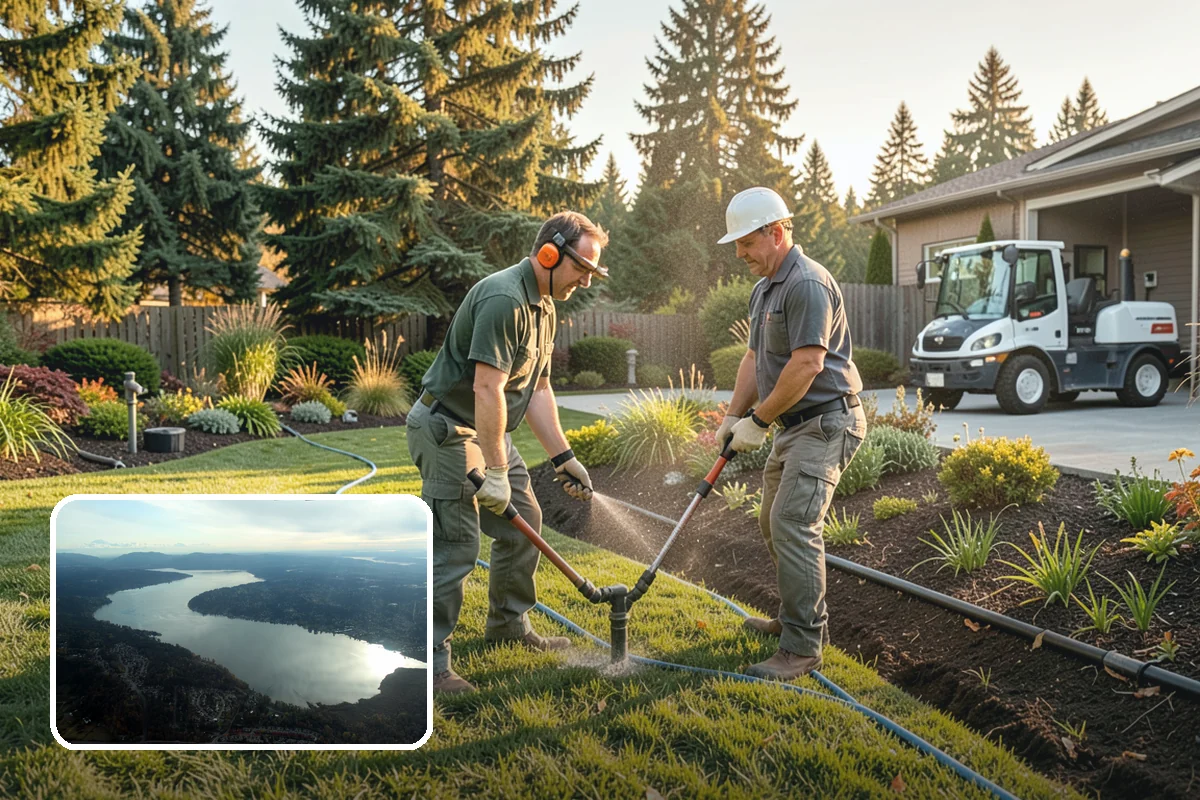
Local Service Information
Sammamish
A residential plateau city on the east side of Lake Sammamish.
Benefits
Removes the barrier that blocks water and nutrients; Reduces moss, pests, and disease pressure; Lets new growth and overseeding thrive; Improves the effectiveness of fertilization; Revives tired, spongy-feeling lawns
Process
Get a Free Lawn Dethatching Estimate in Sammamish
Tell us about your project. We’ll review your needs and provide a customized, no-obligation proposal.
Request a Free Consultation
Complete the form or call our team to discuss your project.
On-Site Assessment
We’ll review your property, discuss your goals, and recommend an appropriate solution.
Receive a Customized Proposal
Receive a detailed estimate outlining the proposed work and pricing.