Shaping Your Outdoors. Surpassing Expectations.

Sammamish Lawn Disease Treatment
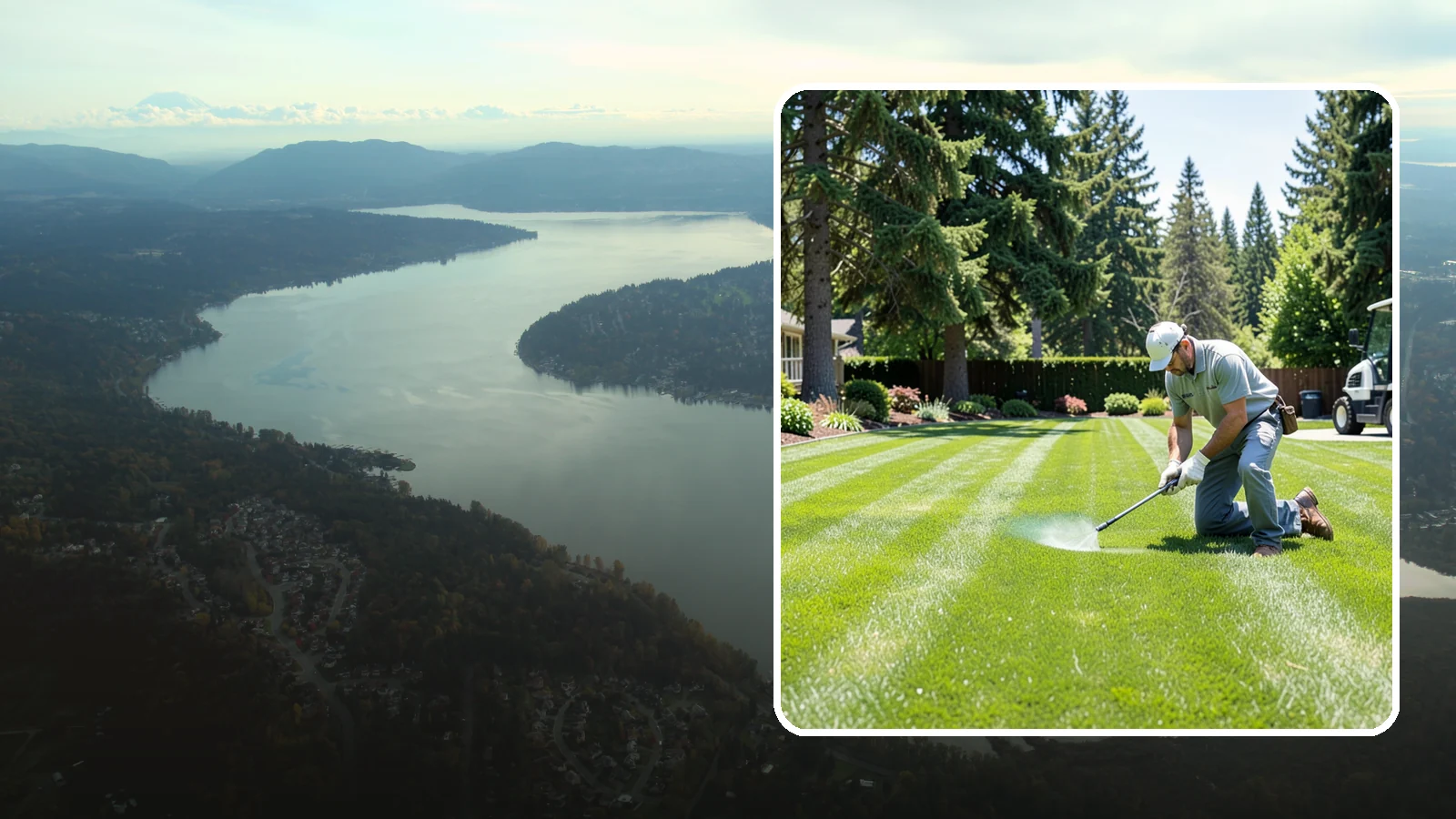
Fungus and disease treatment that stops spreading lawn damage and restores healthy turf.
In Sammamish, lawn disease work makes the most sense in the wet months, roughly October through April. Per Daymet data for 2005-2025, about 80% of the city's yearly precipitation falls in that stretch, and turf stays damp for long periods. Fungal problems like patches and mold tend to show up when grass stays wet and growth is slow.
Washington Landscaping offers lawn disease treatment here. We start by working out what is actually wrong with the lawn, because not every brown patch is a disease. Free estimates are available.
Planning Lawn Disease Treatment in Sammamish
Start with a diagnosis. Brown, thin or slimy turf can come from fungus, but also from compaction, poor drainage, dull mower blades, pet damage or insects. Treating the wrong cause wastes a season. A walk through the lawn, looking at the pattern of damage and the condition of the roots and thatch, comes first.
What affects scope
Moisture is the biggest factor. Daymet records show about 128 days a year in Sammamish with 0.1 in or more of rain. That is a lot of wet days, so lawns that dry slowly are the ones most likely to need ongoing attention.
Shade matters too. Per USFS/NLCD 2025, tree canopy covers about 40.6% of Sammamish. A lawn under or beside large trees gets less sun and less airflow, so leaves stay wet longer and disease can return after treatment. These figures describe the city as a whole. Your own yard may be sunnier, shadier, wetter or drier.
Scope also depends on how much of the lawn is affected, how thick the thatch is, and whether drainage or grading problems need to be fixed along with the turf. If a treatment product is part of the plan, it is applied under our Washington State pesticide applicator license. We do not choose products until the cause is known.
What to expect
After the visit, you get a plain explanation of what we found and what we recommend. That may include cultural steps such as aeration, dethatching, overseeding, adjusting mowing height, or trimming back branches to let in light. Recovery is gradual, and cool wet weather slows regrowth. We cannot promise a result, because weather and site conditions play a large part.
Pricing is given in a free estimate, and financing is available subject to credit approval.
Practical tip: water early in the morning and only when the lawn needs it. Grass that dries during the day is less welcoming to fungus than grass that stays damp overnight.
Sammamish yard conditions at a glance
| Days with 0.1 in or more of rain | 128 a year |
|---|---|
| Tree canopy | 40.6% of the city |
| Frost-free season | about 231 days |
| Share of rain October to April | 80% |
| Last / first frost (median) | Mar 24 / Nov 14 |
A year in a Sammamish yard
- Late winter
- Dormant pruning for most deciduous trees and shrubs, before buds break.
- Spring
- Last frost is usually around Mar 24; in 1 year in 10 it comes on or after Apr 10. Plant frost-tender annuals and vegetables after that.
- Early summer
- Check sprinklers and drip lines before July, the start of the dry months here.
- Summer
- July and August average 0.7 in and 1.2 in. Water deeply and less often; mulch beds to hold moisture.
- Fall
- Aerate, overseed and plant trees and shrubs while the soil is warm; first frost is usually around Nov 14. Winterize irrigation before then.
- Winter
- About 34 days a year freeze at night and thaw by day: keep drains, paver joints and wall weep holes clear.
Dates are medians for the city from Daymet 2005-2025; your yard and any given year can differ.
Sources: Daymet daily weather (NASA/ORNL), 2023 USDA Plant Hardiness Zone Map data (PRISM, Oregon State University), USDA SSURGO soil survey, USGS 3DEP elevation, USFS/NLCD tree canopy 2025, US Census ACS 2020-2024.
Sammamish Lawn Disease Treatment
Local Service Information
Sammamish
A residential plateau city on the east side of Lake Sammamish.
Benefits
Diagnoses the specific disease correctly; Stops spreading damage and discoloration; Corrects the conditions that cause fungus; Restores healthy, uniform turf; Reduces the chance of recurrence
Process
Get a Free Lawn Disease Treatment Estimate in Sammamish
Tell us about your project. We’ll review your needs and provide a customized, no-obligation proposal.
Request a Free Consultation
Complete the form or call our team to discuss your project.
On-Site Assessment
We’ll review your property, discuss your goals, and recommend an appropriate solution.
Receive a Customized Proposal
Receive a detailed estimate outlining the proposed work and pricing.