Shaping Your Outdoors. Surpassing Expectations.

Sammamish Lawn Top Dressing
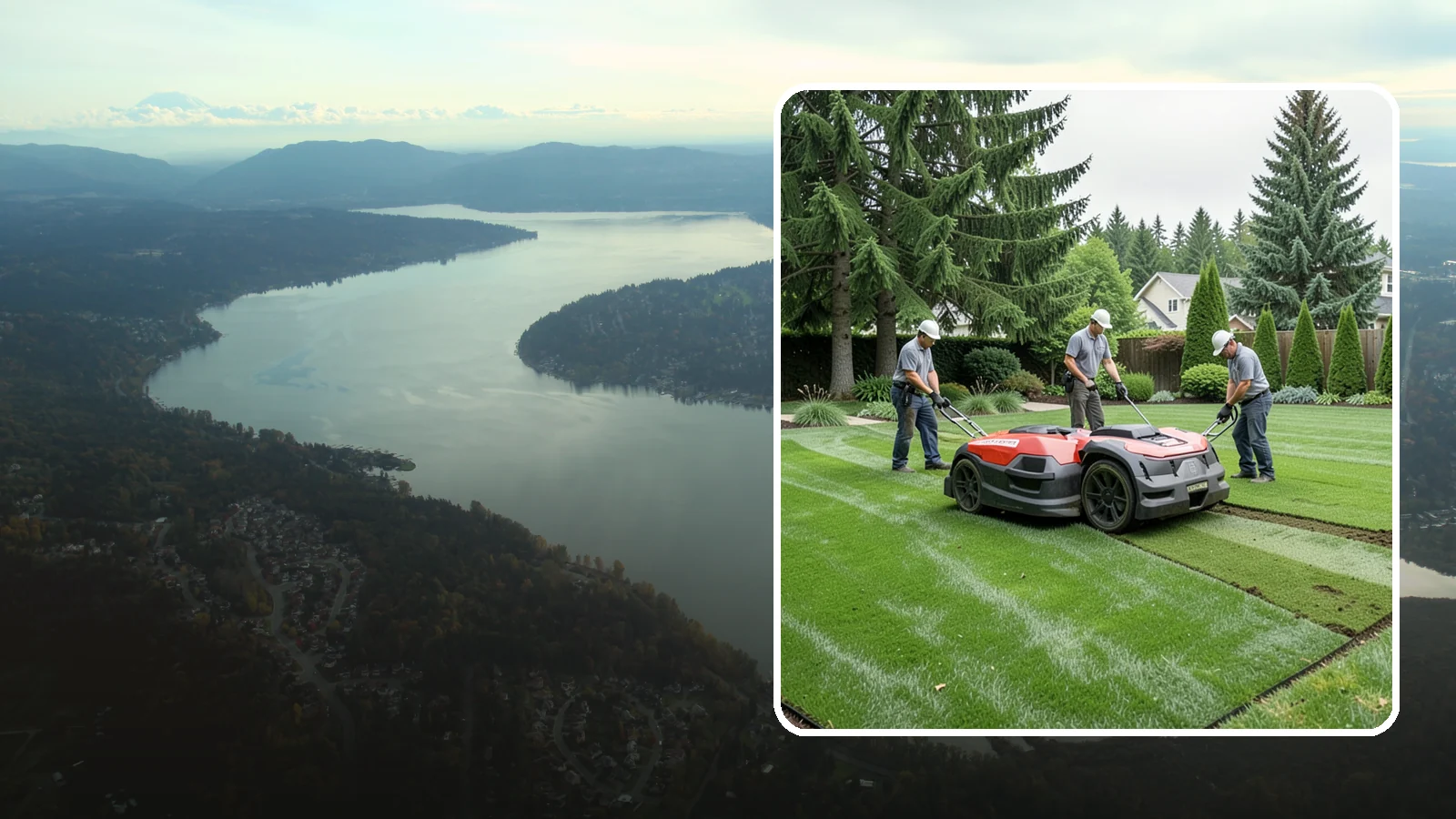
Topdressing with quality compost that levels the surface and improves your soil over time.
You look at your lawn and see low spots that hold water, thin patches, and a surface that feels bumpy underfoot. Thatch builds up. The soil under the grass is compacted or uneven. Mowing gets harder and the grass never quite fills in.
Lawn top dressing spreads a thin layer of screened material over the turf to help with these problems. Washington Landscaping, based in Bothell, WA, offers free estimates for top dressing in Sammamish. This page explains why lawns need it and what the work looks like.
Why Sammamish lawns respond to top dressing
Most lawn trouble starts below the blades. Foot traffic, mowing and years of rain pack the soil. Thatch, the layer of dead stems and roots, thickens at the surface. Water then runs off or sits instead of soaking in. Small dips form and the grass thins out.
Local conditions shape how much this matters. Per the USDA soil survey (SSURGO), about 24% of rated land in Sammamish is well drained, 72% is moderately well drained, and 4% is poorly drained. That describes the city as a whole, and your own yard may differ. Moderately well drained soil can stay wet for a while after heavy rain. In a compacted lawn, that slow drainage can make thin spots and moss more likely. A quick look at where water lingers in your yard tells us a lot.
Timing matters too. Sammamish has a frost-free growing season of about 231 days, from about March 24 to November 14. These are medians from 2005 to 2025, so frost can come earlier or later in a given year. Top dressing works best when grass is actively growing and can push up through the new layer. Early spring and early fall are the usual windows in the Puget Sound region. The long season gives you room to pick a period when the lawn is growing well.
The city sits in USDA hardiness zone 8b, with some parts from 8b to 9a. Winters are mild, so cool-season lawn grasses stay healthy and recover well from this kind of work.
How the work goes
We usually start by checking the lawn for thatch, bumps and low areas. Many lawns are aerated first so the material can reach the soil. Then a thin layer of screened compost or a sand and compost blend is spread and worked down into the turf with a rake or drag. The grass should still show through. Low spots may need a few light passes rather than one heavy layer, because burying the grass can smother it. Overseeding is often done at the same time to fill thin areas. After that, regular watering helps the seed and the new layer settle in.
Call or text 425-433-9444 for a free estimate.
Sammamish yard conditions at a glance
| Soil drainage (rated land) | 24% well, 72% moderately well, 4% poorly drained |
|---|---|
| Dry months (under 1.25 in) | July and August |
| Frost-free season | about 231 days |
| Tree canopy | 40.6% of the city |
| Days with 0.1 in or more of rain | 128 a year |
A year in a Sammamish yard
- Late winter
- Dormant pruning for most deciduous trees and shrubs, before buds break.
- Spring
- Last frost is usually around Mar 24; in 1 year in 10 it comes on or after Apr 10. Plant frost-tender annuals and vegetables after that.
- Early summer
- Check sprinklers and drip lines before July, the start of the dry months here.
- Summer
- July and August average 0.7 in and 1.2 in. Water deeply and less often; mulch beds to hold moisture.
- Fall
- Aerate, overseed and plant trees and shrubs while the soil is warm; first frost is usually around Nov 14. Winterize irrigation before then.
- Winter
- About 34 days a year freeze at night and thaw by day: keep drains, paver joints and wall weep holes clear.
Dates are medians for the city from Daymet 2005-2025; your yard and any given year can differ.
How Sammamish’s soils drain
- Well drained24%
- Moderately well72%
- Poorly drained4%
Share of rated land in the USDA SSURGO soil survey; built-over ground is not rated. A soil check on your lot tells you what you have.
Sources: Daymet daily weather (NASA/ORNL), 2023 USDA Plant Hardiness Zone Map data (PRISM, Oregon State University), USDA SSURGO soil survey, USGS 3DEP elevation, USFS/NLCD tree canopy 2025, US Census ACS 2020-2024.
Sammamish Lawn Top Dressing

Local Service Information
Sammamish
A residential plateau city on the east side of Lake Sammamish.
Benefits
Smooths minor bumps and low spots; Improves soil structure and drainage; Feeds soil microbes and adds organic matter; Protects seed and boosts overseeding results; Builds long-term lawn health

Process
Get a Free Lawn Top Dressing Estimate in Sammamish
Tell us about your project. We’ll review your needs and provide a customized, no-obligation proposal.
Request a Free Consultation
Complete the form or call our team to discuss your project.
On-Site Assessment
We’ll review your property, discuss your goals, and recommend an appropriate solution.
Receive a Customized Proposal
Receive a detailed estimate outlining the proposed work and pricing.