Shaping Your Outdoors. Surpassing Expectations.

Sammamish Moss Control & Removal
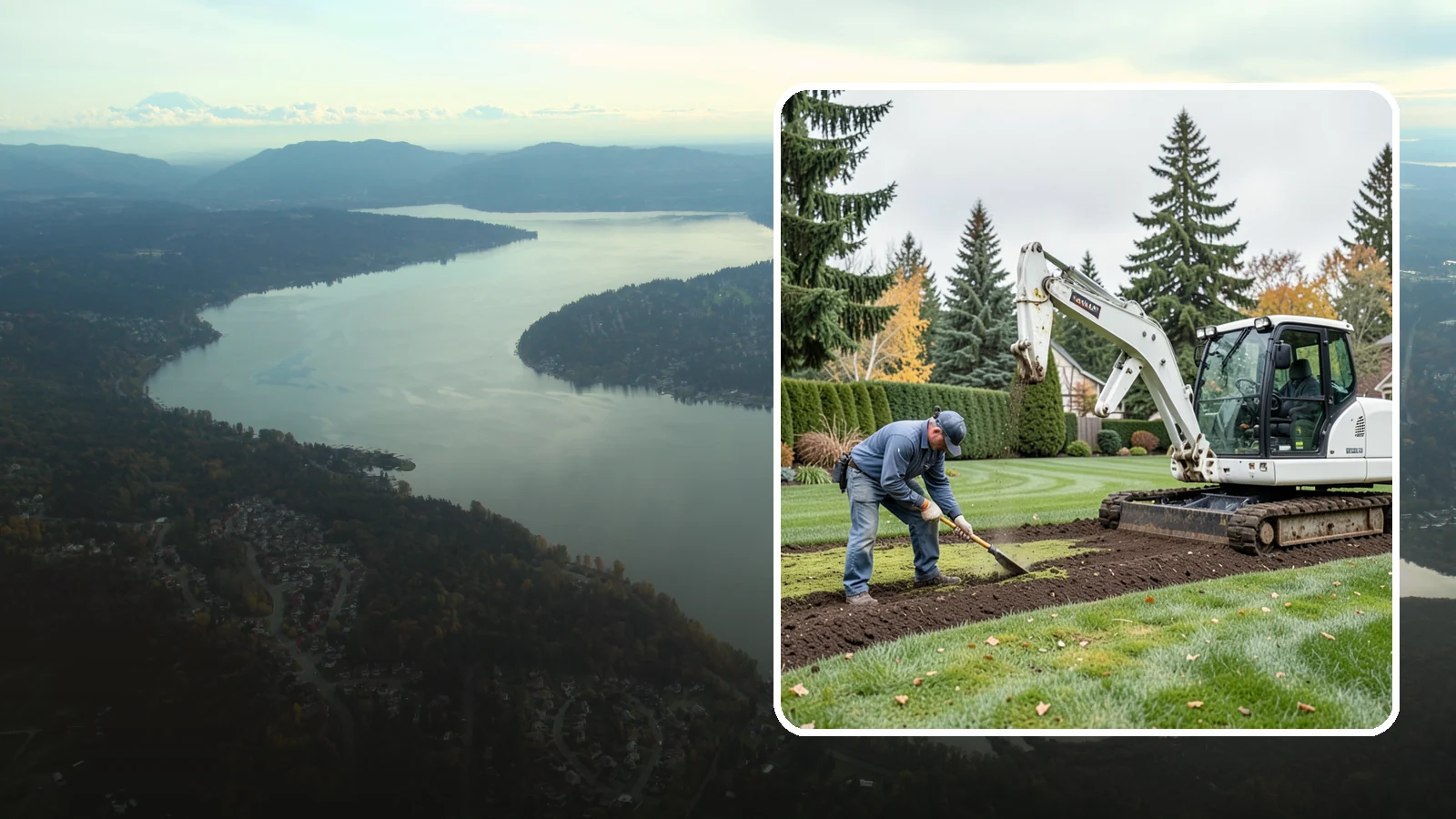
Moss control and removal that reclaims lawns lost to the damp Northwest shade.
You notice green fuzz creeping across the roof shingles, the north side of the deck, or the lawn that now feels spongy underfoot. In Sammamish, moss tends to show up where shade and damp linger, and it rarely stays put once it takes hold.
Washington Landscaping, based in Bothell and in business since 2004, offers moss control and removal. We look at what is feeding the moss, clear it from the surface, and talk through ways to slow its return. Estimates are free, and you can call or text 425-433-9444.
Why moss takes hold in Sammamish yards and roofs
Moss needs moisture, shade and a surface that stays damp. It has no true roots, so it pulls water from the air and from whatever it sits on. Anything that keeps a spot wet for long stretches gives it an opening.
What local conditions add
Two numbers from Sammamish stand out. Per Daymet data for 2005-2025, the city sees about 128 days a year with 0.1 inch or more of rain. Also, about 80% of its yearly precipitation falls from October to April. That means surfaces get wet for months at a time, and the drying season is short. Moss grows well through that long damp stretch.
Shade matters too. Per USFS/NLCD 2025, tree canopy covers about 40.6% of Sammamish, and 41.1% of the city's land sits under 50% or more canopy. Those figures describe the city as a whole, so your own yard may be sunnier or shadier. If you have mature evergreens near the house, though, expect slower drying on roofs, walkways and lawn edges.
What the work involves
We start by walking the property and finding where moss is growing and why. A roof under a fir canopy is a different job than a lawn with compacted, poorly draining soil. Then we remove the moss from the affected surfaces. Roofs call for care, since aggressive scraping or hard pressure can damage shingles.
Where a treatment is part of the plan, it is applied under our Washington State pesticide applicator license. We do not guess at the cause. If the real driver is shade, drainage or thatch in the lawn, we will tell you, because removal alone will not hold for long in those cases.
Common follow-up steps include trimming back branches to let in light, clearing gutters and debris so water moves off, and improving lawn conditions. Moss can return in a wet season, so some upkeep is normal. We are licensed, bonded and insured ($2M), and we offer free estimates.
Sammamish yard conditions at a glance
| Days with 0.1 in or more of rain | 128 a year |
|---|---|
| Tree canopy | 40.6% of the city |
| Frost-free season | about 231 days |
| Share of rain October to April | 80% |
| Last / first frost (median) | Mar 24 / Nov 14 |
A year in a Sammamish yard
- Late winter
- Dormant pruning for most deciduous trees and shrubs, before buds break.
- Spring
- Last frost is usually around Mar 24; in 1 year in 10 it comes on or after Apr 10. Plant frost-tender annuals and vegetables after that.
- Early summer
- Check sprinklers and drip lines before July, the start of the dry months here.
- Summer
- July and August average 0.7 in and 1.2 in. Water deeply and less often; mulch beds to hold moisture.
- Fall
- Aerate, overseed and plant trees and shrubs while the soil is warm; first frost is usually around Nov 14. Winterize irrigation before then.
- Winter
- About 34 days a year freeze at night and thaw by day: keep drains, paver joints and wall weep holes clear.
Dates are medians for the city from Daymet 2005-2025; your yard and any given year can differ.
Sources: Daymet daily weather (NASA/ORNL), 2023 USDA Plant Hardiness Zone Map data (PRISM, Oregon State University), USDA SSURGO soil survey, USGS 3DEP elevation, USFS/NLCD tree canopy 2025, US Census ACS 2020-2024.
Sammamish Moss Control & Removal
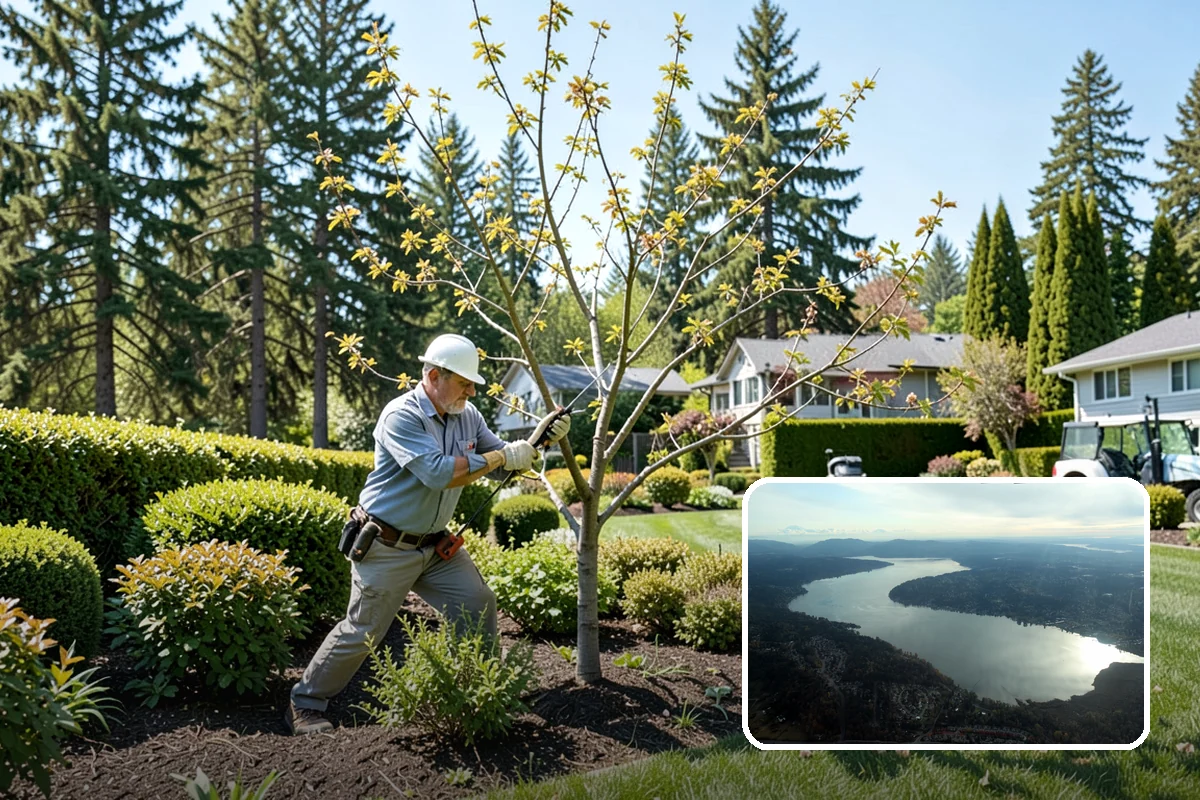
Local Service Information
Sammamish
A residential plateau city on the east side of Lake Sammamish.
Benefits
Kills and removes existing moss; Addresses the shade, moisture, and soil causes; Combines treatment with lawn renovation; Helps grass reclaim mossy areas; Longer-lasting results than removal alone

Process

Get a Free Moss Control & Removal Estimate in Sammamish
Tell us about your project. We’ll review your needs and provide a customized, no-obligation proposal.
Request a Free Consultation
Complete the form or call our team to discuss your project.
On-Site Assessment
We’ll review your property, discuss your goals, and recommend an appropriate solution.
Receive a Customized Proposal
Receive a detailed estimate outlining the proposed work and pricing.