Shaping Your Outdoors. Surpassing Expectations.

Sammamish Rockery Wall Installation
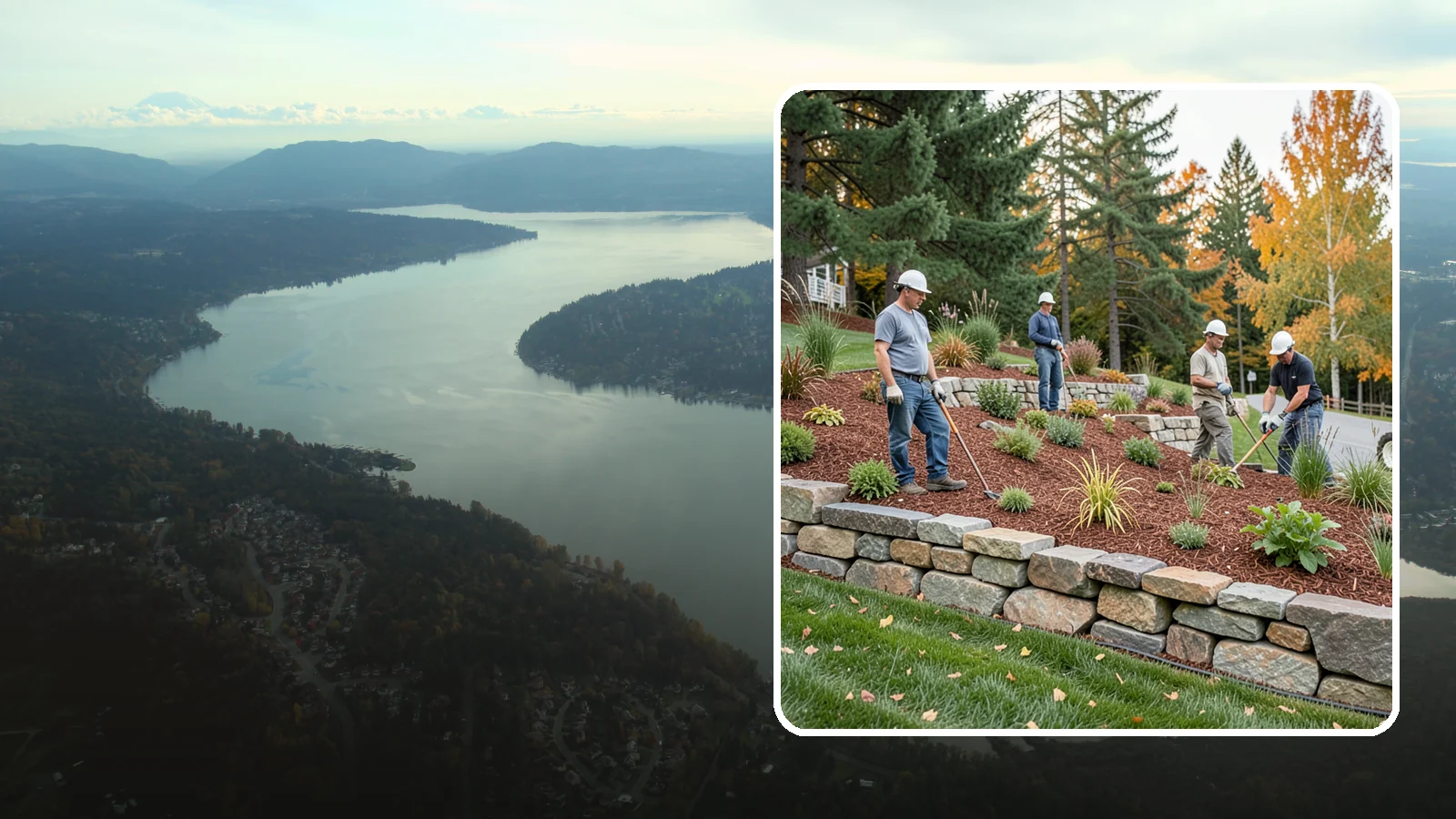
A regional PNW favorite of stacked quarry rock built as a free-draining rockery to stabilize and beautify Western Washington slopes.
Rockery walls can go in during much of the year, but the dry stretch of late spring through early fall is usually easiest. Soil is firmer, trenches stay open, and heavy rock can be moved and set without chewing up the yard. Wet Puget Sound winters make slopes soft and slow the work.
Sammamish has real relief. Per USGS 3DEP elevation data, about 19% of the city's land slopes 15% or more, and about 3% slopes 40% or more. If your yard drops away or sits below a cut bank, a rockery can hold the soil in place. Washington Landscaping, based in Bothell, offers free estimates.
Planning a Rockery Wall in Sammamish, WA
A rockery is a retaining wall built from large stacked boulders, set without mortar. It holds back soil on a slope and gives planting beds a stable edge. The city's terrain matters here. USGS 3DEP data shows elevation ranging from about 29 ft to 572 ft across Sammamish. Those numbers describe the whole city, so your own lot may be much flatter or steeper than the averages suggest.
Planning
Start with what the wall needs to do. Is it stopping slumping soil, creating a level patio edge, or tidying a drop beside a driveway? Height and location drive the design. Taller walls and walls near structures, property lines or steep grades may need a permit, so permit needs are checked with the city before work starts. We would not guess at that outcome.
What affects scope
Wall height and length are the main factors. Slope steepness, access for equipment and rock delivery, and drainage also change the work. Water behind a wall is the most common cause of failure, so a gravel backfill and drain line are standard practice. Soil type and any existing plants or fencing that must be protected or removed can add steps too.
What to expect
Expect a site visit and a free estimate first. Work usually begins with marking the wall line and excavating a base. The largest rocks go at the bottom, set so they lock together and lean slightly back into the slope. Smaller gaps are filled and drainage is placed behind. Expect noise from machinery and some disturbed ground while rock is placed. Our hardscaping work carries a 1-year workmanship warranty, and we are licensed, bonded and insured ($2M). Financing is available subject to credit approval.
Practical tip: before the visit, note where water runs during a heavy rain. Showing us those paths helps us plan drainage behind the wall.
Sammamish yard conditions at a glance
| Days that freeze at night and thaw by day | 34 a year |
|---|---|
| Land sloping 15% or more | 19% (40% or more: 3%) |
| Days with 0.1 in or more of rain | 128 a year |
| Soil drainage (rated land) | 24% well, 72% moderately well, 4% poorly drained |
| Elevation range | 29 to 572 ft |
A year in a Sammamish yard
- Late winter
- Dormant pruning for most deciduous trees and shrubs, before buds break.
- Spring
- Last frost is usually around Mar 24; in 1 year in 10 it comes on or after Apr 10. Plant frost-tender annuals and vegetables after that.
- Early summer
- Check sprinklers and drip lines before July, the start of the dry months here.
- Summer
- July and August average 0.7 in and 1.2 in. Water deeply and less often; mulch beds to hold moisture.
- Fall
- Aerate, overseed and plant trees and shrubs while the soil is warm; first frost is usually around Nov 14. Winterize irrigation before then.
- Winter
- About 34 days a year freeze at night and thaw by day: keep drains, paver joints and wall weep holes clear.
Dates are medians for the city from Daymet 2005-2025; your yard and any given year can differ.
How Sammamish’s soils drain
- Well drained24%
- Moderately well72%
- Poorly drained4%
Share of rated land in the USDA SSURGO soil survey; built-over ground is not rated. A soil check on your lot tells you what you have.
Sources: Daymet daily weather (NASA/ORNL), 2023 USDA Plant Hardiness Zone Map data (PRISM, Oregon State University), USDA SSURGO soil survey, USGS 3DEP elevation, USFS/NLCD tree canopy 2025, US Census ACS 2020-2024.
Sammamish Rockery Wall Installation

Local Service Information
Sammamish
A residential plateau city on the east side of Lake Sammamish.
Benefits
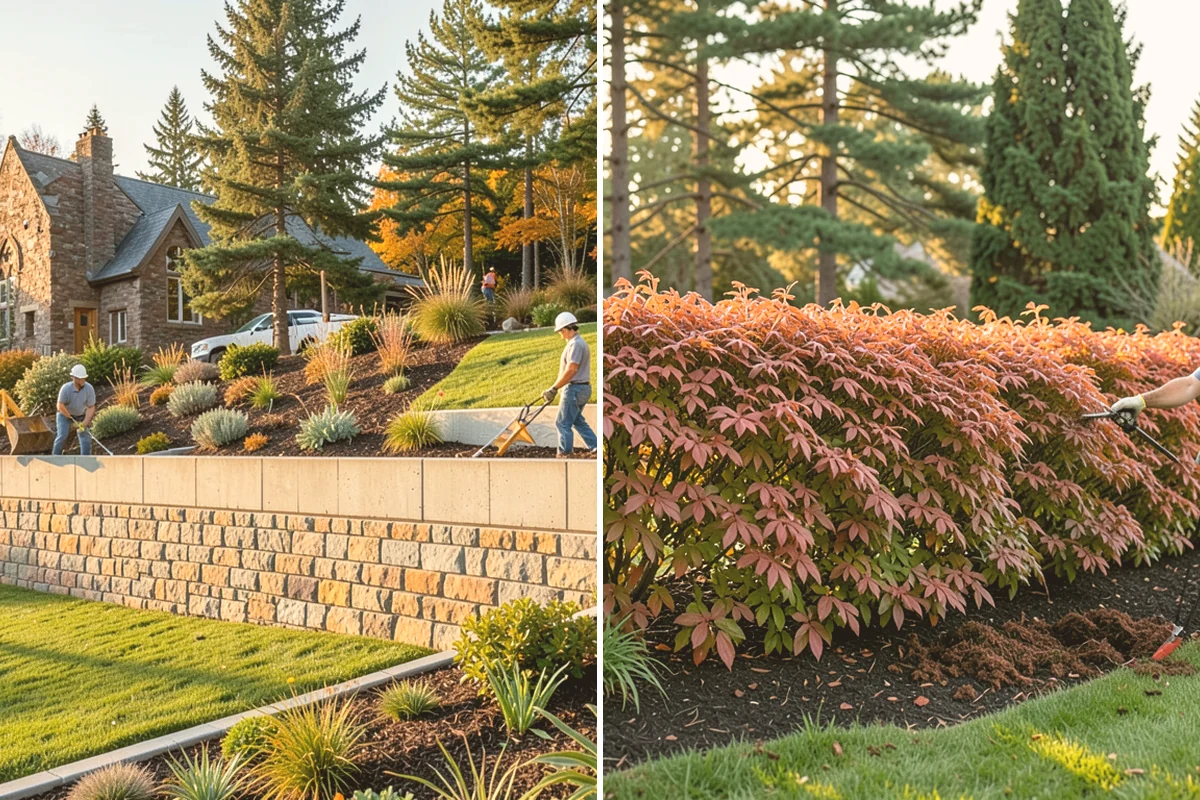
Time-tested regional solution for PNW slopes; Excellent natural drainage; Naturalistic quarry-rock appearance; Supports planting pockets between rocks; Durable and low maintenance
Process

Get a Free Rockery Wall Installation Estimate in Sammamish
Tell us about your project. We’ll review your needs and provide a customized, no-obligation proposal.
Request a Free Consultation
Complete the form or call our team to discuss your project.
On-Site Assessment
We’ll review your property, discuss your goals, and recommend an appropriate solution.
Receive a Customized Proposal
Receive a detailed estimate outlining the proposed work and pricing.