Shaping Your Outdoors. Surpassing Expectations.

Sammamish Soil Amendment
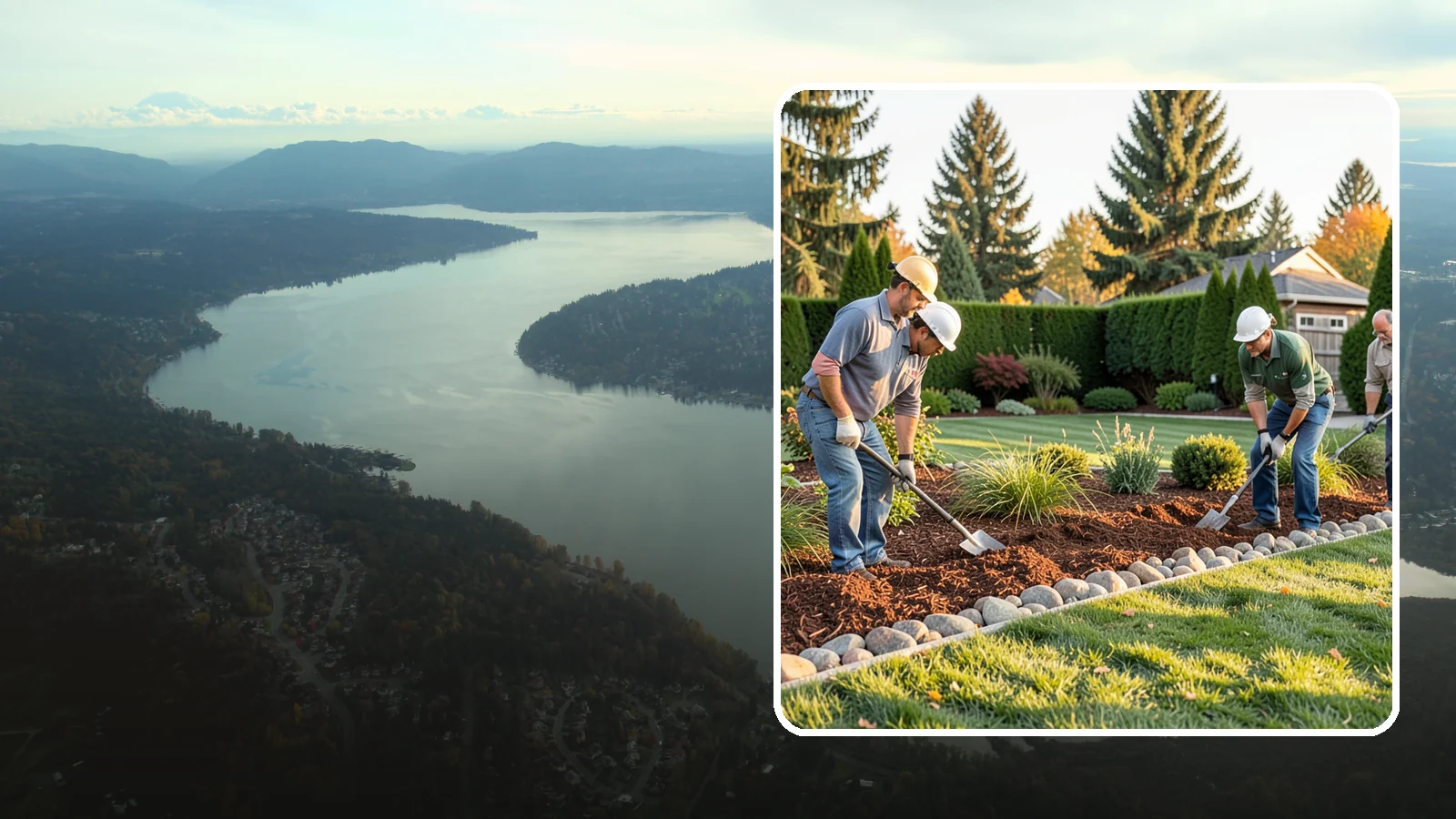
Soil conditioning that improves structure, drainage, and fertility so plants and lawns actually thrive.
The lawn stays thin no matter how often you seed it. Shrubs yellow, water pools after a rain, or the beds turn hard and crusty by midsummer. Those are usually signs the soil is the problem, not the plants.
Soil amendment changes what is in the top layers of your yard so roots can get air, water and nutrients. Washington Landscaping, based in Bothell, offers free estimates for soil work in Sammamish. We start by looking at what your soil is doing before we suggest anything to add.
How Soil Amendment Works in Sammamish Yards
Poor plant growth usually traces back to a few causes. The soil may be compacted, low in organic matter, or holding too much or too little water. Construction traffic, heavy clay layers and years of mowing over bare ground all squeeze out the pore space roots need.
Local data gives a rough picture. Per the USDA soil survey (SSURGO), about 24% of Sammamish's rated land is well drained, 72% is moderately well drained and 4% is poorly drained. That describes the city as a whole. Your own yard may differ, especially on a graded lot or near a low spot. Moderately well drained soil can stay wet longer in the cool months, so a bed that looks fine in August may sit soggy in winter. That is why we check how your yard actually drains before choosing what to mix in.
Timing matters too. Sammamish has a frost-free growing season of about 231 days, from about March 24 to November 14. Those are medians, and frost can come earlier or later in a given year. A long season gives you room to amend beds before planting or to work in material in spring or fall, when soil is workable and not saturated.
The work itself is plain. We look at the soil, often by probing or digging a test hole, to see texture, compaction and moisture. Then we usually loosen the ground and blend in compost or another organic material suited to the site. For lawns, that can mean topdressing after aeration. For beds, it means working material into the planting zone, not just layering it on top. Where drainage is the main issue, the fix may involve more than amendment, and we will say so.
Plant choice still counts. Sammamish is USDA hardiness zone 8b, with parts of the city ranging from 8b to 9a, and healthy soil helps plants in that range establish well. Our team includes an ISA Certified Arborist, which is useful when amending around mature trees, where digging too deep can harm roots. Call or text 425-433-9444 to set up a free estimate.
Sammamish yard conditions at a glance
| Tree canopy | 40.6% of the city |
|---|---|
| Land sloping 15% or more | 19% (40% or more: 3%) |
| Soil drainage (rated land) | 24% well, 72% moderately well, 4% poorly drained |
| Share of rain October to April | 80% |
A year in a Sammamish yard
- Late winter
- Dormant pruning for most deciduous trees and shrubs, before buds break.
- Spring
- Last frost is usually around Mar 24; in 1 year in 10 it comes on or after Apr 10. Plant frost-tender annuals and vegetables after that.
- Early summer
- Check sprinklers and drip lines before July, the start of the dry months here.
- Summer
- July and August average 0.7 in and 1.2 in. Water deeply and less often; mulch beds to hold moisture.
- Fall
- Aerate, overseed and plant trees and shrubs while the soil is warm; first frost is usually around Nov 14. Winterize irrigation before then.
- Winter
- About 34 days a year freeze at night and thaw by day: keep drains, paver joints and wall weep holes clear.
Dates are medians for the city from Daymet 2005-2025; your yard and any given year can differ.
How Sammamish’s soils drain
- Well drained24%
- Moderately well72%
- Poorly drained4%
Share of rated land in the USDA SSURGO soil survey; built-over ground is not rated. A soil check on your lot tells you what you have.
Sources: Daymet daily weather (NASA/ORNL), 2023 USDA Plant Hardiness Zone Map data (PRISM, Oregon State University), USDA SSURGO soil survey, USGS 3DEP elevation, USFS/NLCD tree canopy 2025, US Census ACS 2020-2024.
Sammamish Soil Amendment
Local Service Information
Sammamish
A residential plateau city on the east side of Lake Sammamish.
Benefits
Corrects the real limits on plant health; Better drainage and root aeration; Balanced fertility and pH; Prepares beds for strong establishment; Tailored to PNW acidic clay soils
Process
Also serving Sammamish
- Brush Chipping in Sammamishat Washington Tree Services
Get a Free Soil Amendment Estimate in Sammamish
Tell us about your project. We’ll review your needs and provide a customized, no-obligation proposal.
Request a Free Consultation
Complete the form or call our team to discuss your project.
On-Site Assessment
We’ll review your property, discuss your goals, and recommend an appropriate solution.
Receive a Customized Proposal
Receive a detailed estimate outlining the proposed work and pricing.