Shaping Your Outdoors. Surpassing Expectations.

Sammamish Spring Cleanup

A thorough spring reset that clears winter debris and preps your landscape for a strong growing season.
In Sammamish, spring cleanup makes the most sense in late March and April. The median date of the last spring frost is Mar 24 (Daymet, 2005-2025), so that is when growth starts in earnest. Clearing winter debris before new shoots push up is easier on the plants underneath.
Frost can come earlier or later in a given year, so treat that date as a guide, not a deadline. Washington Landscaping, based in Bothell, WA, handles spring cleanup for homeowners who want beds, lawns and paths ready for the growing season. Estimates are free.
Planning Your Sammamish Spring Cleanup
A good cleanup starts with a walk through the yard. Note where leaves matted down over winter, which beds have broken stems or dead growth, and where branches fell. Those notes shape the scope of the visit.
What affects scope
Tree cover is the biggest factor here. Per USFS/NLCD 2025 data, tree canopy covers about 40.6% of Sammamish. That describes the city as a whole, and your own lot may have more or less shade. Still, a yard under mature conifers and maples usually has more needles, twigs and compacted leaf litter to clear than an open lot. Expect more hauling and more time in those yards.
Other things change the work too: the size of the beds, how much perennial cutback is needed, whether moss or debris has built up on hard surfaces, and whether shrubs need light tidying. Matted leaves left on a lawn can smother grass, so lawn areas are usually raked or cleared early.
Timing and the growing season
The median frost-free season in Sammamish runs about 231 days, from about Mar 24 to Nov 14 (Daymet, 2005-2025). Because the season is long, there is no need to rush in February. Waiting until soil is no longer waterlogged helps avoid compacting it as people walk and rake. A late frost can still nip tender new growth, so cutting back perennials too hard, too early, can expose fresh shoots.
What to expect
Plan on a walkthrough of the areas you want covered, then raking, cutting back, clearing beds and removing the debris. Mulching or edging can often be added to the same visit if you want it. Ask for these when you request your estimate, since it is free. Financing is available subject to credit approval for larger jobs. The company is licensed, bonded and insured ($2M).
Practical tip: before the visit, pick up toys, hoses and pots, and mark irrigation heads or fragile plants with flags. It keeps the work quick and protects what you care about.
Sammamish yard conditions at a glance
| Frost-free season | about 231 days |
|---|---|
| Tree canopy | 40.6% of the city |
| Days with 0.1 in or more of rain | 128 a year |
| Dry months (under 1.25 in) | July and August |
| Last / first frost (median) | Mar 24 / Nov 14 |
A year in a Sammamish yard
- Late winter
- Dormant pruning for most deciduous trees and shrubs, before buds break.
- Spring
- Last frost is usually around Mar 24; in 1 year in 10 it comes on or after Apr 10. Plant frost-tender annuals and vegetables after that.
- Early summer
- Check sprinklers and drip lines before July, the start of the dry months here.
- Summer
- July and August average 0.7 in and 1.2 in. Water deeply and less often; mulch beds to hold moisture.
- Fall
- Aerate, overseed and plant trees and shrubs while the soil is warm; first frost is usually around Nov 14. Winterize irrigation before then.
- Winter
- About 34 days a year freeze at night and thaw by day: keep drains, paver joints and wall weep holes clear.
Dates are medians for the city from Daymet 2005-2025; your yard and any given year can differ.
Sources: Daymet daily weather (NASA/ORNL), 2023 USDA Plant Hardiness Zone Map data (PRISM, Oregon State University), USDA SSURGO soil survey, USGS 3DEP elevation, USFS/NLCD tree canopy 2025, US Census ACS 2020-2024.
Sammamish Spring Cleanup
Local Service Information
Sammamish
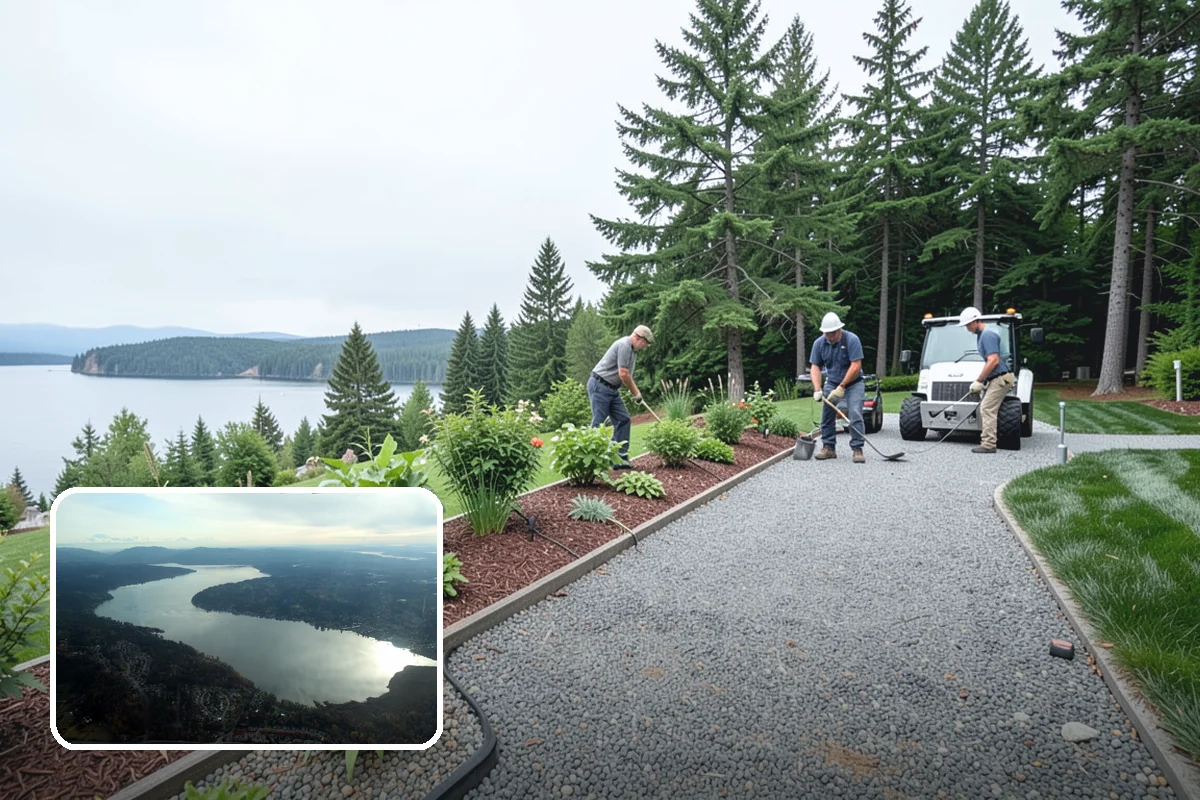
A residential plateau city on the east side of Lake Sammamish.
Benefits
A clean start to the growing season; Winter debris and storm mess cleared; Beds cut back, weeded, and edged; Fresh mulch and early moss knockdown; Healthier plants and lawn from day one

Process
Also serving Sammamish
- Firewood cutting and delivery in Sammamishat Washington Tree Services
- Snow Documentation in Sammamishat Washington Snow Removal
Get a Free Spring Cleanup Estimate in Sammamish
Tell us about your project. We’ll review your needs and provide a customized, no-obligation proposal.
Request a Free Consultation
Complete the form or call our team to discuss your project.
On-Site Assessment
We’ll review your property, discuss your goals, and recommend an appropriate solution.
Receive a Customized Proposal
Receive a detailed estimate outlining the proposed work and pricing.