Shaping Your Outdoors. Surpassing Expectations.

Tacoma Ornamental Tree Pruning
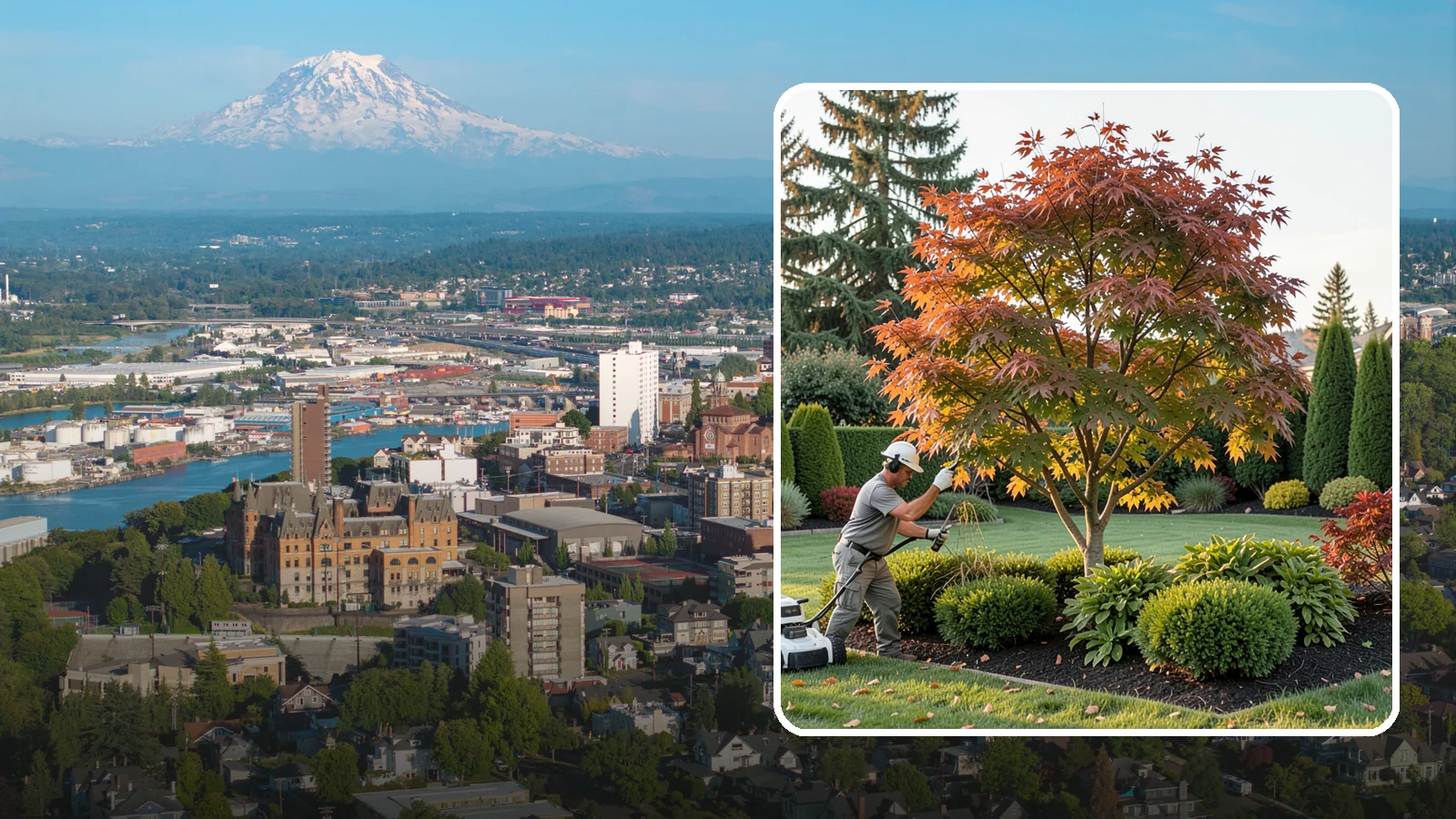
Pruning that keeps ornamental and specimen trees healthy, safe, and beautifully shaped.
For most ornamental trees in Tacoma, pruning makes sense in late winter, before buds break. The median last spring frost here is Mar 20 (Daymet, 2005-2025), so the weeks leading up to it are a common window to plan cuts. Frost can come earlier or later in any given year, so treat that date as a guide, not a deadline.
Washington Landscaping has an ISA Certified Arborist on staff. We can look at your trees, talk through what each one needs, and give you a free estimate. This page explains how we plan the work and what to expect.
Planning Ornamental Tree Pruning in Tacoma Yards
Ornamental trees such as flowering cherries, crabapples, Japanese maples and dogwoods are pruned for structure, health and shape. Good pruning removes dead, crossing or rubbing branches and keeps the natural form. It does not shear a tree into a ball.
Timing and planning
Tacoma is in USDA zone 8b, with parts of the city running 8b to 9a (2023 USDA map). That means average winter lows near 19.4 F. Most of these trees handle ordinary pruning well, but the right month depends on the species. Some spring bloomers are better pruned right after they flower, so you do not cut off this year's blossoms. Your arborist can tell you which group each of your trees falls into.
What affects scope
Scope depends on tree size and height, how long since the last pruning, and how much deadwood or crowding there is. Access matters too. A tree near a roof, power line or fence takes more care than one in open lawn. Tacoma's tree canopy covers about 15.9% of the city (USFS/NLCD 2025). That figure describes the city as a whole, not your lot, but it is a reminder that each mature tree is worth caring for properly.
What to expect
We start with a walk-through of your trees and a conversation about your goals. You get a free estimate. On work day, cuts are made cleanly at the branch collar, and debris is cleared. We do not promise a specific bloom or growth result, since weather and tree health play a part. Financing is available, subject to credit approval, if a larger job needs it. We are licensed, bonded and insured ($2M).
Practical tip: before we visit, walk your yard and note any branches that worry you, such as ones over a walkway or touching the house. Tell us about them, and we can address them first.
Tacoma yard conditions at a glance
| USDA hardiness zone (2023) | 8b (parts 8b to 9a) |
|---|---|
| Last / first frost (median) | Mar 20 / Nov 14 |
| Tree canopy | 15.9% of the city |
| Share of rain October to April | 83% |
| Dry months (under 1.25 in) | July and August |
A year in a Tacoma yard
- Late winter
- Dormant pruning for most deciduous trees and shrubs, before buds break.
- Spring
- Last frost is usually around Mar 20; in 1 year in 10 it comes on or after Apr 8. Plant frost-tender annuals and vegetables after that.
- Early summer
- Check sprinklers and drip lines before July, the start of the dry months here.
- Summer
- July and August average 0.5 in and 0.9 in. Water deeply and less often; mulch beds to hold moisture.
- Fall
- Aerate, overseed and plant trees and shrubs while the soil is warm; first frost is usually around Nov 14. Winterize irrigation before then.
- Winter
- About 31 days a year freeze at night and thaw by day: keep drains, paver joints and wall weep holes clear.
Dates are medians for the city from Daymet 2005-2025; your yard and any given year can differ.
Sources: Daymet daily weather (NASA/ORNL), 2023 USDA Plant Hardiness Zone Map data (PRISM, Oregon State University), USDA SSURGO soil survey, USGS 3DEP elevation, USFS/NLCD tree canopy 2025, US Census ACS 2020-2024.
Tacoma Ornamental Tree Pruning

Local Service Information
Tacoma
The Pierce County seat and a major port city on Commencement Bay of Puget Sound.
Benefits
Enhances form, flowers, and foliage; Species-appropriate technique and timing; Deadwood and hazards removed; Shaped without disfiguring; Healthy, elegant focal points
Process
Ornamental Tree Pruning in nearby areas
Also serving Tacoma
- Driveway clearance pruning in Tacomaat Washington Tree Services
Get a Free Ornamental Tree Pruning Estimate in Tacoma
Tell us about your project. We’ll review your needs and provide a customized, no-obligation proposal.
Request a Free Consultation
Complete the form or call our team to discuss your project.
On-Site Assessment
We’ll review your property, discuss your goals, and recommend an appropriate solution.
Receive a Customized Proposal
Receive a detailed estimate outlining the proposed work and pricing.