Shaping Your Outdoors. Surpassing Expectations.

Tacoma Timber Retaining Wall

A warm, budget-friendly wall built from pressure-treated timbers, well suited to short and mid-height slopes in Northwest yards.
You may notice soil creeping down a slope toward your patio, a lawn edge that keeps crumbling, or a bank that turns to mud after rain. A timber retaining wall is one way to hold that soil in place and create a flatter, more usable area.
Washington Landscaping builds timber retaining walls for Tacoma homeowners. This page explains why slopes cause trouble, what the local numbers suggest, and how a wall project is planned before any digging starts.
How Tacoma's slopes and freeze-thaw affect timber retaining walls
Soil on a slope is always pushed downhill by gravity. Water makes that push stronger. Wet soil is heavier, and water that cannot drain builds pressure behind anything holding the soil back. Most wall failures come from poor drainage and weak base preparation, not from the timber itself.
What the local numbers say
Per USGS 3DEP elevation data, about 11% of Tacoma's land slopes 15% or more, and about 2.9% slopes 40% or more. Those figures describe the city as a whole, not your yard. Your own lot may be flatter or steeper. Still, they show that sloped lots are common here, and a steep bank needs a different approach than a gentle grade.
Daymet data puts Tacoma at about 31 days a year that freeze at night and thaw by day. Repeated freezing and thawing can shift wet soil and push on a wall. That is one more reason drainage behind the wall matters. Water that has somewhere to go is less likely to freeze and heave against the timbers.
What the work involves
The first step is looking at the slope, the soil and where water flows. Wall height, grading and any structure nearby affect whether the city needs to review the plan, so permit needs are checked with the city before work starts. We cannot promise what a permit review will decide.
Once the plan is set, the work generally follows standard practice for the Puget Sound region:
The base is excavated and compacted so the first course sits level. Timbers are stacked and tied back into the slope where the design calls for it. Gravel and drainage pipe go behind the wall so water can leave instead of building up. The area is then backfilled and graded so surface water runs away from the wall.
Taller walls and steeper banks call for more engineering care, and some may suit a different material. We will tell you if that is the case for your site.
Washington Landscaping offers free estimates, and hardscaping work carries a 1-year workmanship warranty. Call or text 425-433-9444 to get started.
Tacoma yard conditions at a glance
| Days that freeze at night and thaw by day | 31 a year |
|---|---|
| Land sloping 15% or more | 11% (40% or more: 2.9%) |
| Days with 0.1 in or more of rain | 118 a year |
| Soil drainage (rated land) | 17% well, 75% moderately well, 7% poorly drained |
| Elevation range | -5 to 445 ft |
A year in a Tacoma yard
- Late winter
- Dormant pruning for most deciduous trees and shrubs, before buds break.
- Spring
- Last frost is usually around Mar 20; in 1 year in 10 it comes on or after Apr 8. Plant frost-tender annuals and vegetables after that.
- Early summer
- Check sprinklers and drip lines before July, the start of the dry months here.
- Summer
- July and August average 0.5 in and 0.9 in. Water deeply and less often; mulch beds to hold moisture.
- Fall
- Aerate, overseed and plant trees and shrubs while the soil is warm; first frost is usually around Nov 14. Winterize irrigation before then.
- Winter
- About 31 days a year freeze at night and thaw by day: keep drains, paver joints and wall weep holes clear.
Dates are medians for the city from Daymet 2005-2025; your yard and any given year can differ.
How Tacoma’s soils drain
- Well drained17%
- Moderately well75%
- Poorly drained7%
Share of rated land in the USDA SSURGO soil survey; built-over ground is not rated. A soil check on your lot tells you what you have.
Sources: Daymet daily weather (NASA/ORNL), 2023 USDA Plant Hardiness Zone Map data (PRISM, Oregon State University), USDA SSURGO soil survey, USGS 3DEP elevation, USFS/NLCD tree canopy 2025, US Census ACS 2020-2024.
Tacoma Timber Retaining Wall
Local Service Information
Tacoma
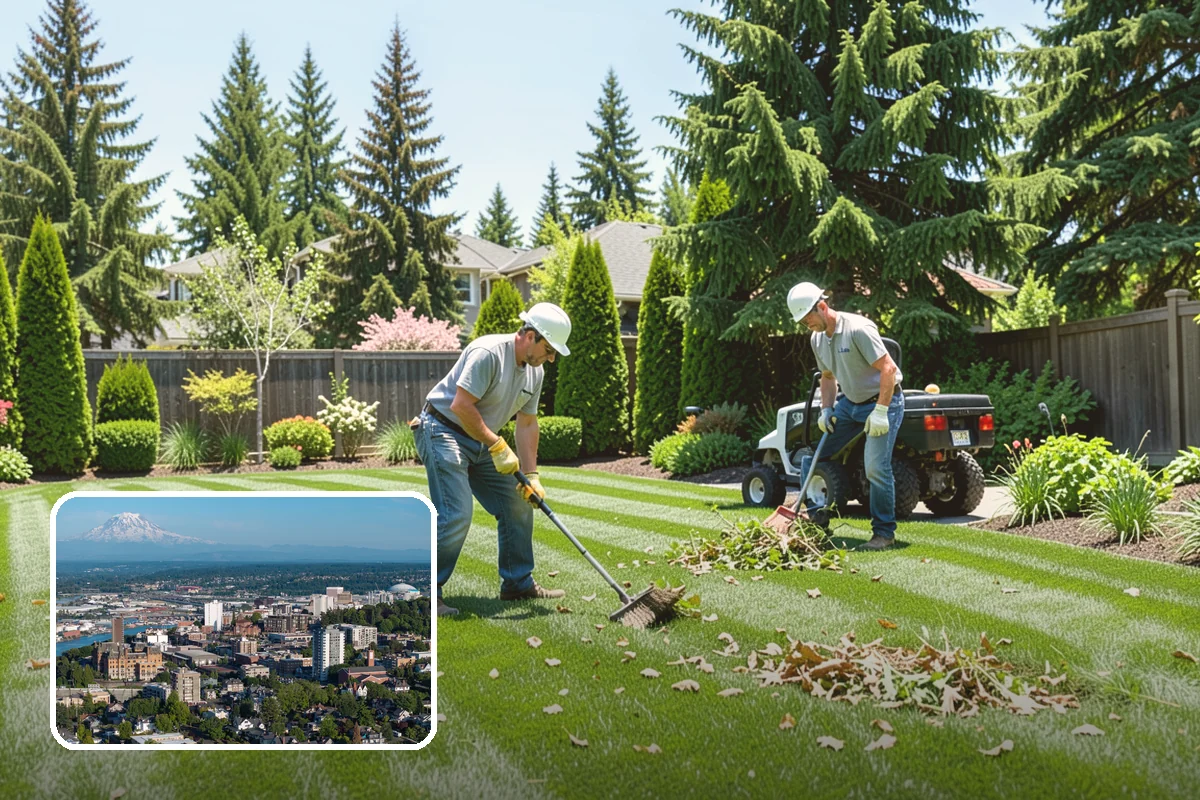
The Pierce County seat and a major port city on Commencement Bay of Puget Sound.
Benefits
Lower upfront cost than stone or concrete; Warm, natural look for wooded lots; Quick installation; Deadman anchors add strength on slopes; Easy to work around plantings and curves
Process
Timber Retaining Wall in nearby areas
Get a Free Timber Retaining Wall Estimate in Tacoma
Tell us about your project. We’ll review your needs and provide a customized, no-obligation proposal.
Request a Free Consultation
Complete the form or call our team to discuss your project.
On-Site Assessment
We’ll review your property, discuss your goals, and recommend an appropriate solution.
Receive a Customized Proposal
Receive a detailed estimate outlining the proposed work and pricing.