Shaping Your Outdoors. Surpassing Expectations.

Tacoma Vegetable Garden Installation
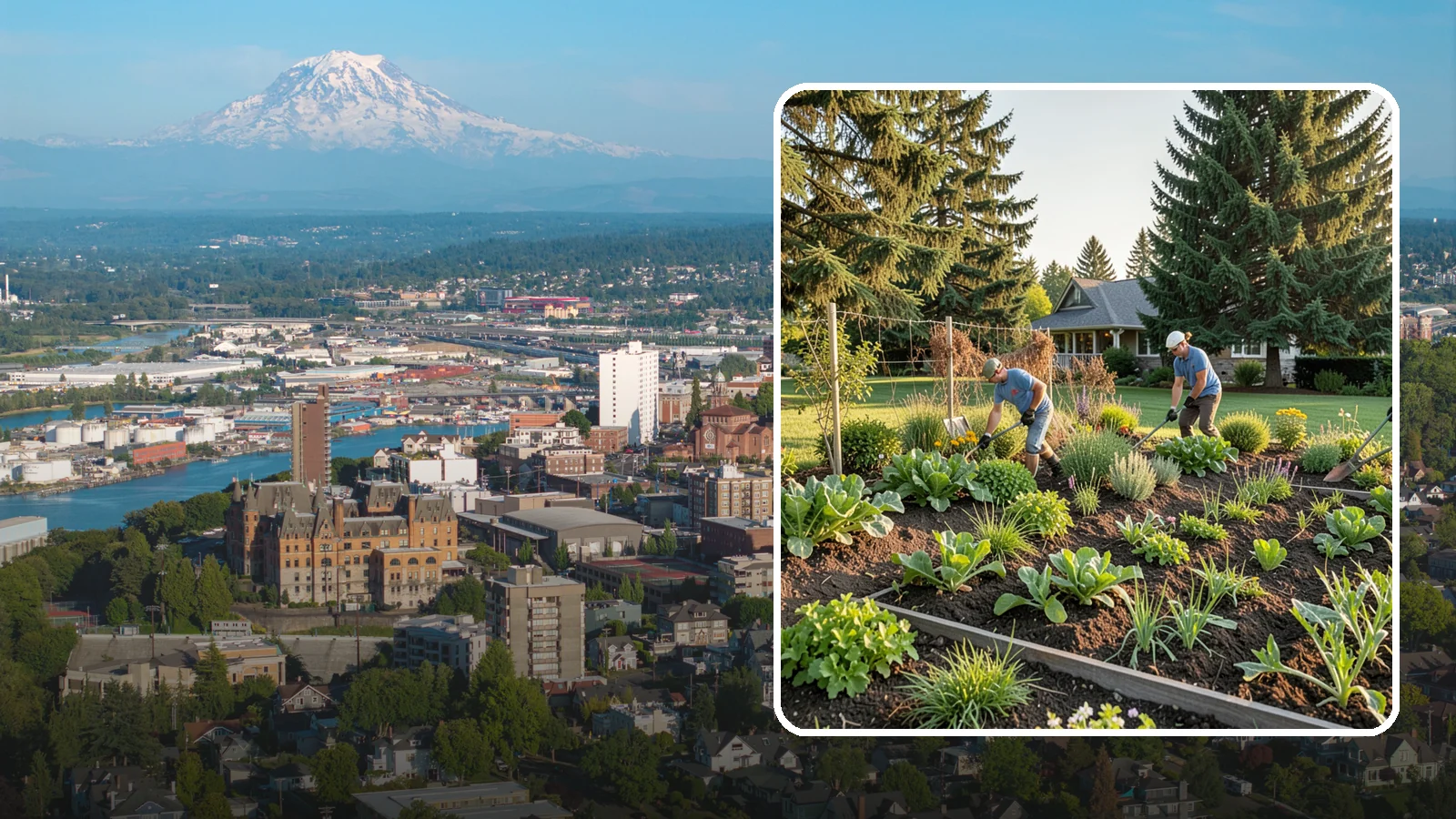
Productive edible gardens installed with quality soil, layout, and sun for a strong harvest.
You want to grow your own food, but the yard is lawn, compacted dirt, or a corner that never got planned. You are not sure where beds should go, how much sun they get, or when it is safe to plant.
Washington Landscaping installs vegetable gardens in Tacoma. That means laying out beds, preparing the soil, and setting up the garden so it is ready for planting. Free estimates are available, and you can call or text 425-433-9444.
Planning a Vegetable Garden in Tacoma: Frost and Timing
Most first-year garden problems come from two things: poor site choice and planting at the wrong time. A bed in shade or on packed soil will struggle no matter how good the seed is. Timing matters just as much, and Tacoma's frost record gives you a useful starting point.
Per Daymet data for 2005-2025, the median last spring frost (32 F) in Tacoma falls on Mar 20. The median frost-free season runs about 235 days, from about Mar 20 to Nov 14. That is a long window for the Puget Sound region. It allows early crops, summer crops, and a fall planting.
Those are medians, though. In 1 spring in 10, the last frost comes on or after Apr 8. Frost can arrive earlier or later in any given year. So the median date is a guide, not a promise. Tender plants such as tomatoes, squash and basil are best held back until the weather is clearly settled, or covered if a cold night is forecast. Hardy crops like peas, kale and lettuce can go in sooner.
How the installation work goes
We start by looking at your yard: where the sun falls through the day, where water collects, and how close the garden is to a hose bib and to your kitchen door. A garden you walk past daily gets used more. Your own yard may differ from city-wide conditions, so we go by what we see on site.
From there, the work usually includes marking out the beds, removing sod or clearing the area, loosening compacted soil, and building raised beds if they suit the site. Raised beds are a common choice in the Puget Sound region because they drain well and warm sooner in spring. We then fill or amend the beds with quality soil and compost, and can plan paths and access so you can reach every plant.
If you want a start date that fits your planting plans, tell us when you hope to plant. We can work backward from the frost dates so beds are ready in time. The estimate is free, and financing is available subject to credit approval. Washington Landscaping has been in business since 2004 and is licensed, bonded and insured.
Tacoma yard conditions at a glance
| USDA hardiness zone (2023) | 8b (parts 8b to 9a) |
|---|---|
| Last / first frost (median) | Mar 20 / Nov 14 |
| Late last frost (1 year in 10) | on or after Apr 8 |
| Frost-free season | about 235 days |
| Dry months (under 1.25 in) | July and August |
| Soil drainage (rated land) | 17% well, 75% moderately well, 7% poorly drained |
A year in a Tacoma yard
- Late winter
- Dormant pruning for most deciduous trees and shrubs, before buds break.
- Spring
- Last frost is usually around Mar 20; in 1 year in 10 it comes on or after Apr 8. Plant frost-tender annuals and vegetables after that.
- Early summer
- Check sprinklers and drip lines before July, the start of the dry months here.
- Summer
- July and August average 0.5 in and 0.9 in. Water deeply and less often; mulch beds to hold moisture.
- Fall
- Aerate, overseed and plant trees and shrubs while the soil is warm; first frost is usually around Nov 14. Winterize irrigation before then.
- Winter
- About 31 days a year freeze at night and thaw by day: keep drains, paver joints and wall weep holes clear.
Dates are medians for the city from Daymet 2005-2025; your yard and any given year can differ.
How Tacoma’s soils drain
- Well drained17%
- Moderately well75%
- Poorly drained7%
Share of rated land in the USDA SSURGO soil survey; built-over ground is not rated. A soil check on your lot tells you what you have.
Sources: Daymet daily weather (NASA/ORNL), 2023 USDA Plant Hardiness Zone Map data (PRISM, Oregon State University), USDA SSURGO soil survey, USGS 3DEP elevation, USFS/NLCD tree canopy 2025, US Census ACS 2020-2024.
Tacoma Vegetable Garden Installation
Local Service Information
Tacoma
The Pierce County seat and a major port city on Commencement Bay of Puget Sound.
Benefits
Sited and built for a real harvest; Rich, well-draining vegetable soil; Smart layout for access and airflow; Optional irrigation and trellising; Set up for easy, productive growing
Process

Vegetable Garden Installation in nearby areas
Also serving Tacoma
- Tree planting in Tacomaat Washington Tree Services
Get a Free Vegetable Garden Installation Estimate in Tacoma
Tell us about your project. We’ll review your needs and provide a customized, no-obligation proposal.
Request a Free Consultation
Complete the form or call our team to discuss your project.
On-Site Assessment
We’ll review your property, discuss your goals, and recommend an appropriate solution.
Receive a Customized Proposal
Receive a detailed estimate outlining the proposed work and pricing.