Shaping Your Outdoors. Surpassing Expectations.

Tukwila Arborvitae Trimming
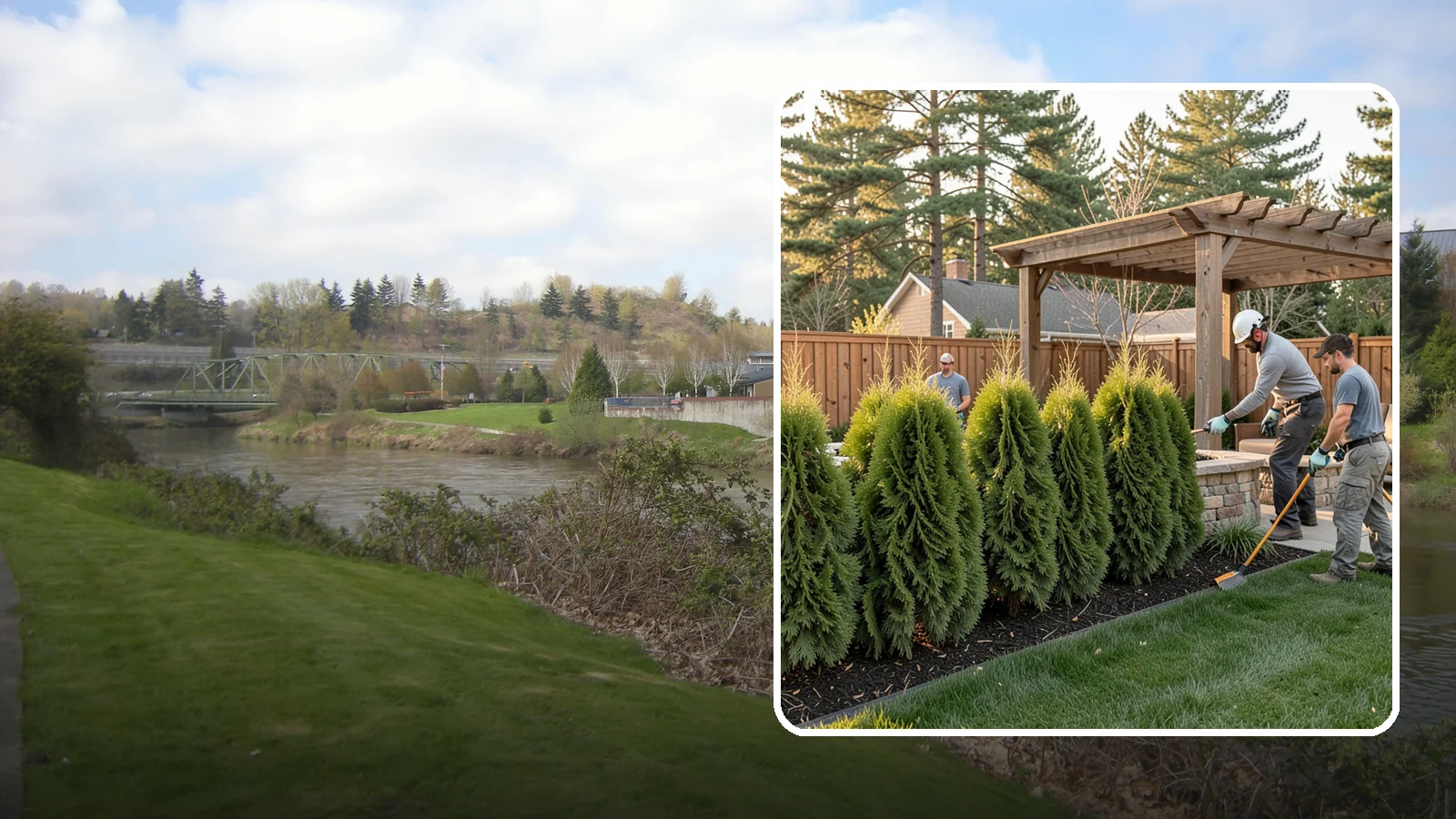
Professional arborvitae trimming that keeps your privacy screen dense, upright, and healthy through Western Washington’s wet, moss-prone winters.
When should you trim arborvitae in Tukwila? For most hedges, the growing season is the safest window, which here runs about Mar 11 to Nov 17 by the median. Frost can come earlier or later in any given year, so treat those dates as a guide, not a deadline.
Washington Landscaping has an ISA Certified Arborist on staff. We trim arborvitae hedges and screens to keep them dense, even and in bounds. Estimates are free, and you can call or text 425-433-9444.
Arborvitae Trimming Timing and Care in Tukwila
Trim within the growing season
Tukwila has a frost-free growing season of about 247 days, from roughly Mar 11 to Nov 17. These are medians from 2005-2025, so a given year may start or end sooner or later. Trimming during active growth lets the foliage fill back in. Cutting late in the season, just before a hard frost, can leave fresh cuts exposed. If a cold snap is in the forecast, it is reasonable to wait.
Cut only into green growth
Arborvitae generally does not regrow from bare, brown inner wood. A good trim stays in the green foliage and shapes the plant slightly wider at the base than the top, so light reaches the lower branches. Cutting deep into the brown interior often leaves a permanent hole. Shearing a little at a time, once or twice a year, keeps the hedge tidy without that risk. Tall screens that have outgrown their space may need more careful judgment, and that is where an arborist's eye helps.
Mind the dry months
July and August are the driest months in Tukwila, with about 0.48 in and 0.83 in of rain on average (Daymet, 2005-2025). Fresh trimming adds stress, and a hedge in dry summer soil has less to draw on. If a trim is needed in midsummer, keep it light and water the base deeply afterward. Heavier shaping fits better in spring or early fall, when rain is more reliable.
Other things we look at
- Brown patches that may point to dry soil, shade or winter damage rather than a trimming problem
- Crowded plants that need thinning or more space between them
- Clippings and debris that should be cleared from the base of the hedge
Tukwila sits in USDA zone 9a, with an average coldest winter night around 21.1 F, so arborvitae generally handles local winters. Your own yard may differ from the city as a whole, depending on wind, shade and drainage. We can look at your hedge and talk through a trim plan during a free estimate.
Tukwila yard conditions at a glance
| USDA hardiness zone (2023) | 9a |
|---|---|
| Last / first frost (median) | Mar 11 / Nov 17 |
| Tree canopy | 19.3% of the city |
| Share of rain October to April | 82% |
| Dry months (under 1.25 in) | July and August |
A year in a Tukwila yard
- Late winter
- Dormant pruning for most deciduous trees and shrubs, before buds break.
- Spring
- Last frost is usually around Mar 11; in 1 year in 10 it comes on or after Mar 27. Plant frost-tender annuals and vegetables after that.
- Early summer
- Check sprinklers and drip lines before July, the start of the dry months here.
- Summer
- July and August average 0.5 in and 0.8 in. Water deeply and less often; mulch beds to hold moisture.
- Fall
- Aerate, overseed and plant trees and shrubs while the soil is warm; first frost is usually around Nov 17. Winterize irrigation before then.
- Winter
- About 26 days a year freeze at night and thaw by day: keep drains, paver joints and wall weep holes clear.
Dates are medians for the city from Daymet 2005-2025; your yard and any given year can differ.
Sources: Daymet daily weather (NASA/ORNL), 2023 USDA Plant Hardiness Zone Map data (PRISM, Oregon State University), USDA SSURGO soil survey, USGS 3DEP elevation, USFS/NLCD tree canopy 2025, US Census ACS 2020-2024.
Tukwila Arborvitae Trimming
Local Service Information
Tukwila
A city in the Green/Duwamish river valley of south King County, a major retail and commercial hub.
Benefits
Maintains a dense, uninterrupted privacy screen; Prevents irreversible brown gaps by cutting only into green growth; Corrects snow-splayed and flopping leaders common in PNW winters; Improves airflow to reduce moss and needle blight; Keeps growth off fences, gutters, and property lines

Process
Also serving Tukwila
- Weight reduction pruning in Tukwilaat Washington Tree Services
Get a Free Arborvitae Trimming Estimate in Tukwila
Tell us about your project. We’ll review your needs and provide a customized, no-obligation proposal.
Request a Free Consultation
Complete the form or call our team to discuss your project.
On-Site Assessment
We’ll review your property, discuss your goals, and recommend an appropriate solution.
Receive a Customized Proposal
Receive a detailed estimate outlining the proposed work and pricing.