Shaping Your Outdoors. Surpassing Expectations.

Tukwila Bamboo Removal
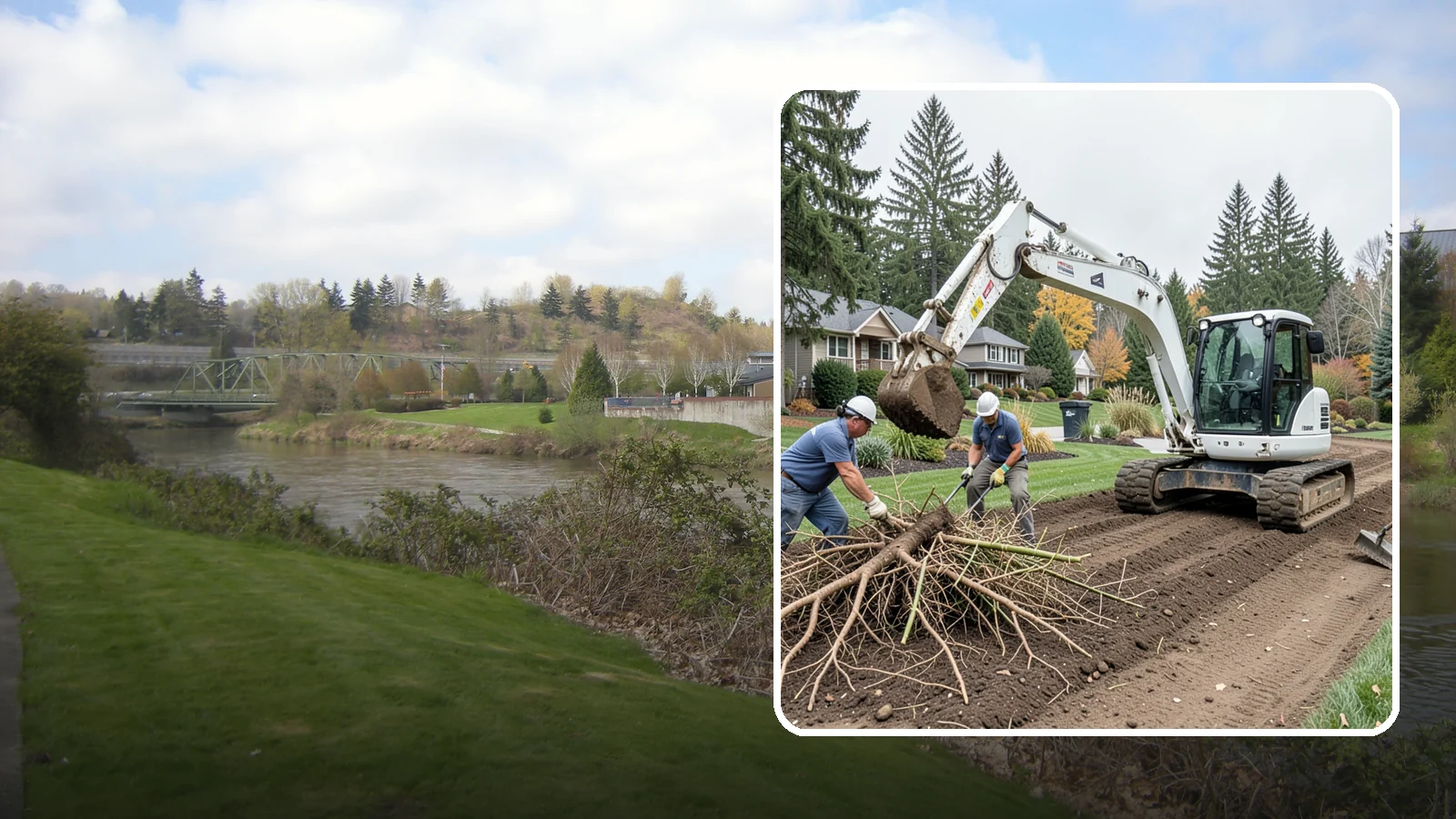
Full removal of invasive running bamboo, including the root and rhizome system, to stop its spread for good.
The first sign is usually a new shoot coming up where none should be. It might be in the lawn, along the fence, or in a neighbor's bed. Bamboo spreads underground, and by the time shoots show up far from the main clump, the root system is already well established.
Washington Landscaping removes bamboo from Tukwila yards. We are licensed, bonded and insured, and estimates are free. This page explains why bamboo is hard to remove and what the work looks like.
How bamboo behaves in Tukwila yards and how we remove it
Most invasive bamboo is a running type. It sends out rhizomes, which are woody underground stems that travel sideways and send up new canes. A single cut cane does not end the plant. The rhizome mat holds energy and can resprout from small pieces left in the soil.
Local conditions favor it. Tukwila is in USDA hardiness zone 9a, where the average coldest winter night is about 21.1 F. That is mild enough that bamboo is rarely knocked back by cold. The frost-free growing season is about 247 days, from about Mar 11 to Nov 17. These are medians, so frost can come earlier or later in a given year. In practice it means bamboo has a long window each year to grow and spread.
Soil matters too. Per the USDA soil survey, about 35% of Tukwila's rated land is well drained, 49% moderately well drained and 16% poorly drained. That describes the city as a whole, and your own yard may differ. Rhizome depth and spread can vary with soil moisture and compaction, so we look at your site before deciding how deep to dig.
What the work involves
We start by finding the edges of the stand. Shoots that have surfaced are a clue, but the rhizomes often reach further than the canes. Next we cut the canes down and dig out the rhizome mat, following it as far as it runs. Digging is the dependable method because it takes out the part that regrows. The material is hauled away so that fragments do not get replanted by accident.
Expect to watch the area afterward. Missed pieces may send up shoots in the next growing season, and these are easiest to remove while they are small. If the bamboo crosses a property line, talk to your neighbor early, because regrowth can come from their side.
If you want a second opinion on what is growing in your yard, our staff includes an ISA Certified Arborist. Call or text 425-433-9444 for a free estimate.
Tukwila yard conditions at a glance
| Tree canopy | 19.3% of the city |
|---|---|
| Land sloping 15% or more | 19% (40% or more: 2.8%) |
| Soil drainage (rated land) | 35% well, 49% moderately well, 16% poorly drained |
| Share of rain October to April | 82% |
A year in a Tukwila yard
- Late winter
- Dormant pruning for most deciduous trees and shrubs, before buds break.
- Spring
- Last frost is usually around Mar 11; in 1 year in 10 it comes on or after Mar 27. Plant frost-tender annuals and vegetables after that.
- Early summer
- Check sprinklers and drip lines before July, the start of the dry months here.
- Summer
- July and August average 0.5 in and 0.8 in. Water deeply and less often; mulch beds to hold moisture.
- Fall
- Aerate, overseed and plant trees and shrubs while the soil is warm; first frost is usually around Nov 17. Winterize irrigation before then.
- Winter
- About 26 days a year freeze at night and thaw by day: keep drains, paver joints and wall weep holes clear.
Dates are medians for the city from Daymet 2005-2025; your yard and any given year can differ.
How Tukwila’s soils drain
- Well drained35%
- Moderately well49%
- Poorly drained16%
Share of rated land in the USDA SSURGO soil survey; built-over ground is not rated. A soil check on your lot tells you what you have.
Sources: Daymet daily weather (NASA/ORNL), 2023 USDA Plant Hardiness Zone Map data (PRISM, Oregon State University), USDA SSURGO soil survey, USGS 3DEP elevation, USFS/NLCD tree canopy 2025, US Census ACS 2020-2024.
Tukwila Bamboo Removal
Local Service Information
Tukwila
A city in the Green/Duwamish river valley of south King County, a major retail and commercial hub.
Benefits
Stops aggressive bamboo spread; Rhizomes excavated, not just cut; Protects structures and hardscape; Optional rhizome barrier install; The only lasting solution
Process
Also serving Tukwila
- Site Clearing in Tukwilaat Washington Construction
- Trail clearing in Tukwilaat Washington Tree Services
Get a Free Bamboo Removal Estimate in Tukwila
Tell us about your project. We’ll review your needs and provide a customized, no-obligation proposal.
Request a Free Consultation
Complete the form or call our team to discuss your project.
On-Site Assessment
We’ll review your property, discuss your goals, and recommend an appropriate solution.
Receive a Customized Proposal
Receive a detailed estimate outlining the proposed work and pricing.