Shaping Your Outdoors. Surpassing Expectations.

Tukwila Cedar Tree Pruning

Pruning for cedars and arborvitae that maintains form, health, and screening without bare spots.
The lower branches of your cedar are brown and dead. Limbs hang over the roof or drive. Inner foliage looks thin, and the tree has grown wider than the space you gave it. These are the usual reasons Tukwila homeowners start looking into cedar pruning.
Washington Landscaping has an ISA Certified Arborist on staff, and estimates are free. We can look at the tree, explain what should come off and what should stay, and prune with the tree's long-term health in mind rather than just its size.
Cedar Pruning in Tukwila: Timing, Rainfall and Tree Health
Cedars react to pruning differently from many other trees. Most cedars will not push new growth from bare, leafless wood. If a cut goes back past the green foliage, that spot usually stays bare. So the first question is not how much can be removed, but how much green must be left behind.
Dead interior growth is normal on a healthy cedar. Shaded inner branches drop their needles over time. Lower limbs also die back when neighboring trees, fences or buildings cut off light. Pruning can clear that dead wood, lift the canopy off a roof or walkway, and let air move through the tree. It cannot restore foliage on branches that are already bare.
Local weather matters for timing. Per Daymet data from 2005 to 2025, Tukwila sees about 104 days a year with 0.1 inch or more of rain. Wet foliage and wet wood stay damp longer, which favors fungal problems around fresh cuts and in crowded canopies. Opening up a dense cedar can help it dry out between rains. The same data shows July and August as the dry months, averaging about 0.48 inches and 0.83 inches. Dry weather makes access easier and cleanup cleaner, though it also means a newly pruned tree may need attention to watering. Your own yard and tree may differ from these city-wide averages.
Tree canopy covers about 19.3% of Tukwila, according to USFS/NLCD 2025. That figure describes the city as a whole. On a single lot, a cedar may be one of the few large trees, and its shade and screening matter. That is a good reason to prune conservatively and avoid heavy cuts.
On a typical visit, the arborist looks at the tree's structure, the amount of live foliage and any conflicts with structures or power lines. Then we agree on a plan: remove dead and crossing branches, raise the canopy where needed, and shorten live limbs only to a side branch with foliage. If the tree is too large or too far gone for pruning to help, we will tell you plainly. Call or text 425-433-9444 to set up a free estimate.
Tukwila yard conditions at a glance
| USDA hardiness zone (2023) | 9a |
|---|---|
| Last / first frost (median) | Mar 11 / Nov 17 |
| Tree canopy | 19.3% of the city |
| Share of rain October to April | 82% |
| Dry months (under 1.25 in) | July and August |
A year in a Tukwila yard
- Late winter
- Dormant pruning for most deciduous trees and shrubs, before buds break.
- Spring
- Last frost is usually around Mar 11; in 1 year in 10 it comes on or after Mar 27. Plant frost-tender annuals and vegetables after that.
- Early summer
- Check sprinklers and drip lines before July, the start of the dry months here.
- Summer
- July and August average 0.5 in and 0.8 in. Water deeply and less often; mulch beds to hold moisture.
- Fall
- Aerate, overseed and plant trees and shrubs while the soil is warm; first frost is usually around Nov 17. Winterize irrigation before then.
- Winter
- About 26 days a year freeze at night and thaw by day: keep drains, paver joints and wall weep holes clear.
Dates are medians for the city from Daymet 2005-2025; your yard and any given year can differ.
Sources: Daymet daily weather (NASA/ORNL), 2023 USDA Plant Hardiness Zone Map data (PRISM, Oregon State University), USDA SSURGO soil survey, USGS 3DEP elevation, USFS/NLCD tree canopy 2025, US Census ACS 2020-2024.
Tukwila Cedar Tree Pruning
Local Service Information
Tukwila
A city in the Green/Duwamish river valley of south King County, a major retail and commercial hub.
Benefits
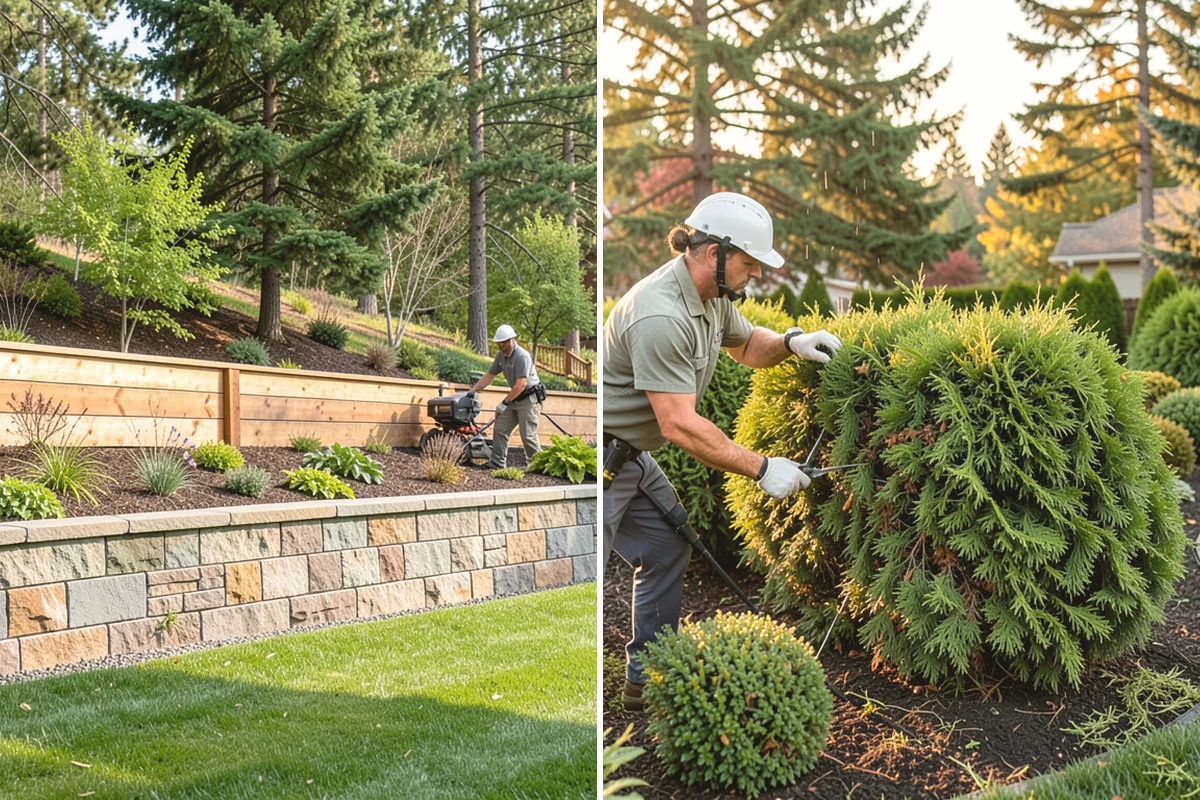
Maintains screening density and form; Stays within green growth; Deadwood and hazards removed; Even, full growth for screens; Avoids permanent bare spots
Process
Also serving Tukwila
- Building clearance pruning in Tukwilaat Washington Tree Services
Get a Free Cedar Tree Pruning Estimate in Tukwila
Tell us about your project. We’ll review your needs and provide a customized, no-obligation proposal.
Request a Free Consultation
Complete the form or call our team to discuss your project.
On-Site Assessment
We’ll review your property, discuss your goals, and recommend an appropriate solution.
Receive a Customized Proposal
Receive a detailed estimate outlining the proposed work and pricing.