Shaping Your Outdoors. Surpassing Expectations.

Tukwila Dry Creek Bed Installation
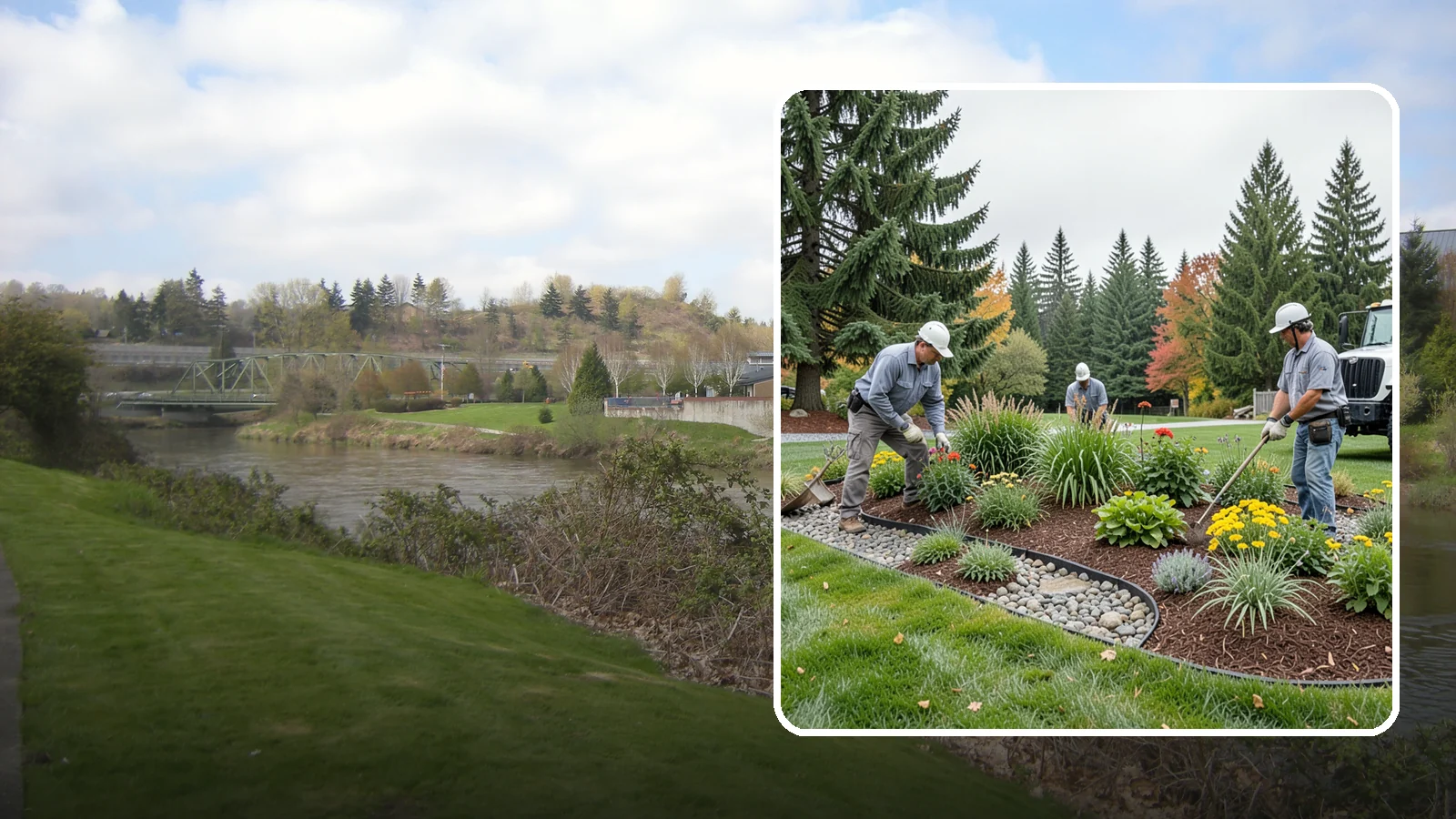
Decorative dry creek beds that manage runoff and add natural beauty to the landscape.
After a hard rain, water pools by the downspout, cuts a muddy channel across the lawn, or washes mulch out of a planting bed. If you see this in your yard, a dry creek bed may be what you need.
A dry creek bed is a shaped channel lined with stone. It carries runoff along a set path and stays dry most of the year. Washington Landscaping, based in Bothell, WA, installs them, and estimates are free. Below is how Tukwila's rain and slopes affect the design.
How Tukwila's Rain and Slopes Shape a Dry Creek Bed
Water erodes soil when it moves fast and has no defined path. Roof runoff, a compacted lawn or a slope can all send it across bare ground. A dry creek bed gives that water a route. It slows the flow and spreads the force across stone instead of soil.
Tukwila's rain pattern matters here. Per Daymet data from 2005 to 2025, the city gets about 39.8 inches of rain a year. Only about 4.5 days a year bring an inch or more. So the channel mostly has to handle moderate rain, with a few heavy days that set its size. We size the width and depth for those heavier days, and we plan for overflow if the water exceeds the channel.
Slope is the other factor. USGS 3DEP elevation data shows about 19% of Tukwila's land slopes 15% or more. That describes the city as a whole, and your own yard may be flatter or steeper. On a steeper lot, water moves faster. The bed may need larger stone, a more winding line to slow the flow, or a few drops built in. On a flat lot, getting enough fall for the water to leave is the main concern.
Timing also matters. July and August are the driest months here, with averages of about 0.48 inches and 0.83 inches. Dry ground is easier to dig and shape, and you can see where water actually runs once the rains return. These are averages, so a given year may differ.
The work itself is plain. We mark the path, dig the channel, and lay fabric to keep soil from mixing with the stone. Then we set larger stones along the edges and fill the center with smaller rock. Plantings along the banks help hold the soil. If the bed sits near a wall or involves grading, we check permit needs with the city before work starts.
Tukwila yard conditions at a glance
| Soil drainage (rated land) | 35% well, 49% moderately well, 16% poorly drained |
|---|---|
| Days with 1 in or more of rain | 4.5 a year |
| Share of rain October to April | 82% |
| Land sloping 15% or more | 19% (40% or more: 2.8%) |
| Average yearly precipitation | 39.8 in |
A year in a Tukwila yard
- Late winter
- Dormant pruning for most deciduous trees and shrubs, before buds break.
- Spring
- Last frost is usually around Mar 11; in 1 year in 10 it comes on or after Mar 27. Plant frost-tender annuals and vegetables after that.
- Early summer
- Check sprinklers and drip lines before July, the start of the dry months here.
- Summer
- July and August average 0.5 in and 0.8 in. Water deeply and less often; mulch beds to hold moisture.
- Fall
- Aerate, overseed and plant trees and shrubs while the soil is warm; first frost is usually around Nov 17. Winterize irrigation before then.
- Winter
- About 26 days a year freeze at night and thaw by day: keep drains, paver joints and wall weep holes clear.
Dates are medians for the city from Daymet 2005-2025; your yard and any given year can differ.
How Tukwila’s soils drain
- Well drained35%
- Moderately well49%
- Poorly drained16%
Share of rated land in the USDA SSURGO soil survey; built-over ground is not rated. A soil check on your lot tells you what you have.
Sources: Daymet daily weather (NASA/ORNL), 2023 USDA Plant Hardiness Zone Map data (PRISM, Oregon State University), USDA SSURGO soil survey, USGS 3DEP elevation, USFS/NLCD tree canopy 2025, US Census ACS 2020-2024.
Tukwila Dry Creek Bed Installation
Local Service Information
Tukwila
A city in the Green/Duwamish river valley of south King County, a major retail and commercial hub.
Benefits
Manages runoff and looks beautiful; Natural, water-worn streambed look; Controls erosion along flow paths; Rock and boulders for character; Function and design in one feature

Process
Also serving Tukwila
- Basement Foundation in Tukwilaat Washington Construction
Get a Free Dry Creek Bed Installation Estimate in Tukwila
Tell us about your project. We’ll review your needs and provide a customized, no-obligation proposal.
Request a Free Consultation
Complete the form or call our team to discuss your project.
On-Site Assessment
We’ll review your property, discuss your goals, and recommend an appropriate solution.
Receive a Customized Proposal
Receive a detailed estimate outlining the proposed work and pricing.