Shaping Your Outdoors. Surpassing Expectations.

Tukwila Dry Well Installation
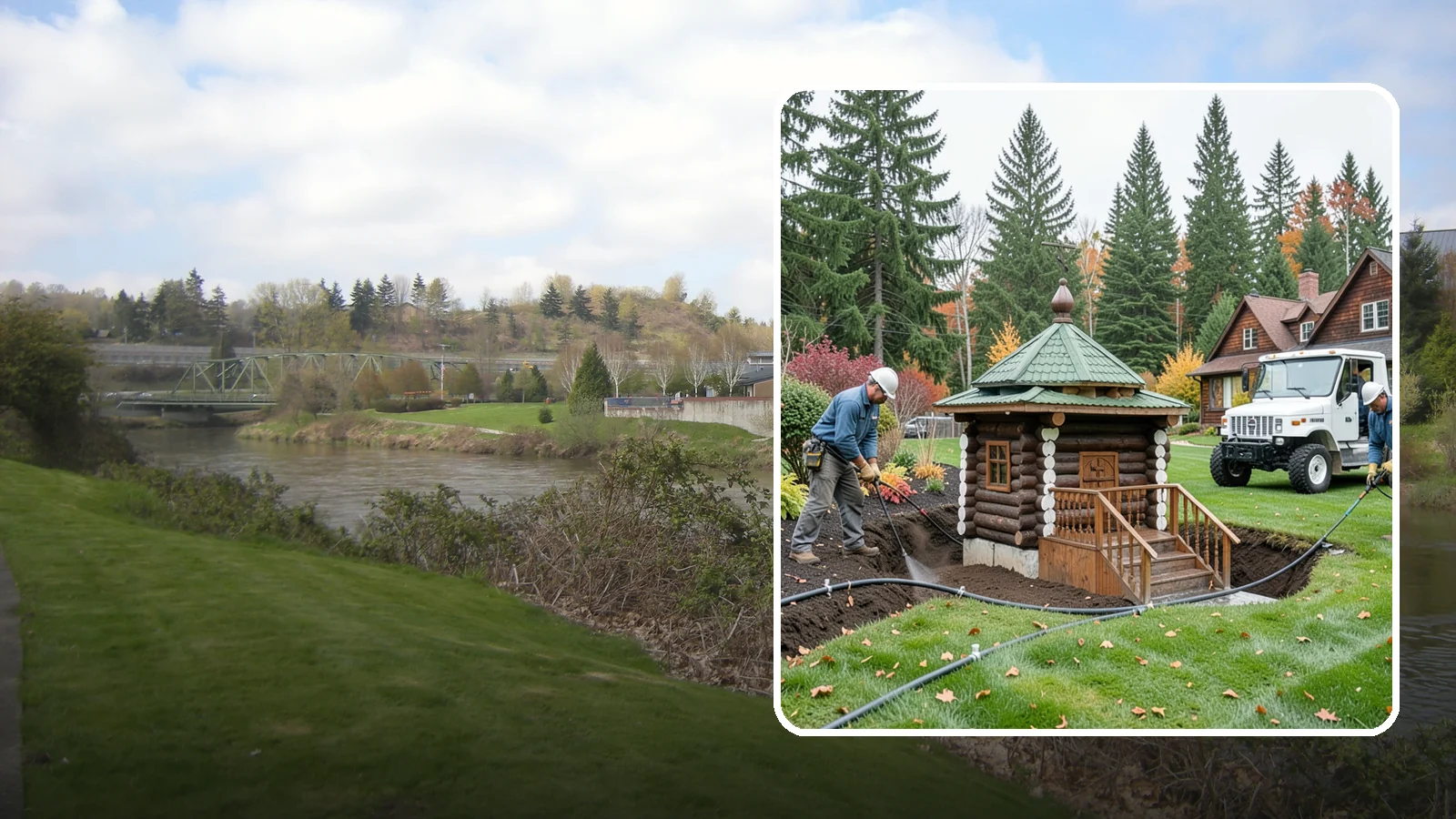
We install underground dry wells that collect concentrated runoff and let it infiltrate slowly into the soil away from your foundation.
After a heavy rain, water from your downspouts or roof edge collects near the foundation, floods a low corner of the lawn, or runs across the driveway and stays there. If that sounds familiar, a dry well may be worth a look.
A dry well is an underground chamber that takes in roof or surface runoff and lets it soak slowly into the ground. Washington Landscaping, based in Bothell, WA, installs them in Tukwila. Estimates are free, and we can talk through whether a dry well fits your yard.
How Tukwila's Rain and Soil Affect Dry Well Installation
Water pools because it has nowhere to go. Roofs and paved areas shed rain fast, and if the soil under a downspout outlet cannot absorb it as quickly, it spreads across the surface or settles against the house. A dry well gives that water a place to collect and then drain down into the soil at its own pace.
Why local conditions matter
Two numbers help explain what a dry well here has to handle. Per Daymet data for 2005-2025, Tukwila gets about 39.8 inches of precipitation a year, and 82% of it falls from October to April. So the system works hardest through the wet months, often when the ground is already damp. Days with an inch or more of rain are uncommon, about 4.5 a year, but those are the days a undersized system overflows.
Soil is the other piece. The USDA soil survey (SSURGO) rates about 16% of Tukwila's land as poorly drained. That describes the city as a whole, not your yard, so your own soil may drain better or worse. This matters because a dry well only works where water can soak out of it. In slow soil, a dry well may need to be larger, or another drainage approach may suit the site better.
What the work looks like
We start by looking at where the water comes from and where it collects. Then we check how the soil drains, usually by looking at the ground and testing how fast water soaks in. The size and location of the well follow from that. It should sit well away from the foundation and from neighboring property, and downhill or level with the area it serves.
The crew digs the pit, lines it with filter fabric, and fills or sets it with drain rock or a prefabricated chamber. Pipe from your downspouts or a catch basin is routed in, and the surface is restored. Because this is excavation, we check with the city on any permit needs before work starts.
If you want an estimate, call or text 425-433-9444. Financing is available, subject to credit approval.
Tukwila yard conditions at a glance
| Soil drainage (rated land) | 35% well, 49% moderately well, 16% poorly drained |
|---|---|
| Days with 1 in or more of rain | 4.5 a year |
| Share of rain October to April | 82% |
| Land sloping 15% or more | 19% (40% or more: 2.8%) |
| Average yearly precipitation | 39.8 in |
A year in a Tukwila yard
- Late winter
- Dormant pruning for most deciduous trees and shrubs, before buds break.
- Spring
- Last frost is usually around Mar 11; in 1 year in 10 it comes on or after Mar 27. Plant frost-tender annuals and vegetables after that.
- Early summer
- Check sprinklers and drip lines before July, the start of the dry months here.
- Summer
- July and August average 0.5 in and 0.8 in. Water deeply and less often; mulch beds to hold moisture.
- Fall
- Aerate, overseed and plant trees and shrubs while the soil is warm; first frost is usually around Nov 17. Winterize irrigation before then.
- Winter
- About 26 days a year freeze at night and thaw by day: keep drains, paver joints and wall weep holes clear.
Dates are medians for the city from Daymet 2005-2025; your yard and any given year can differ.
How Tukwila’s soils drain
- Well drained35%
- Moderately well49%
- Poorly drained16%
Share of rated land in the USDA SSURGO soil survey; built-over ground is not rated. A soil check on your lot tells you what you have.
Sources: Daymet daily weather (NASA/ORNL), 2023 USDA Plant Hardiness Zone Map data (PRISM, Oregon State University), USDA SSURGO soil survey, USGS 3DEP elevation, USFS/NLCD tree canopy 2025, US Census ACS 2020-2024.
Tukwila Dry Well Installation

Local Service Information
Tukwila
A city in the Green/Duwamish river valley of south King County, a major retail and commercial hub.
Benefits
Stores large runoff volumes underground; Recharges groundwater instead of overloading storm systems; Frees up yard space with a hidden below-grade solution; Relieves saturated downspout and catch-basin lines; Sized for PNW rainfall and slow-draining clay soils
Process

Also serving Tukwila
- Foundation Drainage System in Tukwilaat Washington Construction
- Box Gutter Installation in Tukwilaat Washington Roofing
Get a Free Dry Well Installation Estimate in Tukwila
Tell us about your project. We’ll review your needs and provide a customized, no-obligation proposal.
Request a Free Consultation
Complete the form or call our team to discuss your project.
On-Site Assessment
We’ll review your property, discuss your goals, and recommend an appropriate solution.
Receive a Customized Proposal
Receive a detailed estimate outlining the proposed work and pricing.