Shaping Your Outdoors. Surpassing Expectations.

Tukwila Erosion Control
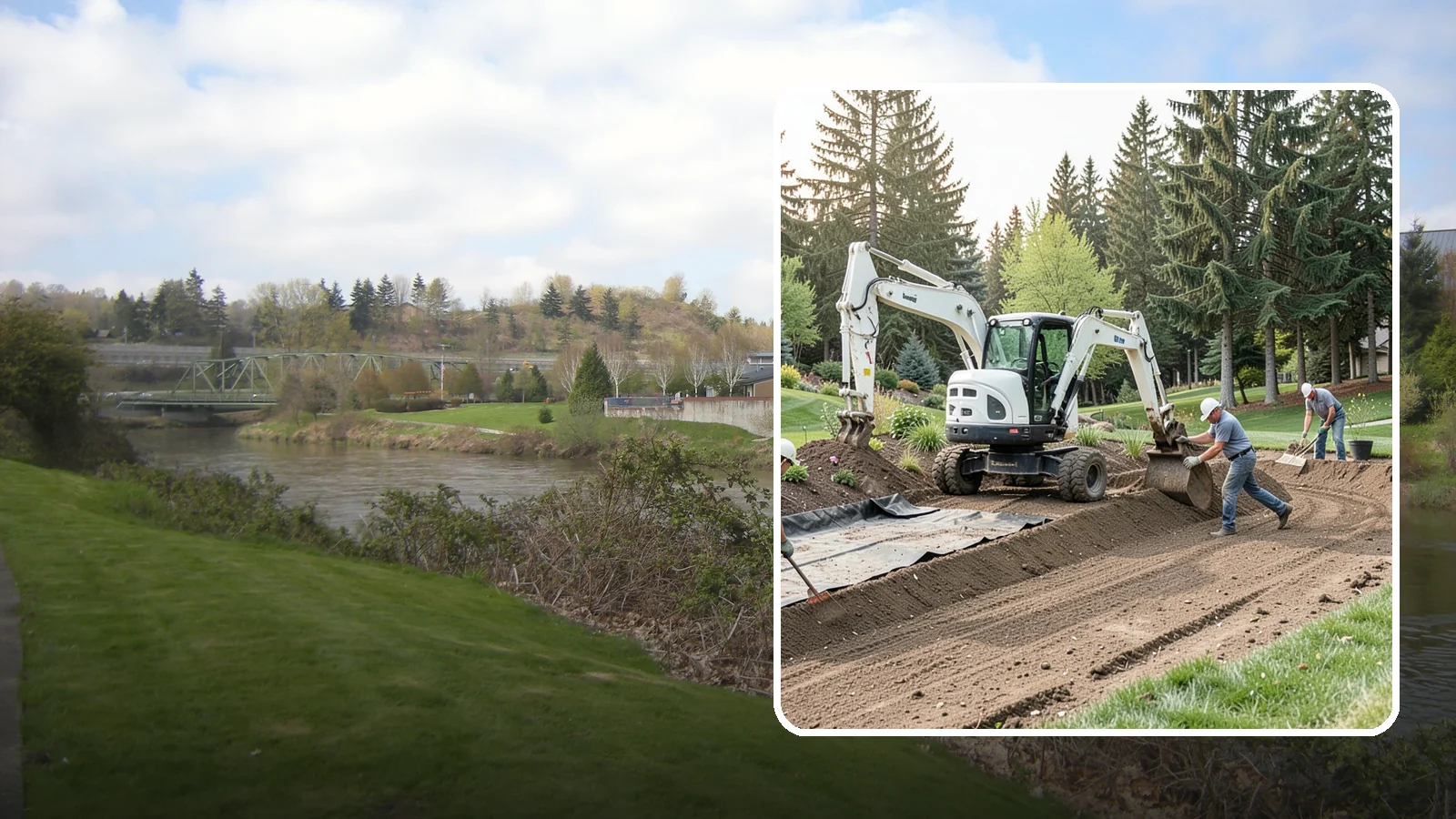
Effective erosion control that stabilizes soil on slopes and bare areas to stop washouts and loss.
You notice it after a hard rain. Soil is washing out of a planting bed, a gully is forming along the downspout, or muddy water is running onto the driveway. Bare dirt that moves once will usually move again.
Washington Landscaping offers erosion control for Tukwila homeowners. We look at where the water comes from, where it goes, and what is holding the soil in place. Estimates are free, and you can call or text 425-433-9444.
Why Erosion Control Matters on Tukwila Yards
Erosion starts with moving water and soil that has nothing holding it. Roots, mulch and plant cover slow rain down and let it soak in. Where those are missing, drops hit bare ground, loosen the particles and carry them downhill. Concentrated flow from a roof, a driveway or a downspout cuts channels fast.
Two local numbers help explain the risk. Per USGS 3DEP elevation data, about 19% of Tukwila's land slopes 15% or more, and about 2.8% slopes 40% or more. Those figures describe the city as a whole. Your own yard may be flat, steep, or somewhere in between, so we judge the slope on site. Steeper ground moves water faster, which is why even a modest grade can need attention if the surface is bare.
Timing matters too. Daymet data for 2005-2025 shows that 82% of Tukwila's yearly precipitation falls from October to April. That means the wet season is long, and soil is exposed to rain for months at a time. For most homeowners, the practical point is to get stabilizing work done before the rains settle in, since planting and seeding are harder to establish in wet, cold ground. If the soil is already moving, temporary protection can hold it until permanent work is possible.
The work itself depends on what we find. Common approaches in Puget Sound landscapes include:
Regrading small areas so water spreads out instead of concentrating. Redirecting downspouts and surface flow to a safe outlet. Covering bare soil with mulch, erosion blankets or dense groundcover and shrub plantings with deep roots. Adding small retaining features or rock-lined channels where flow is strong. Any wall, grading or structure is checked with the city for permit needs before work starts.
We begin with a free estimate. We walk the yard, note where water enters and leaves, and explain what we would do and why. Financing is available, subject to credit approval. We have been in business since 2004, and we are licensed, bonded and insured.
Tukwila yard conditions at a glance
| Soil drainage (rated land) | 35% well, 49% moderately well, 16% poorly drained |
|---|---|
| Days with 1 in or more of rain | 4.5 a year |
| Share of rain October to April | 82% |
| Land sloping 15% or more | 19% (40% or more: 2.8%) |
| Average yearly precipitation | 39.8 in |
A year in a Tukwila yard
- Late winter
- Dormant pruning for most deciduous trees and shrubs, before buds break.
- Spring
- Last frost is usually around Mar 11; in 1 year in 10 it comes on or after Mar 27. Plant frost-tender annuals and vegetables after that.
- Early summer
- Check sprinklers and drip lines before July, the start of the dry months here.
- Summer
- July and August average 0.5 in and 0.8 in. Water deeply and less often; mulch beds to hold moisture.
- Fall
- Aerate, overseed and plant trees and shrubs while the soil is warm; first frost is usually around Nov 17. Winterize irrigation before then.
- Winter
- About 26 days a year freeze at night and thaw by day: keep drains, paver joints and wall weep holes clear.
Dates are medians for the city from Daymet 2005-2025; your yard and any given year can differ.
How Tukwila’s soils drain
- Well drained35%
- Moderately well49%
- Poorly drained16%
Share of rated land in the USDA SSURGO soil survey; built-over ground is not rated. A soil check on your lot tells you what you have.
Sources: Daymet daily weather (NASA/ORNL), 2023 USDA Plant Hardiness Zone Map data (PRISM, Oregon State University), USDA SSURGO soil survey, USGS 3DEP elevation, USFS/NLCD tree canopy 2025, US Census ACS 2020-2024.
Tukwila Erosion Control
Local Service Information
Tukwila
A city in the Green/Duwamish river valley of south King County, a major retail and commercial hub.
Benefits
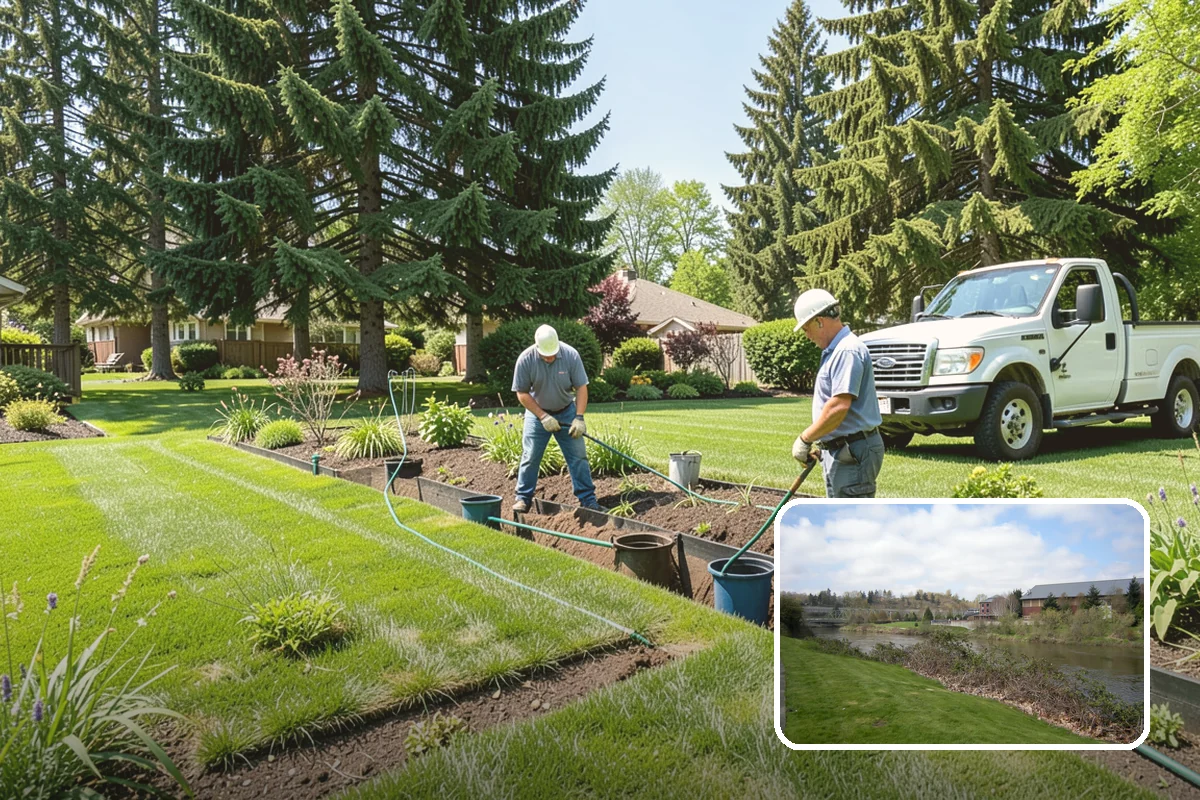
Stops soil loss and washouts; Stabilizes slopes and bare ground; Plantings, matting, and structures; Manages the water driving erosion; Long-term, not seasonal fixes

Process
Also serving Tukwila
- Permit Assistance in Tukwilaat Washington Construction
- Annual House Washing in Tukwilaat Washington Pressure Washing
- Historic Roof Replacement in Tukwilaat Washington Roofing
Get a Free Erosion Control Estimate in Tukwila
Tell us about your project. We’ll review your needs and provide a customized, no-obligation proposal.
Request a Free Consultation
Complete the form or call our team to discuss your project.
On-Site Assessment
We’ll review your property, discuss your goals, and recommend an appropriate solution.
Receive a Customized Proposal
Receive a detailed estimate outlining the proposed work and pricing.