Shaping Your Outdoors. Surpassing Expectations.

Wilkeson Drainage Solutions

Custom drainage systems that eliminate standing water, soggy lawns, and water pooling around your home.
Drainage work in Wilkeson makes the most sense in late summer or early fall, before the wet season sets in. Per Daymet data from 2005 to 2025, about 79% of the town's yearly precipitation falls from October to April. Digging in dry soil is easier, and you can fix problems before the rain tests them.
Washington Landscaping, based in Bothell, WA, designs and installs drainage solutions for yards with standing water, soggy lawns, and runoff that heads toward a foundation. Estimates are free. Call or text 425-433-9444 to start.
Planning Drainage Solutions for Your Wilkeson Yard
Start by watching the yard during a hard rain. Note where water pools, where it runs, and how long it stays. Daymet records for 2005 to 2025 show about 55.1 inches of precipitation a year in Wilkeson, with about 5.9 days a year bringing an inch or more of rain. Those heavy days are the ones that overwhelm a weak drainage setup, so plan for them rather than for a typical drizzle.
What affects scope
Soil matters first. The USDA soil survey rates about 10% of Wilkeson's rated land as poorly drained. That figure describes the town as a whole, and your own yard may differ. A site visit and a few test holes tell more than a map does.
Beyond soil, scope depends on a few practical points:
Slope and where the water can go. A drain needs a legal, safe place to discharge, such as a daylight outlet, a dry well, or a rain garden. The source of the water also counts, whether roof downspouts, a hillside, or a driveway. Finally, access and existing landscaping affect how much must be dug up and restored. Common solutions include French drains, catch basins, downspout tie-ins to solid pipe, regrading, and dry wells. Any work involving grading or structures is checked with the city for permit needs before it starts.
What to expect
After the site visit, you get a free estimate and a proposed layout. Financing is available, subject to credit approval. The company has been in business since 2004 and is licensed, bonded and insured ($2M). Work usually begins with marking utilities, then trenching, laying perforated pipe in gravel, connecting outlets, and restoring the surface. Lawn and plantings may need a season to settle and fill in.
One practical tip: before the crew arrives, take photos or short videos of the yard during a heavy rain. They show exactly where water collects and make the plan more accurate.
Wilkeson yard conditions at a glance
| Soil drainage (rated land) | 61% well, 28% moderately well, 10% poorly drained |
|---|---|
| Days with 1 in or more of rain | 5.9 a year |
| Share of rain October to April | 79% |
| Land sloping 15% or more | 42% (40% or more: 10.9%) |
| Average yearly precipitation | 55.1 in |
A year in a Wilkeson yard
- Late winter
- Dormant pruning for most deciduous trees and shrubs, before buds break.
- Spring
- Last frost is usually around Apr 3; in 1 year in 10 it comes on or after Apr 20. Plant frost-tender annuals and vegetables after that.
- Early summer
- Check sprinklers and drip lines before July, the start of the dry months here.
- Summer
- July and August average 0.8 in and 1.2 in. Water deeply and less often; mulch beds to hold moisture.
- Fall
- Aerate, overseed and plant trees and shrubs while the soil is warm; first frost is usually around Nov 9. Winterize irrigation before then.
- Winter
- About 43 days a year freeze at night and thaw by day: keep drains, paver joints and wall weep holes clear.
Dates are medians for the city from Daymet 2005-2025; your yard and any given year can differ.
How Wilkeson’s soils drain
- Well drained61%
- Moderately well28%
- Poorly drained10%
Share of rated land in the USDA SSURGO soil survey; built-over ground is not rated. A soil check on your lot tells you what you have.
Sources: Daymet daily weather (NASA/ORNL), 2023 USDA Plant Hardiness Zone Map data (PRISM, Oregon State University), USDA SSURGO soil survey, USGS 3DEP elevation, USFS/NLCD tree canopy 2025, US Census ACS 2020-2024.
Wilkeson Drainage Solutions
Local Service Information
Wilkeson
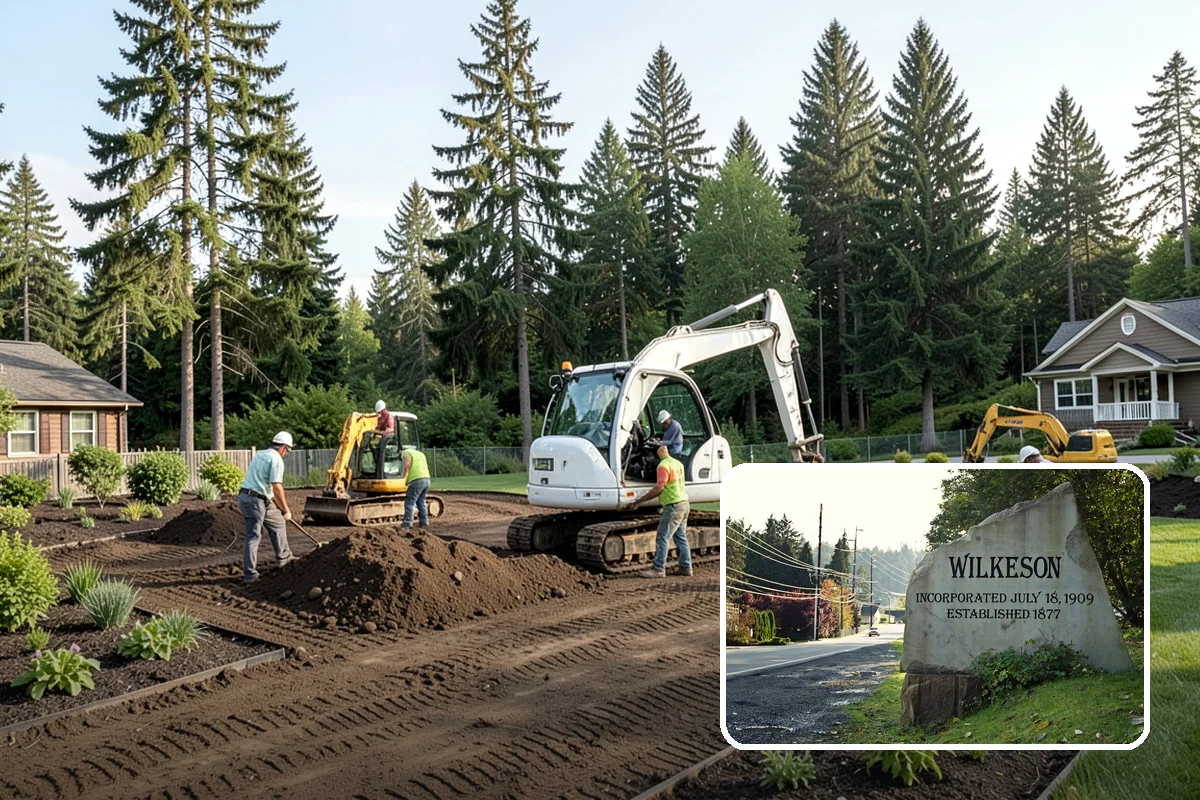
A very small historic coal and sandstone town in the foothills of southeast Pierce County.
Benefits
Eliminates standing water and soggy spots; Protects your foundation and landscape; Custom-engineered to your property; Solves the cause, not just symptoms; Built for PNW rainfall

Process

Drainage Solutions in nearby areas
Also serving Wilkeson
- Foundation Construction in Wilkesonat Washington Construction
Get a Free Drainage Solutions Estimate in Wilkeson
Tell us about your project. We’ll review your needs and provide a customized, no-obligation proposal.
Request a Free Consultation
Complete the form or call our team to discuss your project.
On-Site Assessment
We’ll review your property, discuss your goals, and recommend an appropriate solution.
Receive a Customized Proposal
Receive a detailed estimate outlining the proposed work and pricing.