Shaping Your Outdoors. Surpassing Expectations.

Lake Stevens Evergreen Pruning
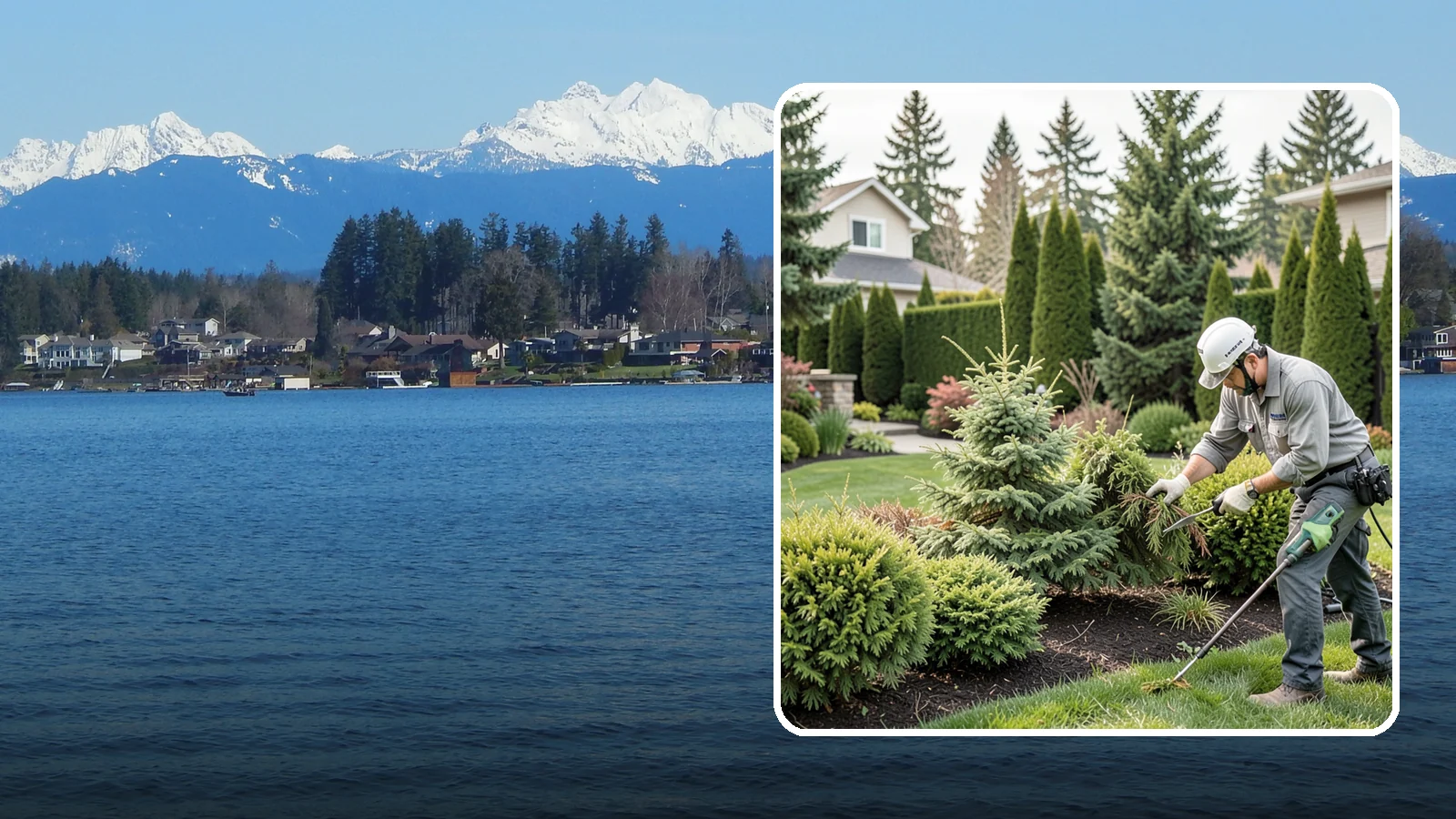
Species-aware evergreen pruning that maintains shape and health without leaving dead, bare patches.
In Lake Stevens, evergreen pruning is easiest to plan around the weather. Per Daymet data for 2005-2025, about 78% of the city's yearly precipitation falls from October to April, while July averages only about 0.74 in of rain. Those drier summer weeks give crews dry footing and let you see each tree's shape clearly.
Washington Landscaping has an ISA Certified Arborist on staff. This page explains how evergreen pruning is planned, what changes the scope of the job, and what to expect from start to finish.
Planning Evergreen Pruning in Lake Stevens
Start with the goal. Some homeowners want a hedge kept to a set height. Others want clearance from a roof, driveway or power line, or a thinner crown so more light reaches the yard. The goal decides which cuts make sense, and it decides which ones do not.
What affects the scope
Species matters most. Many evergreens, including most conifers, do not regrow well from bare wood. Cutting back past the green growth can leave a permanent gap. A pruner needs to know where live foliage ends before deciding how much to take.
Size and access also shape the job. A tall tree near a structure calls for different methods than a shrub-height hedge. Tight side yards, slopes and fences all change how work is done and how debris is hauled out.
Canopy is another factor. Per USFS/NLCD 2025 data, tree canopy covers about 31.4% of Lake Stevens. That describes the city as a whole, and your own lot may have more or less shade. Still, it is a reminder that neighboring trees often overlap. Branches may cross property lines, so it helps to talk with neighbors before any work starts.
What to expect
Expect a site visit first. The arborist looks at the trees, talks through your goals and explains what can safely be removed. Then the work is scoped. We offer free estimates, and financing is available subject to credit approval.
On the day, work typically covers removing dead or crossing branches, shaping, and cleanup. Pruning cuts are made to leave the tree's natural form, not a flat or lopsided shape. Fresh cuts on conifers may ooze sap. That is normal and not a sign of harm.
Results show over time. A tree may look sparse for a short while, and new growth fills in as the seasons pass. No one can promise exactly how a tree will respond.
Practical tip: before the visit, walk your yard and tie a bit of ribbon on any branch that worries you. It makes the conversation faster and the estimate more accurate.
Lake Stevens yard conditions at a glance
| USDA hardiness zone (2023) | 8b |
|---|---|
| Last / first frost (median) | Mar 24 / Nov 10 |
| Tree canopy | 31.4% of the city |
| Share of rain October to April | 78% |
| Dry months (under 1.25 in) | July |
A year in a Lake Stevens yard
- Late winter
- Dormant pruning for most deciduous trees and shrubs, before buds break.
- Spring
- Last frost is usually around Mar 24; in 1 year in 10 it comes on or after Apr 12. Plant frost-tender annuals and vegetables after that.
- Early summer
- Check sprinklers and drip lines before July, the start of the dry months here.
- Summer
- July average 0.7 in. Water deeply and less often; mulch beds to hold moisture.
- Fall
- Aerate, overseed and plant trees and shrubs while the soil is warm; first frost is usually around Nov 10. Winterize irrigation before then.
- Winter
- About 40 days a year freeze at night and thaw by day: keep drains, paver joints and wall weep holes clear.
Dates are medians for the city from Daymet 2005-2025; your yard and any given year can differ.
Sources: Daymet daily weather (NASA/ORNL), 2023 USDA Plant Hardiness Zone Map data (PRISM, Oregon State University), USDA SSURGO soil survey, USGS 3DEP elevation, USFS/NLCD tree canopy 2025, US Census ACS 2020-2024.
Lake Stevens Evergreen Pruning
Local Service Information
Lake Stevens
A city surrounding the lake of the same name in central Snohomish County.
Benefits
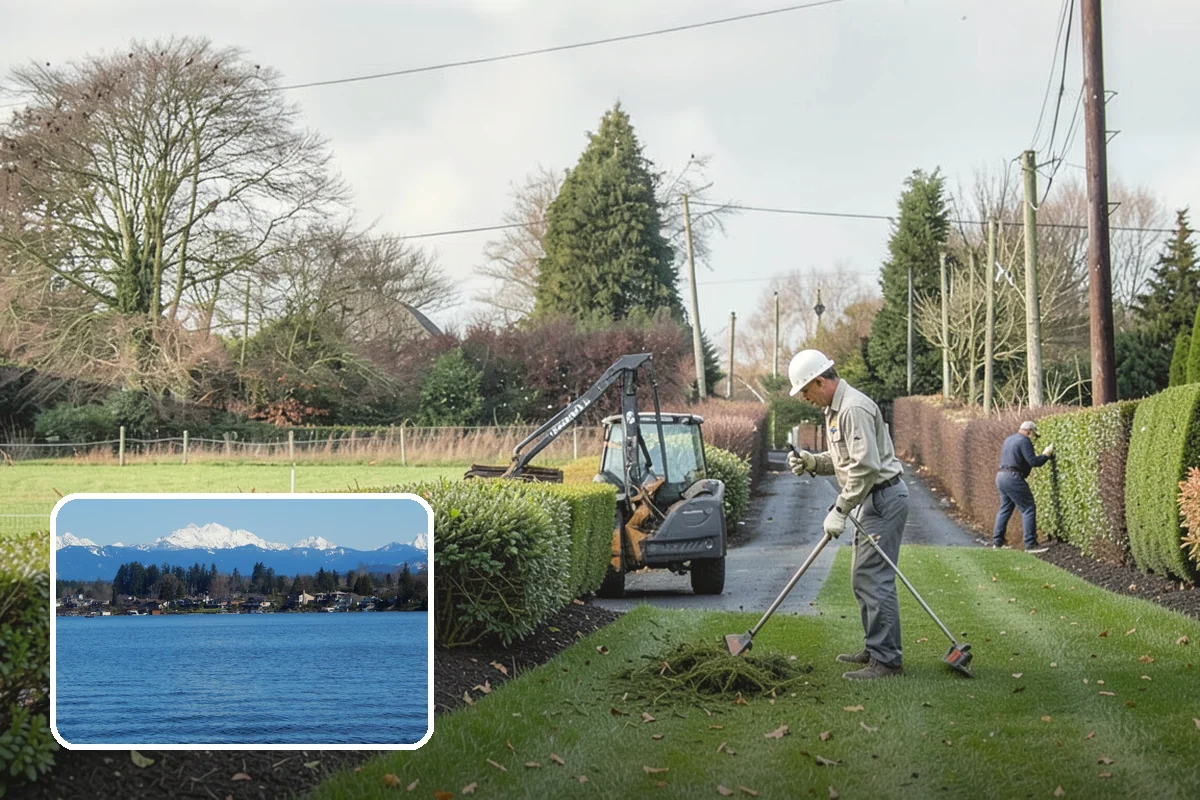
Cuts kept within living green to avoid bare spots; Natural silhouette preserved, not sheared; Size and density controlled thoughtfully; Approach tailored to conifers vs. broadleaf evergreens; Healthier, fuller year-round structure
Process

Evergreen Pruning in nearby areas
Also serving Lake Stevens
- Mulching in Lake Stevensat Washington Tree Services
Get a Free Evergreen Pruning Estimate in Lake Stevens
Tell us about your project. We’ll review your needs and provide a customized, no-obligation proposal.
Request a Free Consultation
Complete the form or call our team to discuss your project.
On-Site Assessment
We’ll review your property, discuss your goals, and recommend an appropriate solution.
Receive a Customized Proposal
Receive a detailed estimate outlining the proposed work and pricing.