Shaping Your Outdoors. Surpassing Expectations.

Lake Stevens Lawn Lime Treatment
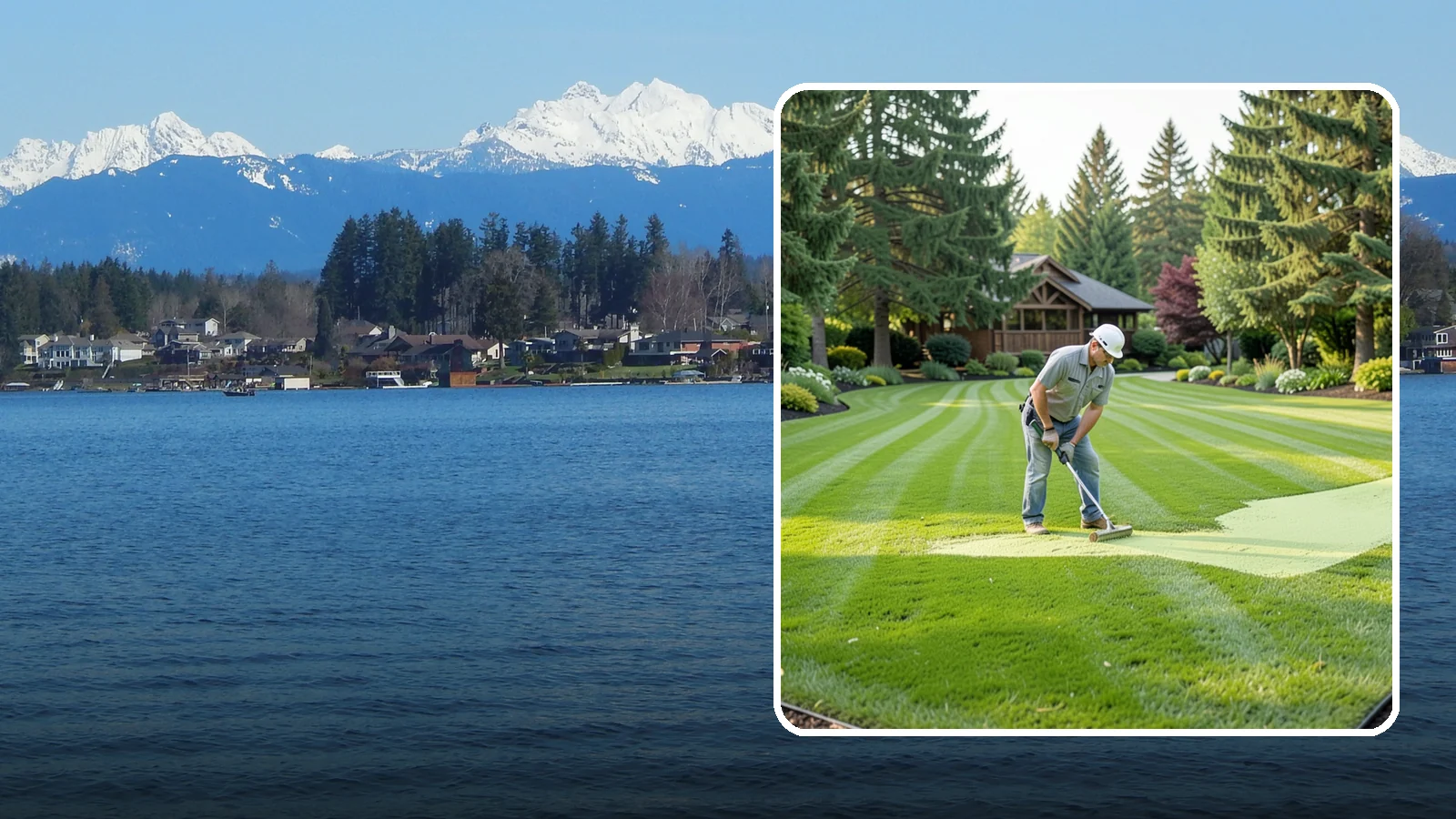
Lime treatment that corrects acidic Northwest soil so your lawn thrives and moss retreats.
The moss keeps coming back. Grass thins out in patches, and the lawn looks pale even after you fertilize. In Lake Stevens, many homeowners see this and wonder whether the soil has turned too acidic for turf to do well.
Lawn lime treatment spreads ground limestone over the grass to raise soil pH. Washington Landscaping, based in Bothell, WA, can look at your lawn and talk through whether liming makes sense. Estimates are free, and you can call or text 425-433-9444.
Why Lake Stevens lawns often need lime
Lime does one job. It raises soil pH. Rain in western Washington is slightly acidic, and over the years it leaches calcium and magnesium from the topsoil. The pH drops. When it gets low, grass roots take up nutrients less well, and moss moves into the thin turf.
Rainfall here makes that pattern plausible. Lake Stevens averages about 50.8 inches of precipitation a year, and 78% of it falls from October to April (Daymet, 2005-2025). Most of that water arrives while the lawn is dormant or growing slowly. That is a long season of leaching, and it is also the wet stretch when moss does best.
Drainage matters too. Per the USDA soil survey, about 4% of rated land in Lake Stevens is well drained, 88% is moderately well drained and 8% is poorly drained. Those figures describe the city as a whole. Your own yard may differ, especially if it has a low spot or compacted ground. If water sits on your lawn, moss may be a drainage problem as much as a pH problem. Lime will not fix standing water, so it is worth sorting out which one you have.
Test first, then lime
Standard practice is to test the soil before applying anything. A pH test tells you whether the soil is acidic and roughly how much lime it needs. If the pH is already fine, lime will not help the lawn, and the real cause lies elsewhere, such as shade, compaction or low fertility.
How the work goes
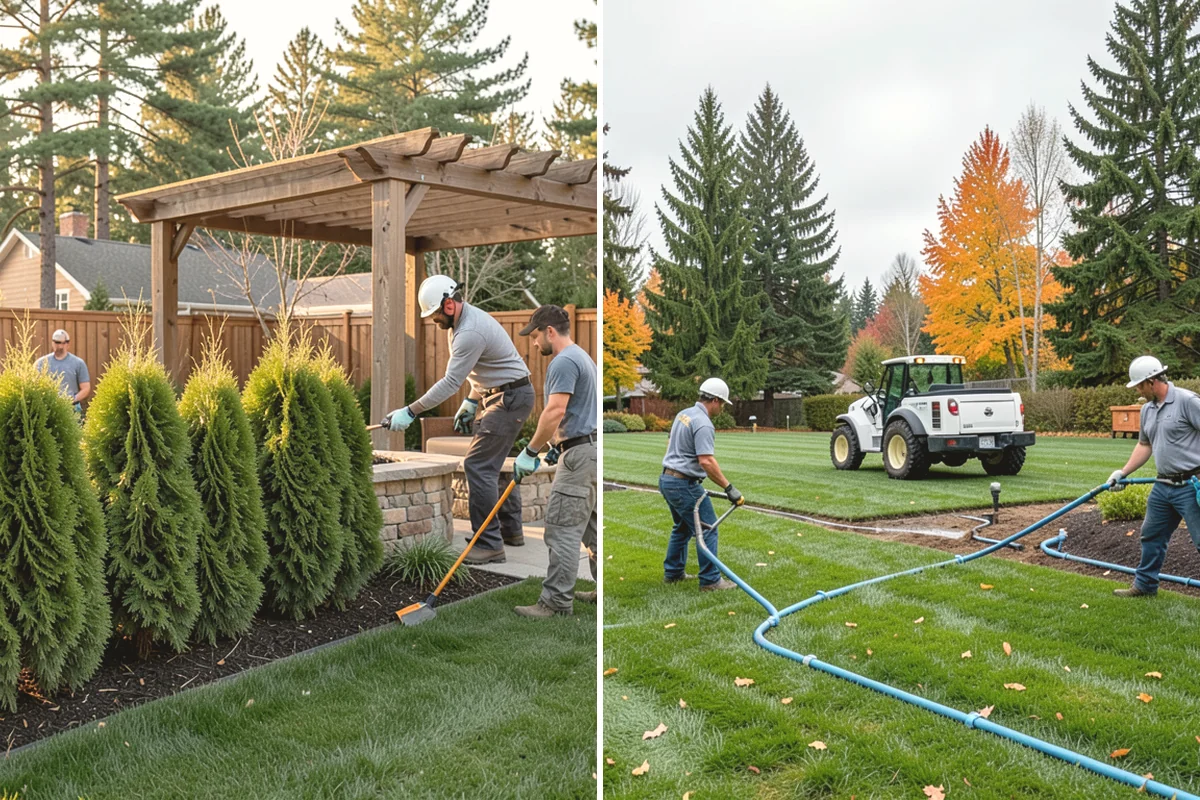
If the test shows the soil needs it, the lime is spread evenly across the lawn. Ground or pelletized limestone is the usual form. It works slowly, so a change in pH takes months rather than days. Many lawns are limed in fall or early spring, when rain can carry the lime into the soil. Lime does not kill moss. Raking out the moss and overseeding thin areas are separate steps that usually go alongside it.
Call or text 425-433-9444 for a free estimate. Washington Landscaping is licensed, bonded and insured ($2M).
Lake Stevens yard conditions at a glance
| Days with 0.1 in or more of rain | 136 a year |
|---|---|
| Tree canopy | 31.4% of the city |
| Frost-free season | about 225 days |
| Share of rain October to April | 78% |
| Last / first frost (median) | Mar 24 / Nov 10 |
A year in a Lake Stevens yard
- Late winter
- Dormant pruning for most deciduous trees and shrubs, before buds break.
- Spring
- Last frost is usually around Mar 24; in 1 year in 10 it comes on or after Apr 12. Plant frost-tender annuals and vegetables after that.
- Early summer
- Check sprinklers and drip lines before July, the start of the dry months here.
- Summer
- July average 0.7 in. Water deeply and less often; mulch beds to hold moisture.
- Fall
- Aerate, overseed and plant trees and shrubs while the soil is warm; first frost is usually around Nov 10. Winterize irrigation before then.
- Winter
- About 40 days a year freeze at night and thaw by day: keep drains, paver joints and wall weep holes clear.
Dates are medians for the city from Daymet 2005-2025; your yard and any given year can differ.
Sources: Daymet daily weather (NASA/ORNL), 2023 USDA Plant Hardiness Zone Map data (PRISM, Oregon State University), USDA SSURGO soil survey, USGS 3DEP elevation, USFS/NLCD tree canopy 2025, US Census ACS 2020-2024.
Lake Stevens Lawn Lime Treatment
Local Service Information
Lake Stevens
A city surrounding the lake of the same name in central Snohomish County.
Benefits
Corrects acidic Northwest soil; Unlocks nutrients so fertilizer works better; Shifts conditions from moss toward grass; Guided by soil pH for the right rate; A foundational step in lawn renovation
Process

Lawn Lime Treatment in nearby areas
Get a Free Lawn Lime Treatment Estimate in Lake Stevens
Tell us about your project. We’ll review your needs and provide a customized, no-obligation proposal.
Request a Free Consultation
Complete the form or call our team to discuss your project.
On-Site Assessment
We’ll review your property, discuss your goals, and recommend an appropriate solution.
Receive a Customized Proposal
Receive a detailed estimate outlining the proposed work and pricing.