Shaping Your Outdoors. Surpassing Expectations.

Renton Grub Control
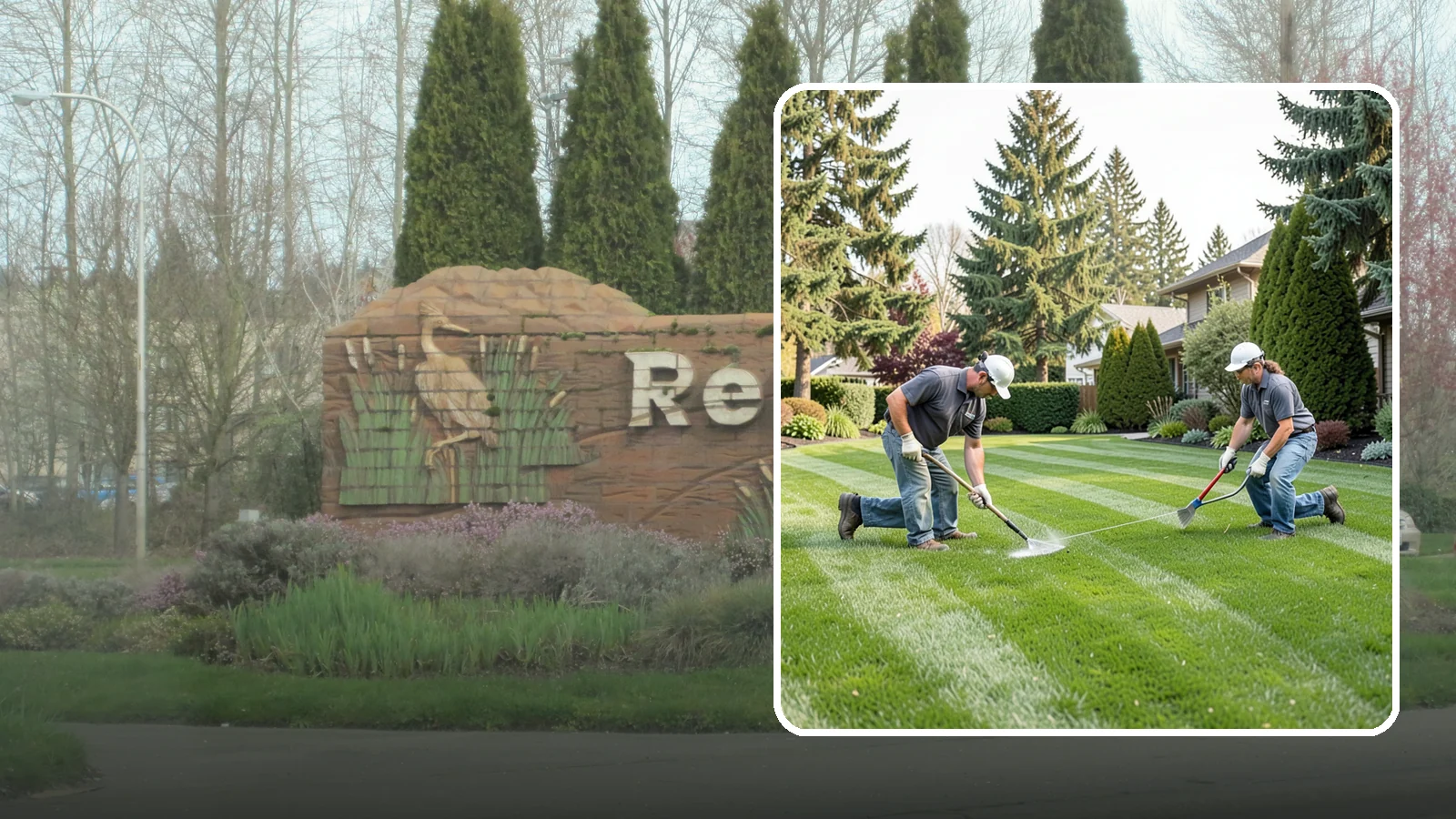
Grub treatment that protects your lawn from the root-feeding larvae that cause dead patches.
Grub control in Renton makes the most sense in two windows. Late summer, when eggs have hatched and young grubs feed near the surface of the turf, is one. Early fall, before the soil cools, is the other. July and August are the dry months here, with about 0.54 in of rain in July and 0.93 in in August, so lawns under drought stress can show grub damage quickly.
Washington Landscaping holds a Washington State pesticide applicator license. We look at your lawn first, confirm grubs are actually the problem, and then plan the treatment around the timing and your yard.
Planning Grub Control for Your Renton Lawn
Start by confirming the cause. Brown, spongy turf that lifts like a loose mat can point to grubs, but drought, disease and dull mower blades look similar. Pulling back a square of sod and counting the white, C-shaped grubs in the root zone is the standard check. A few grubs are normal. Many in one spot is a reason to treat.
Timing depends on the season. Renton has a frost-free growing season of about 244 days, from about Mar 19 to Nov 17. These are medians, so frost can come earlier or later in a given year. Grubs feed while the soil is warm and active, so the useful treatment window falls inside that stretch rather than in deep winter.
What affects the scope
Lawn size and how widespread the damage is decide how much area needs work. Soil matters too. Per the USDA soil survey, about 23% of Renton's rated land is well drained, 65% moderately well drained and 12% poorly drained. That describes the city as a whole, and your own yard may differ. Wetter, heavier spots tend to hold moisture, which affects how turf recovers and how evenly a treatment soaks in.
Existing turf health also shapes the plan. A thin, stressed lawn may need overseeding after the grubs are dealt with.
What to expect
We walk the lawn, check for grubs and tell you what we find. If treatment makes sense, a licensed applicator does the work. Damaged patches do not green up overnight. Roots need time to regrow, and we cannot promise results. Birds, skunks and raccoons digging at the lawn can be a sign of grubs below.
Estimates are free, and financing is available subject to credit approval.
Practical tip: water the lawn deeply but not often during July and August. Healthy, deep roots tolerate light grub feeding better than shallow, stressed ones.
Renton yard conditions at a glance
| Days with 0.1 in or more of rain | 109 a year |
|---|---|
| Tree canopy | 25.2% of the city |
| Frost-free season | about 244 days |
| Share of rain October to April | 82% |
| Last / first frost (median) | Mar 19 / Nov 17 |
A year in a Renton yard
- Late winter
- Dormant pruning for most deciduous trees and shrubs, before buds break.
- Spring
- Last frost is usually around Mar 19; in 1 year in 10 it comes on or after Apr 4. Plant frost-tender annuals and vegetables after that.
- Early summer
- Check sprinklers and drip lines before July, the start of the dry months here.
- Summer
- July and August average 0.5 in and 0.9 in. Water deeply and less often; mulch beds to hold moisture.
- Fall
- Aerate, overseed and plant trees and shrubs while the soil is warm; first frost is usually around Nov 17. Winterize irrigation before then.
- Winter
- About 29 days a year freeze at night and thaw by day: keep drains, paver joints and wall weep holes clear.
Dates are medians for the city from Daymet 2005-2025; your yard and any given year can differ.
Sources: Daymet daily weather (NASA/ORNL), 2023 USDA Plant Hardiness Zone Map data (PRISM, Oregon State University), USDA SSURGO soil survey, USGS 3DEP elevation, USFS/NLCD tree canopy 2025, US Census ACS 2020-2024.
Renton Grub Control

Local Service Information
Renton
A city at the south end of Lake Washington where the Cedar River meets the lake.
Benefits
Stops root-feeding damage before it spreads; Prevents brown patches and animal digging; Timed to the grub life cycle for effectiveness; Protects your investment in a healthy lawn; Paired with practices that build resistance
Process

Get a Free Grub Control Estimate in Renton
Tell us about your project. We’ll review your needs and provide a customized, no-obligation proposal.
Request a Free Consultation
Complete the form or call our team to discuss your project.
On-Site Assessment
We’ll review your property, discuss your goals, and recommend an appropriate solution.
Receive a Customized Proposal
Receive a detailed estimate outlining the proposed work and pricing.