Shaping Your Outdoors. Surpassing Expectations.

Tukwila Grub Control
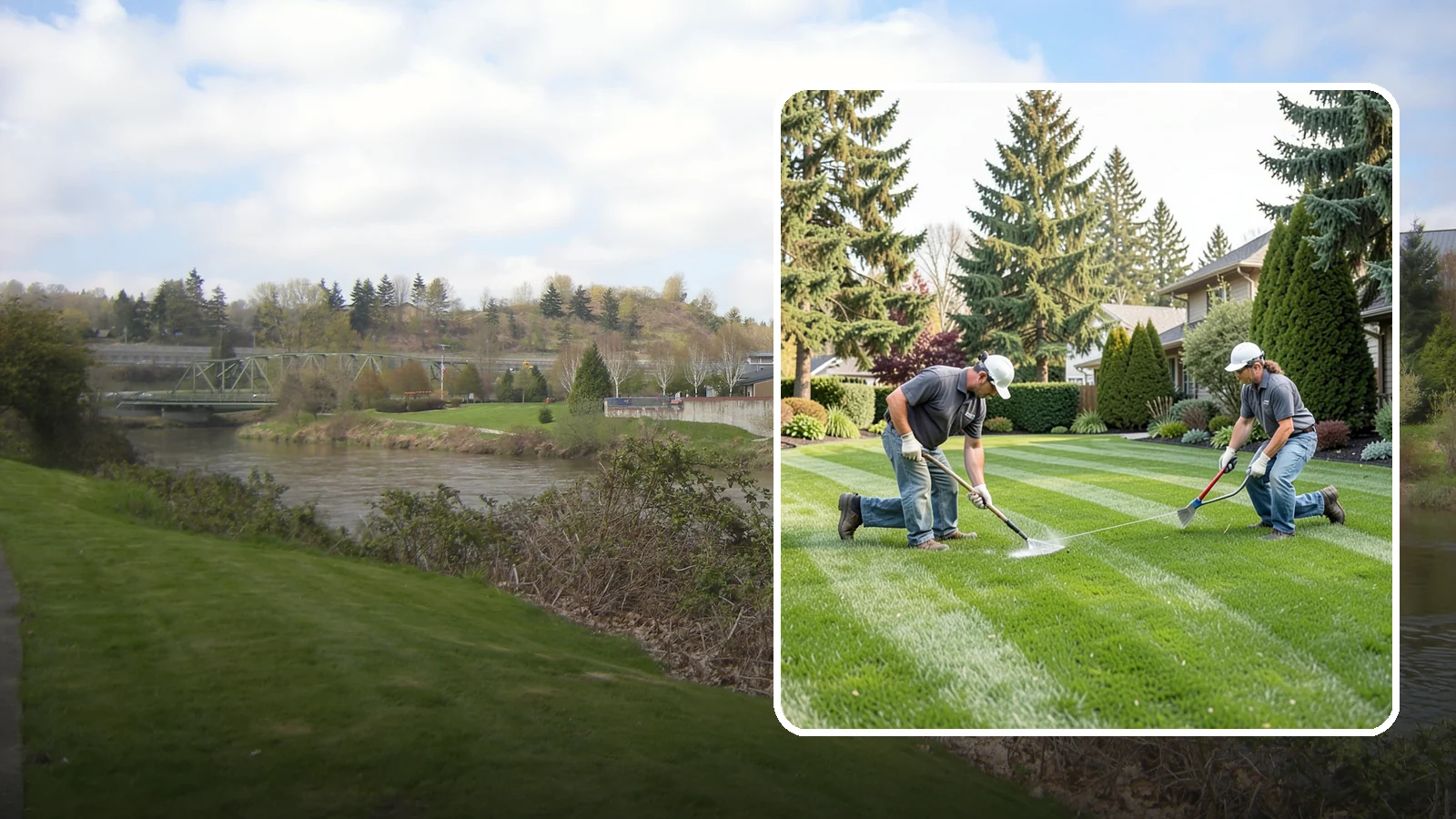
Grub treatment that protects your lawn from the root-feeding larvae that cause dead patches.
The lawn turns brown in patches that don't respond to watering. You pull on the turf and it lifts like a loose carpet, with no roots holding it down. Or crows and raccoons keep tearing up the grass. Those are the usual signs that lawn grubs are feeding below the surface.
Washington Landscaping offers grub control for Tukwila homeowners. We hold a Washington State pesticide applicator license, and estimates are free. Below is how grubs damage a lawn, how Tukwila conditions affect them, and what treatment looks like.
How Grubs Affect Tukwila Lawns and How We Treat Them
Lawn grubs are the larvae of beetles. They hatch from eggs laid in turf, then feed on grass roots. Once the roots are cut, the grass can't take up water, so the lawn looks drought-stressed even when it is damp. Animals digging for the grubs often do more visible damage than the grubs themselves.
Local conditions matter here. Tukwila's frost-free season runs about 247 days, from roughly March 11 to November 17. These are median dates, and frost can come earlier or later in a given year. A long season means the soil stays workable and grubs can stay active for much of the year, so timing a treatment is a real decision and not a fixed date on the calendar.
Moisture is the second factor. July and August are Tukwila's dry months, at about 0.48 in and 0.83 in of rain on average. Beetles tend to prefer moist turf for egg laying, so a lawn that is irrigated through summer can be more attractive than one left dry. Watering deeply and less often is a common practice that avoids keeping the surface constantly wet.
Drainage plays a part too. Per the USDA soil survey, about 35% of Tukwila's rated land is well drained, 49% moderately well drained and 16% poorly drained. That describes the city as a whole. Your own yard may differ, and a low, soggy corner may behave differently from a sloped, fast-draining one.
The work starts with confirming grubs are the cause. We look at the damaged turf, check the root zone and judge how many grubs are present, since a few are normal and not worth treating. If treatment is warranted, a licensed applicator carries it out and explains what to expect afterward, including how to water. Lawns with heavy root loss may also need overseeding or repair once the grubs are controlled.
Call or text 425-433-9444 to set up a free estimate.
Tukwila yard conditions at a glance
| Days with 0.1 in or more of rain | 104 a year |
|---|---|
| Tree canopy | 19.3% of the city |
| Frost-free season | about 247 days |
| Share of rain October to April | 82% |
| Last / first frost (median) | Mar 11 / Nov 17 |
A year in a Tukwila yard
- Late winter
- Dormant pruning for most deciduous trees and shrubs, before buds break.
- Spring
- Last frost is usually around Mar 11; in 1 year in 10 it comes on or after Mar 27. Plant frost-tender annuals and vegetables after that.
- Early summer
- Check sprinklers and drip lines before July, the start of the dry months here.
- Summer
- July and August average 0.5 in and 0.8 in. Water deeply and less often; mulch beds to hold moisture.
- Fall
- Aerate, overseed and plant trees and shrubs while the soil is warm; first frost is usually around Nov 17. Winterize irrigation before then.
- Winter
- About 26 days a year freeze at night and thaw by day: keep drains, paver joints and wall weep holes clear.
Dates are medians for the city from Daymet 2005-2025; your yard and any given year can differ.
Sources: Daymet daily weather (NASA/ORNL), 2023 USDA Plant Hardiness Zone Map data (PRISM, Oregon State University), USDA SSURGO soil survey, USGS 3DEP elevation, USFS/NLCD tree canopy 2025, US Census ACS 2020-2024.
Tukwila Grub Control

Local Service Information
Tukwila
A city in the Green/Duwamish river valley of south King County, a major retail and commercial hub.
Benefits
Stops root-feeding damage before it spreads; Prevents brown patches and animal digging; Timed to the grub life cycle for effectiveness; Protects your investment in a healthy lawn; Paired with practices that build resistance
Process
Get a Free Grub Control Estimate in Tukwila
Tell us about your project. We’ll review your needs and provide a customized, no-obligation proposal.
Request a Free Consultation
Complete the form or call our team to discuss your project.
On-Site Assessment
We’ll review your property, discuss your goals, and recommend an appropriate solution.
Receive a Customized Proposal
Receive a detailed estimate outlining the proposed work and pricing.