Shaping Your Outdoors. Surpassing Expectations.

Renton Sump Pump Drainage
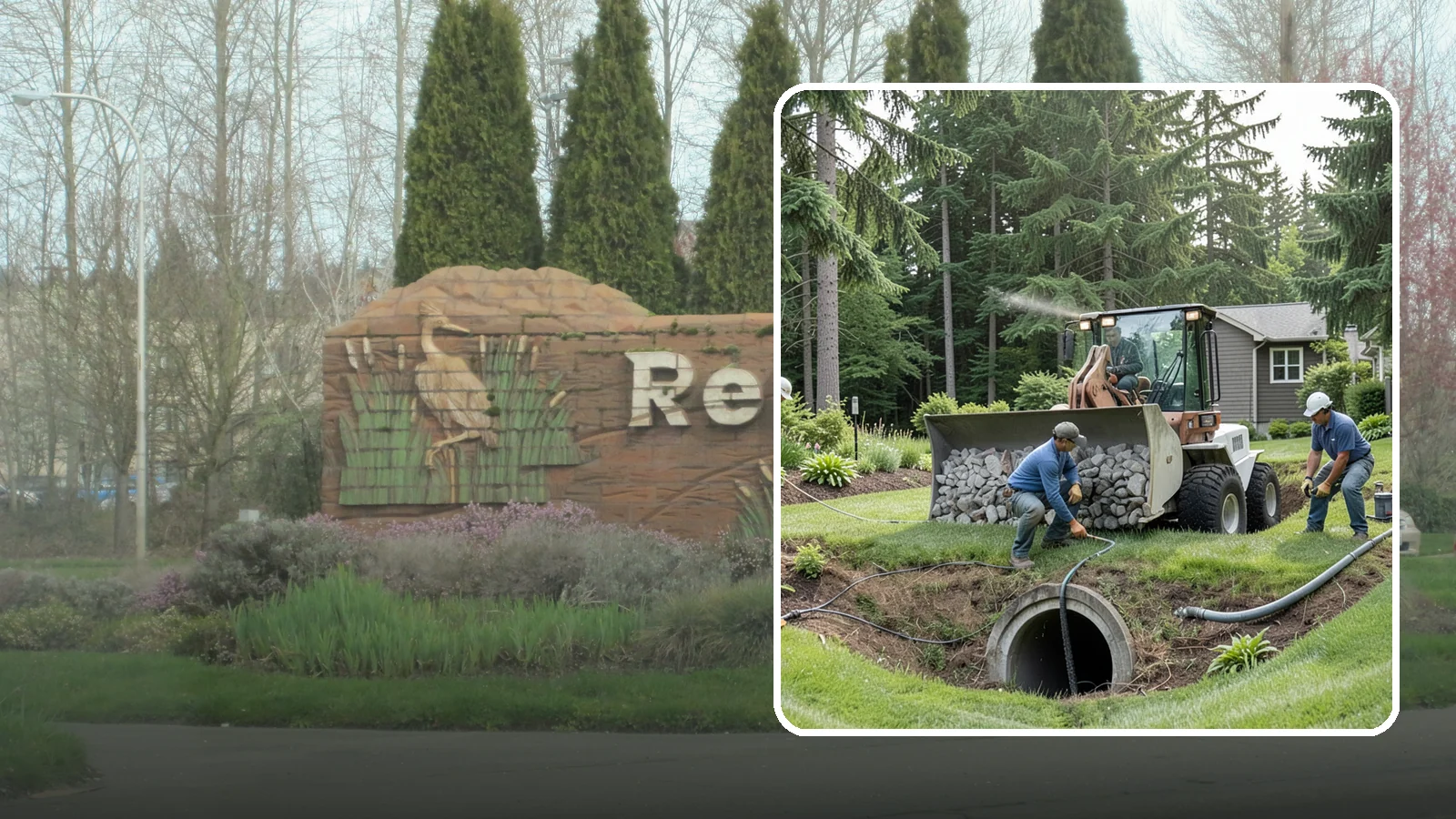
We install sump pump systems that actively collect and pump water out of low areas where gravity drainage is not possible.
The best time to plan sump pump drainage in Renton is late summer or early fall, before the wet season sets in. Renton gets about 42.4 inches of rain a year (Daymet, 2005-2025), and the heavy months are when a discharge line that was never planned properly shows its flaws.
Washington Landscaping, based in Bothell, WA, has been in business since 2004. We look at where your pump water goes once it leaves the house, and we design a drainage route that moves it away from the foundation and off your neighbors' ground. Free estimates are available.
Planning Sump Pump Drainage for a Renton Yard
A sump pump only moves water out of the pit. The drainage that carries it away is what keeps the problem from coming back. Planning starts with where the discharge line exits and where that water ends up.
What the local data suggests
Per the USDA SSURGO soil survey, poorly drained soils cover about 12% of Renton's rated land. That figure describes the city as a whole. Your own yard may drain better or worse, so we look at the actual ground. Rain is also uneven. Renton averages about 4.8 days a year with 1 inch or more (Daymet, 2005-2025), and the wettest single day in that period brought 3 inches on November 6, 2006. A pump line should be sized and routed for those heavy days, not only for ordinary rain.
What affects scope
Several things change how much work a job takes:
The distance from the pump to a suitable discharge point matters most. Slope matters too, since a line needs to carry water downhill or away without pooling. Soil type affects whether water can soak in or needs to be piped farther. Existing patios, walkways, and plantings in the path add digging and restoration. If the plan involves grading or any structure, we check permit needs with the city before work starts.
What to expect
We start with a walk through the yard and a look at the current discharge. You get a free estimate, and financing is available subject to credit approval. Work usually involves trenching, laying solid pipe, setting an outlet, and restoring the surface. We are licensed, bonded and insured ($2M).
Practical tip: before we visit, run the pump during or after a hard rain and note where the water lands and whether it comes back toward the house. Photos or a short video help us plan the route. You can call or text 425-433-9444.
Renton yard conditions at a glance
| Soil drainage (rated land) | 23% well, 65% moderately well, 12% poorly drained |
|---|---|
| Days with 1 in or more of rain | 4.8 a year |
| Share of rain October to April | 82% |
| Land sloping 15% or more | 15% (40% or more: 3.5%) |
| Average yearly precipitation | 42.4 in |
A year in a Renton yard
- Late winter
- Dormant pruning for most deciduous trees and shrubs, before buds break.
- Spring
- Last frost is usually around Mar 19; in 1 year in 10 it comes on or after Apr 4. Plant frost-tender annuals and vegetables after that.
- Early summer
- Check sprinklers and drip lines before July, the start of the dry months here.
- Summer
- July and August average 0.5 in and 0.9 in. Water deeply and less often; mulch beds to hold moisture.
- Fall
- Aerate, overseed and plant trees and shrubs while the soil is warm; first frost is usually around Nov 17. Winterize irrigation before then.
- Winter
- About 29 days a year freeze at night and thaw by day: keep drains, paver joints and wall weep holes clear.
Dates are medians for the city from Daymet 2005-2025; your yard and any given year can differ.
How Renton’s soils drain
- Well drained23%
- Moderately well65%
- Poorly drained12%
Share of rated land in the USDA SSURGO soil survey; built-over ground is not rated. A soil check on your lot tells you what you have.
Sources: Daymet daily weather (NASA/ORNL), 2023 USDA Plant Hardiness Zone Map data (PRISM, Oregon State University), USDA SSURGO soil survey, USGS 3DEP elevation, USFS/NLCD tree canopy 2025, US Census ACS 2020-2024.
Renton Sump Pump Drainage
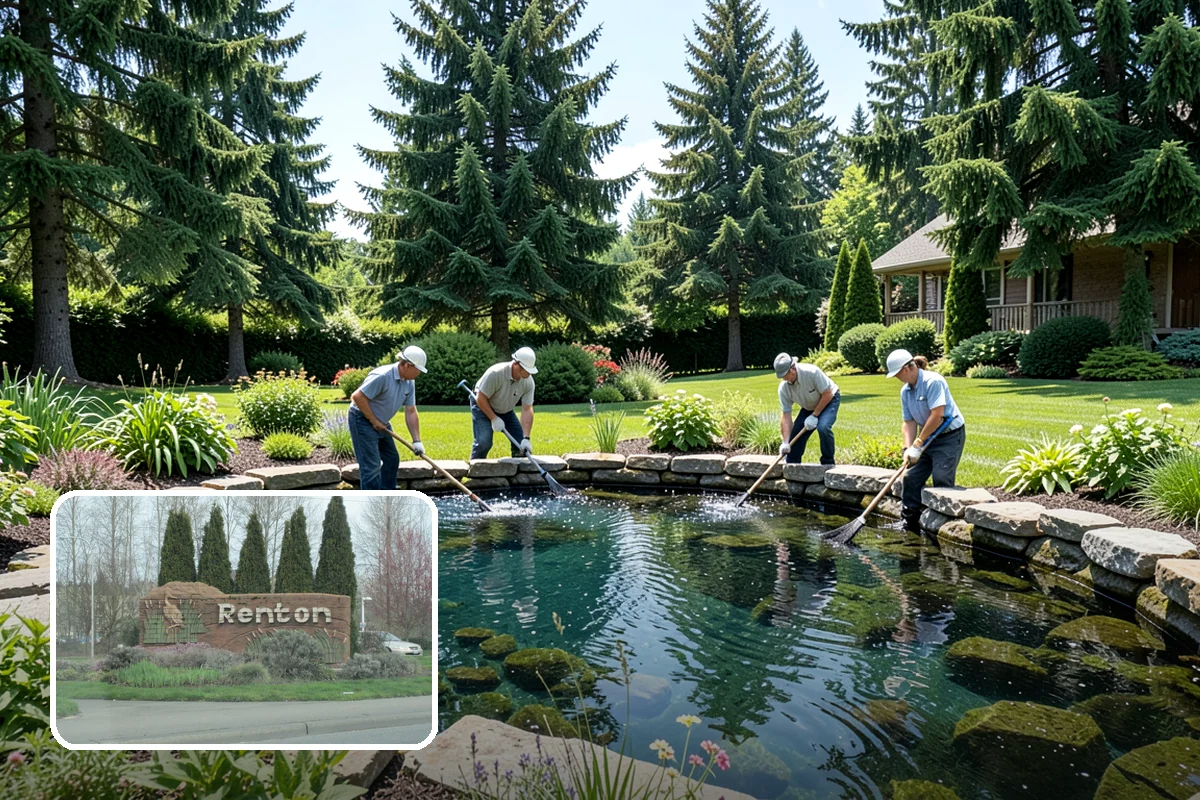
Local Service Information
Renton
A city at the south end of Lake Washington where the Cedar River meets the lake.
Benefits
Removes water where gravity drainage is impossible; Automatic float activation during storms; Protects basements, crawl spaces, and low yards; Battery-backup options for power outages; Reliable through heavy PNW winter rainfall
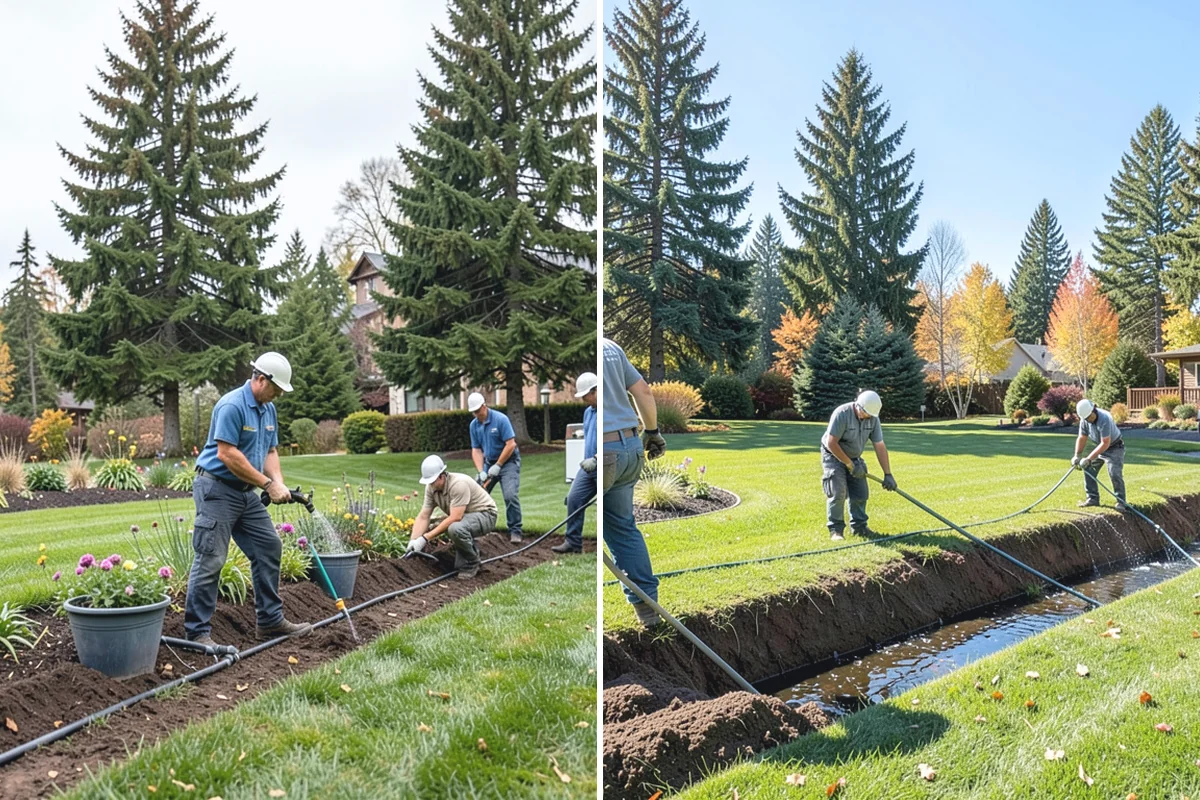
Process

Also serving Renton
- Foundation Underpinning in Rentonat Washington Construction
- Gutter Repair in Rentonat Washington Roofing
Get a Free Sump Pump Drainage Estimate in Renton
Tell us about your project. We’ll review your needs and provide a customized, no-obligation proposal.
Request a Free Consultation
Complete the form or call our team to discuss your project.
On-Site Assessment
We’ll review your property, discuss your goals, and recommend an appropriate solution.
Receive a Customized Proposal
Receive a detailed estimate outlining the proposed work and pricing.