Shaping Your Outdoors. Surpassing Expectations.

Sammamish Apple Tree Pruning

Fruit-focused pruning that improves apple tree health, light, and harvest.
Your apple tree is crowded with upright shoots, the fruit is small, and the middle of the canopy stays dark and damp. Maybe branches are rubbing, or limbs hang low under the weight of a heavy crop. These are common signs that a tree has gone too long without structural pruning.
Washington Landscaping prunes apple trees for Sammamish homeowners, and an ISA Certified Arborist is on staff. Free estimates are available. Call or text 425-433-9444 to talk through what your tree needs and when the cuts should be made.
Pruning Apple Trees in Sammamish: Timing, Rain and Structure
Apple trees respond to pruning in predictable ways. Heavy cuts trigger vigorous upright shoots called water sprouts. Light, well-placed cuts open the canopy so sun and air reach the fruiting wood. An unpruned tree often does the opposite. It grows dense, shades its own fruit and holds moisture in the leaves.
Moisture is the local concern. Per Daymet data for 2005-2025, Sammamish gets about 128 days a year with 0.1 inch of rain or more. That is a lot of wet foliage. Apple scab and other fungal problems favor damp, stagnant canopies, so opening the center of the tree is a practical step here. It will not prevent disease on its own, but it helps leaves dry faster. Your own yard may be wetter or drier than the city as a whole, depending on shade and airflow.
Timing matters too. Most apple pruning in the Puget Sound region is done in late winter, while the tree is dormant and before buds swell. The median last spring frost in Sammamish is March 24, per Daymet for 2005-2025. That is a median, so frost can arrive earlier or later in a given year. We generally avoid heavy cuts right before a hard freeze, since fresh wounds and tender growth are more exposed.
Cold hardiness is less of a worry. Sammamish is USDA zone 8b, with an average coldest night of about 19.8 F, and parts of the city range up to 9a. Most apple varieties tolerate that. The bigger question is which variety and rootstock you have, because that affects how tall the tree should be kept.
On a typical visit, the work follows a plain order:
First, remove dead, broken and diseased wood. Next, cut crossing or rubbing branches and thin crowded shoots. Then shorten or lighten limbs that are too tall or too heavy to reach and harvest safely. The goal is a strong framework with open spaces, not a tree stripped bare. Very old or neglected trees are often best corrected over two or three seasons rather than in one hard cut.
If you are unsure what your tree needs, ask for a free estimate and we can look at its shape and age together.
Sammamish yard conditions at a glance
| USDA hardiness zone (2023) | 8b (parts 8b to 9a) |
|---|---|
| Last / first frost (median) | Mar 24 / Nov 14 |
| Tree canopy | 40.6% of the city |
| Share of rain October to April | 80% |
| Dry months (under 1.25 in) | July and August |
A year in a Sammamish yard
- Late winter
- Dormant pruning for most deciduous trees and shrubs, before buds break.
- Spring
- Last frost is usually around Mar 24; in 1 year in 10 it comes on or after Apr 10. Plant frost-tender annuals and vegetables after that.
- Early summer
- Check sprinklers and drip lines before July, the start of the dry months here.
- Summer
- July and August average 0.7 in and 1.2 in. Water deeply and less often; mulch beds to hold moisture.
- Fall
- Aerate, overseed and plant trees and shrubs while the soil is warm; first frost is usually around Nov 14. Winterize irrigation before then.
- Winter
- About 34 days a year freeze at night and thaw by day: keep drains, paver joints and wall weep holes clear.
Dates are medians for the city from Daymet 2005-2025; your yard and any given year can differ.
Sources: Daymet daily weather (NASA/ORNL), 2023 USDA Plant Hardiness Zone Map data (PRISM, Oregon State University), USDA SSURGO soil survey, USGS 3DEP elevation, USFS/NLCD tree canopy 2025, US Census ACS 2020-2024.
Sammamish Apple Tree Pruning
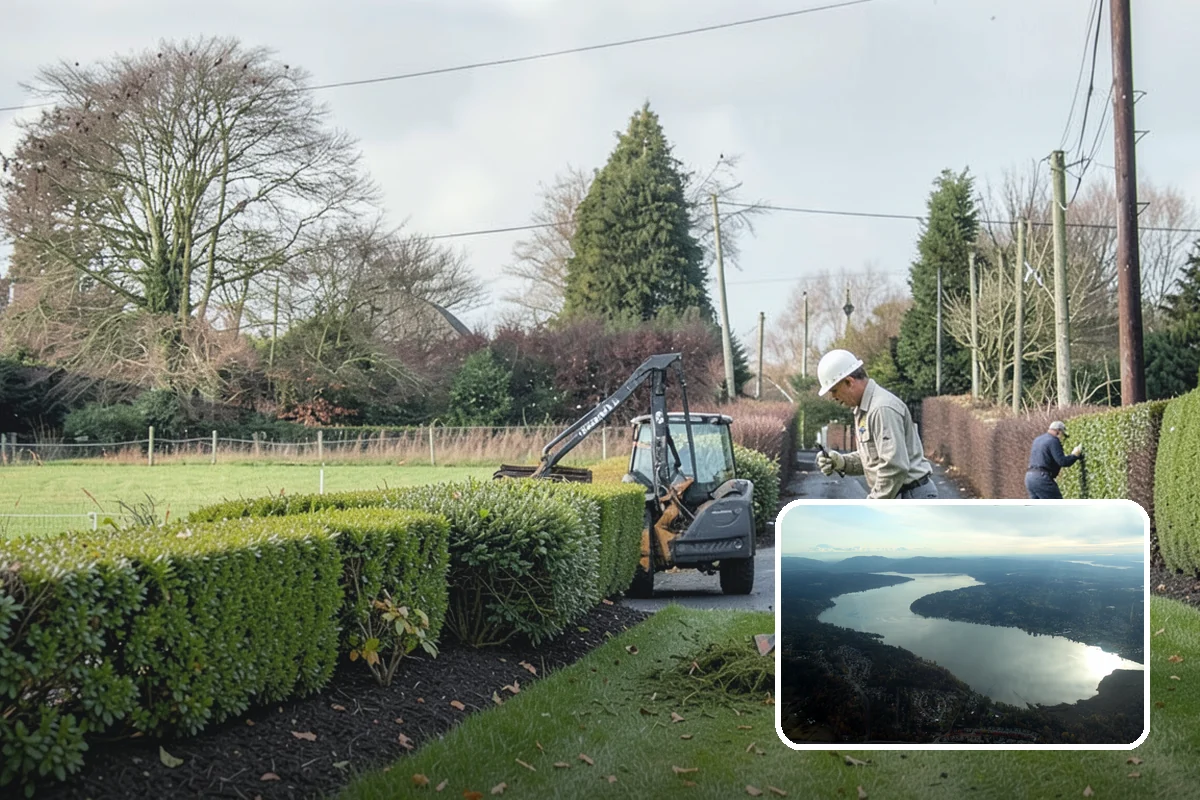
Local Service Information
Sammamish
A residential plateau city on the east side of Lake Sammamish.
Benefits
Better sunlight and air for ripening fruit; Reduced disease pressure; Deadwood, suckers, and water sprouts removed; Strong fruiting structure; Renovation option for neglected trees

Process

Also serving Sammamish
- Utility line clearance pruning in Sammamishat Washington Tree Services
Get a Free Apple Tree Pruning Estimate in Sammamish
Tell us about your project. We’ll review your needs and provide a customized, no-obligation proposal.
Request a Free Consultation
Complete the form or call our team to discuss your project.
On-Site Assessment
We’ll review your property, discuss your goals, and recommend an appropriate solution.
Receive a Customized Proposal
Receive a detailed estimate outlining the proposed work and pricing.