Shaping Your Outdoors. Surpassing Expectations.

Sammamish Arborvitae Trimming
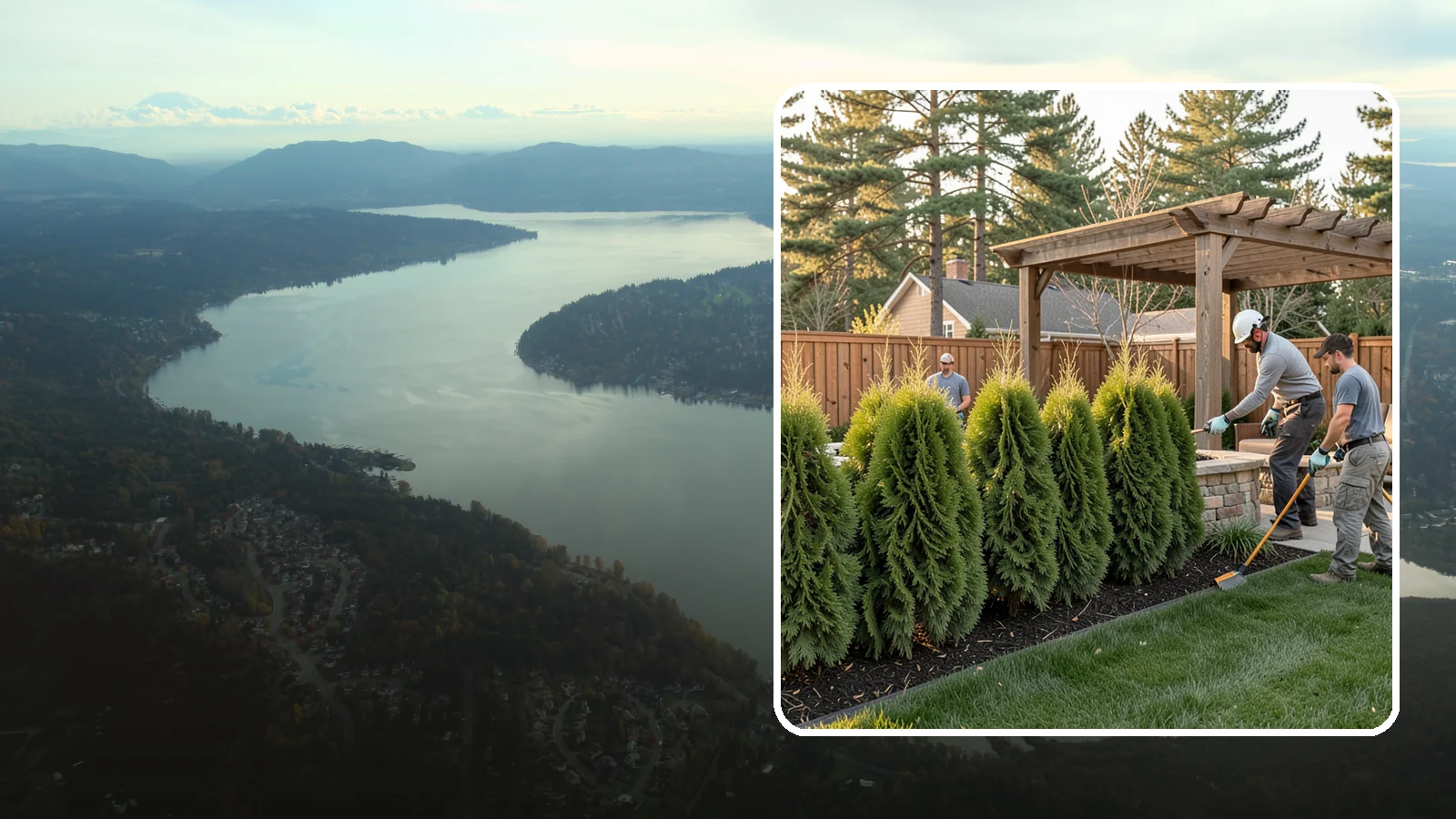
Professional arborvitae trimming that keeps your privacy screen dense, upright, and healthy through Western Washington’s wet, moss-prone winters.
Your arborvitae hedge has gone shaggy. Maybe it is crowding the walkway, pressing on a fence, or showing brown patches inside while the outer foliage stays green. Those are common reasons Sammamish homeowners start looking for trimming help.
Washington Landscaping trims arborvitae with an ISA Certified Arborist on staff. This page explains why the shrubs get out of hand, what the local climate means for timing, and how the work is done. Estimates are free, and you can call or text 425-433-9444.
Arborvitae Trimming in Sammamish: Timing and Technique
Arborvitae grow fast when they are happy. A screen planted at a modest size can add a foot or more of height and width each year. Left alone, the hedge gets wider, shades its own interior, and the inner foliage dies. That is why you see brown, bare wood inside a green shell.
This matters for how we trim. Arborvitae do not reliably regrow from bare wood. If a cut goes back past the live green growth, the bare spot usually stays bare. So the work is shaping within the green, not cutting deep into the brown interior. A hedge that has already gone too far often needs gradual correction over more than one season rather than one hard cut.
How Sammamish conditions affect timing
Sammamish sits in USDA zone 8b, with parts of the city running from 8b to 9a. The average coldest winter night is about 19.8 F. Arborvitae are hardy at that level, so cold itself is rarely the concern. The concern is timing relative to growth. The median frost-free season runs about 231 days, from about March 24 to November 14. Frost can come earlier or later in any given year. New growth that is trimmed late in the season may not harden off before cold arrives, so heavy shaping is better done during active growth than right before the first frost.
Summer is the other consideration. July and August are the dry months here, at about 0.71 and 1.21 inches of rain on average. Trimming does not cause drought stress, but a freshly trimmed hedge that is also dry can look worse for longer. If your hedge is on a slope or in a sunny spot, watch its moisture through those months. Your own yard may differ from city averages.
What the work looks like
We start by looking at the hedge's shape, height and where live foliage ends. We then trim by hand or with hedge shears, keeping the sides slightly narrower at the top so light reaches the lower branches. We clear clippings and take away the debris. If a plant looks diseased, damaged or too tall to trim safely, the arborist on staff can advise on the next step. Ask for a free estimate and we will look at your hedge in person.
Sammamish yard conditions at a glance
| USDA hardiness zone (2023) | 8b (parts 8b to 9a) |
|---|---|
| Last / first frost (median) | Mar 24 / Nov 14 |
| Tree canopy | 40.6% of the city |
| Share of rain October to April | 80% |
| Dry months (under 1.25 in) | July and August |
A year in a Sammamish yard
- Late winter
- Dormant pruning for most deciduous trees and shrubs, before buds break.
- Spring
- Last frost is usually around Mar 24; in 1 year in 10 it comes on or after Apr 10. Plant frost-tender annuals and vegetables after that.
- Early summer
- Check sprinklers and drip lines before July, the start of the dry months here.
- Summer
- July and August average 0.7 in and 1.2 in. Water deeply and less often; mulch beds to hold moisture.
- Fall
- Aerate, overseed and plant trees and shrubs while the soil is warm; first frost is usually around Nov 14. Winterize irrigation before then.
- Winter
- About 34 days a year freeze at night and thaw by day: keep drains, paver joints and wall weep holes clear.
Dates are medians for the city from Daymet 2005-2025; your yard and any given year can differ.
Sources: Daymet daily weather (NASA/ORNL), 2023 USDA Plant Hardiness Zone Map data (PRISM, Oregon State University), USDA SSURGO soil survey, USGS 3DEP elevation, USFS/NLCD tree canopy 2025, US Census ACS 2020-2024.
Sammamish Arborvitae Trimming
Local Service Information
Sammamish
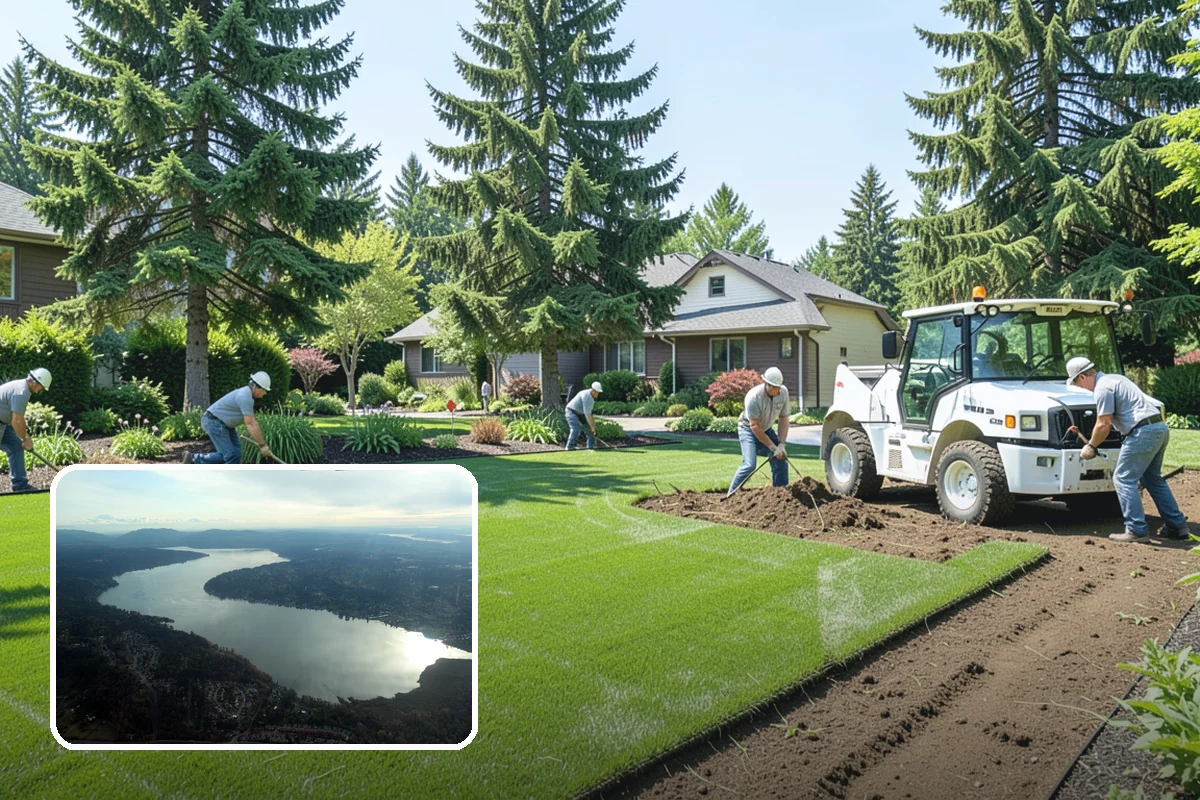
A residential plateau city on the east side of Lake Sammamish.
Benefits
Maintains a dense, uninterrupted privacy screen; Prevents irreversible brown gaps by cutting only into green growth; Corrects snow-splayed and flopping leaders common in PNW winters; Improves airflow to reduce moss and needle blight; Keeps growth off fences, gutters, and property lines
Process
Also serving Sammamish
- Tree Pruning in Sammamishat Washington Tree Services
Get a Free Arborvitae Trimming Estimate in Sammamish
Tell us about your project. We’ll review your needs and provide a customized, no-obligation proposal.
Request a Free Consultation
Complete the form or call our team to discuss your project.
On-Site Assessment
We’ll review your property, discuss your goals, and recommend an appropriate solution.
Receive a Customized Proposal
Receive a detailed estimate outlining the proposed work and pricing.