Shaping Your Outdoors. Surpassing Expectations.

Sammamish Backflow Replacement
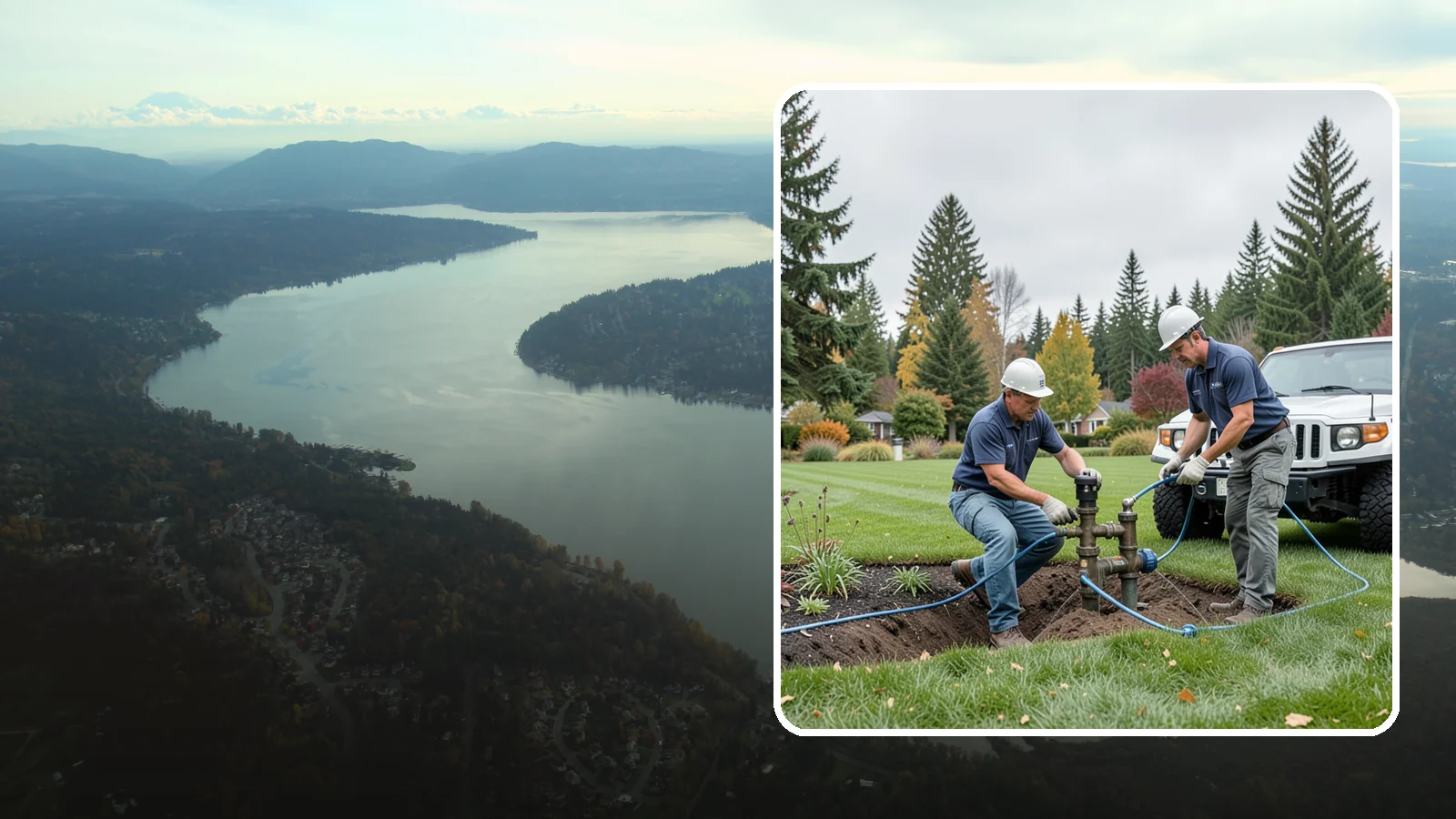
We replace failed or freeze-damaged backflow assemblies with code-compliant units that protect your home’s drinking water from irrigation contamination.
Your irrigation backflow assembly may be leaking, spitting water when the system starts, or it may have failed its annual test. Maybe a pipe cracked after a cold snap. Any of these is a reason to look at replacing the assembly.
A backflow assembly keeps lawn and garden water from flowing back into your drinking water. Washington Landscaping has a certified backflow assembly tester, so the testing and the replacement can be handled together. Call or text 425-433-9444 for a free estimate.
Why Backflow Assemblies Fail in Sammamish Yards
Most backflow assemblies fail for ordinary reasons. Internal rubber seals and springs wear out. Debris from the line gets caught in a check valve. Water left inside a cold assembly freezes, expands and cracks the body or its fittings.
Freezing is the local factor worth taking seriously. Sammamish sees about 34 nights a winter that drop below freezing between October and April, per Daymet data from 2005 to 2025. That counts nights, not days that stay frozen. Even so, an assembly sitting above ground with water in it can crack on a single hard night. The median first fall frost, 32 F, falls on Nov 14. That is a median, so frost can arrive earlier or later in a given year. Draining the system and insulating or covering the assembly before then is standard practice in the Puget Sound region.
Dry weather matters too, but for timing. July and August are the driest months here, with about 0.71 in of rain in July and about 1.21 in in August. Irrigation runs hardest then. A failed assembly is most likely to show itself in those months, when the system is working daily. A leak or a failed test is better dealt with before peak watering than in the middle of it.
The replacement work itself is straightforward. We confirm the assembly type and size, shut off and drain the supply, and remove the old unit. Then we install a new assembly with the correct orientation and clearances, and check the connecting pipe for damage. Because we have a certified backflow assembly tester, the new assembly can be tested after installation. Where the location needs to change, such as moving it to a spot that is easier to reach or protect, we can discuss that during the estimate.
Your own yard may differ from the city as a whole. A shaded, low-lying spot may get colder than the Daymet figures suggest. We look at where yours sits and recommend from there. Estimates are free, and financing is available subject to credit approval.
Sammamish yard conditions at a glance
| Dry months (under 1.25 in) | July and August |
|---|---|
| Average yearly precipitation | 52 in |
| Last / first frost (median) | Mar 24 / Nov 14 |
| Days that freeze at night and thaw by day | 34 a year |
| Frost-free season | about 231 days |
A year in a Sammamish yard
- Late winter
- Dormant pruning for most deciduous trees and shrubs, before buds break.
- Spring
- Last frost is usually around Mar 24; in 1 year in 10 it comes on or after Apr 10. Plant frost-tender annuals and vegetables after that.
- Early summer
- Check sprinklers and drip lines before July, the start of the dry months here.
- Summer
- July and August average 0.7 in and 1.2 in. Water deeply and less often; mulch beds to hold moisture.
- Fall
- Aerate, overseed and plant trees and shrubs while the soil is warm; first frost is usually around Nov 14. Winterize irrigation before then.
- Winter
- About 34 days a year freeze at night and thaw by day: keep drains, paver joints and wall weep holes clear.
Dates are medians for the city from Daymet 2005-2025; your yard and any given year can differ.
How Sammamish’s soils drain
- Well drained24%
- Moderately well72%
- Poorly drained4%
Share of rated land in the USDA SSURGO soil survey; built-over ground is not rated. A soil check on your lot tells you what you have.
Sources: Daymet daily weather (NASA/ORNL), 2023 USDA Plant Hardiness Zone Map data (PRISM, Oregon State University), USDA SSURGO soil survey, USGS 3DEP elevation, USFS/NLCD tree canopy 2025, US Census ACS 2020-2024.
Sammamish Backflow Replacement

Local Service Information
Sammamish
A residential plateau city on the east side of Lake Sammamish.
Benefits
Protects household drinking water from contamination; Meets Washington cross-connection code requirements; Replaces freeze-cracked or corroded assemblies; Includes certified post-installation testing; Provides documentation for your water utility
Process
Get a Free Backflow Replacement Estimate in Sammamish
Tell us about your project. We’ll review your needs and provide a customized, no-obligation proposal.
Request a Free Consultation
Complete the form or call our team to discuss your project.
On-Site Assessment
We’ll review your property, discuss your goals, and recommend an appropriate solution.
Receive a Customized Proposal
Receive a detailed estimate outlining the proposed work and pricing.