Shaping Your Outdoors. Surpassing Expectations.

Sammamish Holiday Lighting Removal
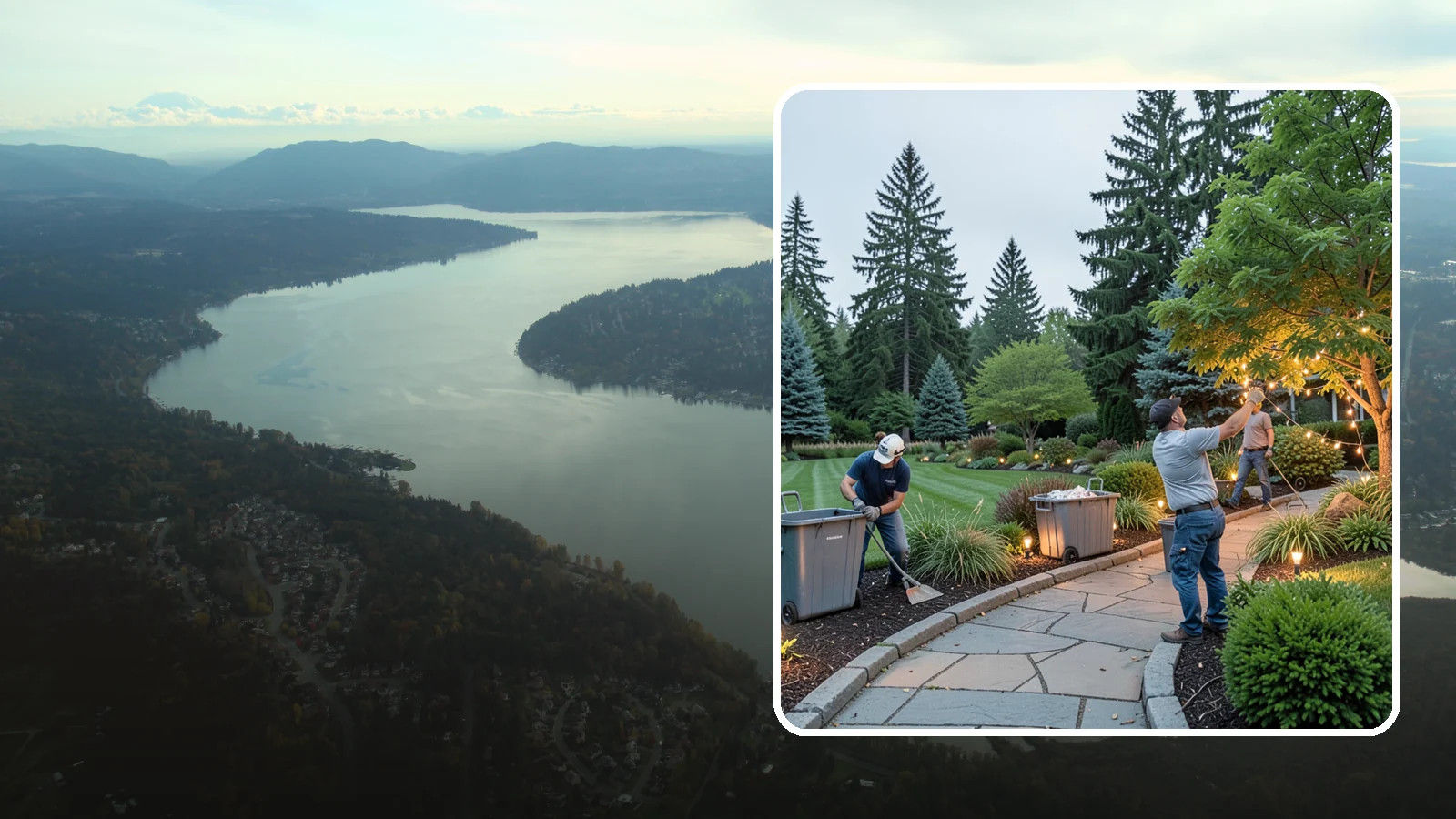
We safely take down, sort, and store your holiday lighting once the season ends.
Holiday lighting removal makes most sense once the season ends, ideally before late winter rain and wind make ladder work miserable. In Sammamish, the median first fall frost arrives around Nov 14 (Daymet, 2005-2025), so lights hung in early November are often up when the first cold snaps hit. Frost can come earlier or later in a given year.
Taking lights down promptly protects the wiring, the clips and your roofline. Washington Landscaping removes holiday lighting from roofs, gutters, trees and shrubs, and we can walk you through what the job looks like before we start.
Planning Holiday Lighting Removal in Sammamish
Start by deciding what is up and where. Roofline strands, gutter clips, wrapped trunks, shrub nets and ground stakes all take different handling. A quick walk around the property, with notes on anything unusual, makes the job easier to scope.
What affects scope
Height and access matter most. Per the Census, about 81% of Sammamish housing is single-family detached houses. That figure describes the city as a whole, not your yard, but it suggests many homes have full rooflines, multiple gables and landscaping that all hold lights. Each of those adds time.
Other factors are how the lights were attached, how much is wrapped around tree limbs, and whether strands have grown into branches or been buried in shrub growth. Older installs can be brittle. Lights left up through a few seasons are harder to free without care.
Weather plays a part too. Sammamish sees about 128 days a year with 0.1 in or more of rain (Daymet, 2005-2025). That means wet roofs and slick ground are common in the off-season, and a dry window is worth watching for. Work on a wet roof may need to be rescheduled for safety.
What to expect
Lights come down by hand, section by section, so clips, hooks and stakes are removed along with the wire. Plants should not be pulled or stripped to get strands out. We coil or bundle the strands so they are easy to store or dispose of, whichever you prefer. We offer free estimates, so you can see the scope before committing, and we are licensed, bonded and insured.
If you want the lights reinstalled next year, tell us before the work starts. Strands that come down gently are far easier to reuse.
Practical tip: before removal day, take a few photos of how the lights were laid out, then label each bundle by location, such as front roofline or porch rail. Next season, setup goes much faster.
Sammamish yard conditions at a glance
| Last / first frost (median) | Mar 24 / Nov 14 |
|---|---|
| Days with 0.1 in or more of rain | 128 a year |
| Single-family detached homes | 81% of housing |
A year in a Sammamish yard
- Late winter
- Dormant pruning for most deciduous trees and shrubs, before buds break.
- Spring
- Last frost is usually around Mar 24; in 1 year in 10 it comes on or after Apr 10. Plant frost-tender annuals and vegetables after that.
- Early summer
- Check sprinklers and drip lines before July, the start of the dry months here.
- Summer
- July and August average 0.7 in and 1.2 in. Water deeply and less often; mulch beds to hold moisture.
- Fall
- Aerate, overseed and plant trees and shrubs while the soil is warm; first frost is usually around Nov 14. Winterize irrigation before then.
- Winter
- About 34 days a year freeze at night and thaw by day: keep drains, paver joints and wall weep holes clear.
Dates are medians for the city from Daymet 2005-2025; your yard and any given year can differ.
Sources: Daymet daily weather (NASA/ORNL), 2023 USDA Plant Hardiness Zone Map data (PRISM, Oregon State University), USDA SSURGO soil survey, USGS 3DEP elevation, USFS/NLCD tree canopy 2025, US Census ACS 2020-2024.
Sammamish Holiday Lighting Removal
Local Service Information
Sammamish
A residential plateau city on the east side of Lake Sammamish.
Benefits
No dangerous ladder work in icy winter conditions; Careful removal that protects roofs and gutters; Strands inspected, labeled, and coiled for reuse; Optional off-site storage until next season; Faster, tangle-free reinstallation the following year
Process

Also serving Sammamish
- Smart Lighting Installation in Sammamishat Washington Construction
Get a Free Holiday Lighting Removal Estimate in Sammamish
Tell us about your project. We’ll review your needs and provide a customized, no-obligation proposal.
Request a Free Consultation
Complete the form or call our team to discuss your project.
On-Site Assessment
We’ll review your property, discuss your goals, and recommend an appropriate solution.
Receive a Customized Proposal
Receive a detailed estimate outlining the proposed work and pricing.