Shaping Your Outdoors. Surpassing Expectations.

Sammamish Maple Tree Pruning
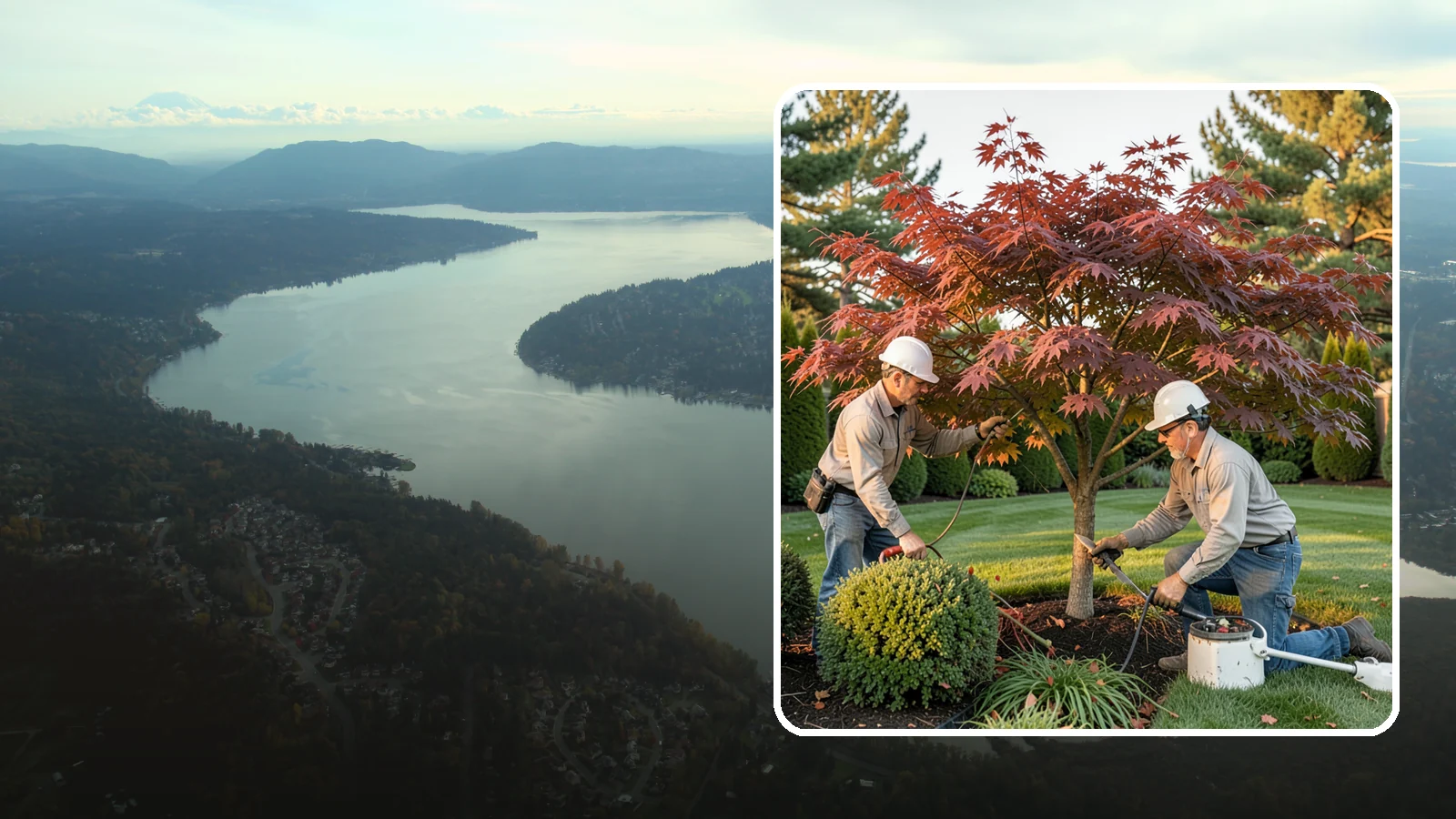
Structural and maintenance pruning for maples that improves health, form, and safety.
For maple pruning in Sammamish, timing matters more than most people expect. Maples bleed sap if cut in late winter and early spring, so many arborists favor the dormant stretch after leaf drop or the mature leaf season of summer. The median first fall frost here is Nov 14 (Daymet, 2005-2025), and frost can come earlier or later in a given year.
Washington Landscaping has an ISA Certified Arborist on staff. Call or text 425-433-9444 for a free estimate on your maples. This page explains how we plan the work, what changes the scope, and what to expect on the day.
Planning Maple Tree Pruning in Sammamish
Good pruning starts with a walk around the tree. We look at the branch structure, any deadwood, crossing limbs, and how close the canopy sits to your roof, siding, driveway and power lines. Then we agree on what to remove and what to leave.
What affects scope
Size is the biggest factor. A small Japanese maple can be shaped from the ground. A tall bigleaf maple may need climbing and rigging, and that takes more time. Access matters too. Tight side yards, slopes and fences change how we move cut limbs out.
Tree health also shapes the plan. Dead or rubbing branches come out first. Cutting more live wood than the tree can handle in one visit stresses it, so a heavy job may be split across seasons.
Sammamish has about 40.6% tree canopy (USFS/NLCD 2025). That is a citywide figure, and your own lot may have more or less shade. In a yard with many trees, maples often compete with conifers for light, which can mean thinning to let air and sun through.
What to expect
Cuts are made just outside the branch collar so the tree can seal the wound. We do not top maples. Topping causes weak, fast regrowth and does not make a tree safer. Debris is cut down and cleared as part of the job, and we will confirm that with you in the estimate.
Wet weather is another reason to plan ahead. About 80% of Sammamish's yearly precipitation falls October to April (Daymet, 2005-2025). Wet cuts stay damp longer, and soft ground can make heavy equipment rough on a lawn. Dry periods are easier on both the tree and your yard.
Practical tip: before we visit, walk your maple and tie a bit of ribbon on any branch you worry about. Note any limb that hangs over a roof or wire. It helps us talk through your priorities on site.
Sammamish yard conditions at a glance
| USDA hardiness zone (2023) | 8b (parts 8b to 9a) |
|---|---|
| Last / first frost (median) | Mar 24 / Nov 14 |
| Tree canopy | 40.6% of the city |
| Share of rain October to April | 80% |
| Dry months (under 1.25 in) | July and August |
A year in a Sammamish yard
- Late winter
- Dormant pruning for most deciduous trees and shrubs, before buds break.
- Spring
- Last frost is usually around Mar 24; in 1 year in 10 it comes on or after Apr 10. Plant frost-tender annuals and vegetables after that.
- Early summer
- Check sprinklers and drip lines before July, the start of the dry months here.
- Summer
- July and August average 0.7 in and 1.2 in. Water deeply and less often; mulch beds to hold moisture.
- Fall
- Aerate, overseed and plant trees and shrubs while the soil is warm; first frost is usually around Nov 14. Winterize irrigation before then.
- Winter
- About 34 days a year freeze at night and thaw by day: keep drains, paver joints and wall weep holes clear.
Dates are medians for the city from Daymet 2005-2025; your yard and any given year can differ.
Sources: Daymet daily weather (NASA/ORNL), 2023 USDA Plant Hardiness Zone Map data (PRISM, Oregon State University), USDA SSURGO soil survey, USGS 3DEP elevation, USFS/NLCD tree canopy 2025, US Census ACS 2020-2024.
Sammamish Maple Tree Pruning
Local Service Information
Sammamish
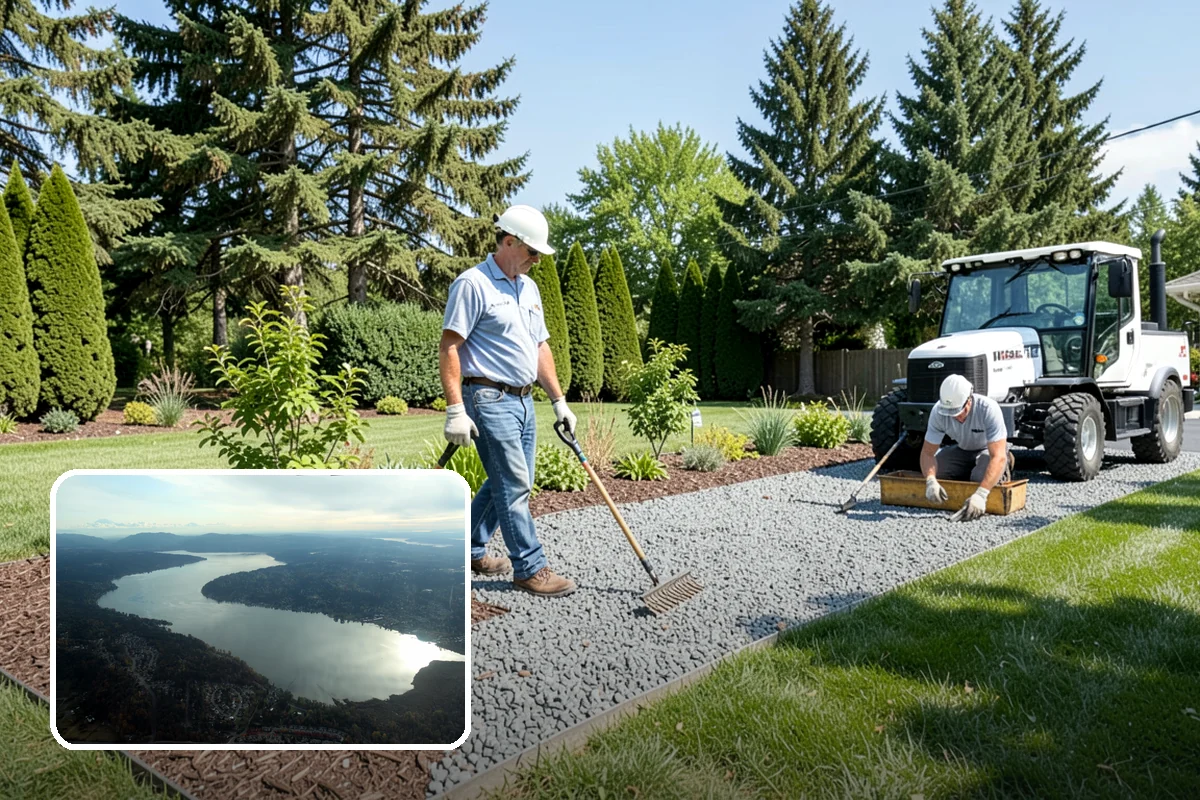
A residential plateau city on the east side of Lake Sammamish.
Benefits
Stronger branch structure; Reduced storm-breakage risk; Deadwood and crowding removed; Better light and airflow; Limits heavy sap bleeding with proper timing
Process
Also serving Sammamish
- Crown reduction in Sammamishat Washington Tree Services
Get a Free Maple Tree Pruning Estimate in Sammamish
Tell us about your project. We’ll review your needs and provide a customized, no-obligation proposal.
Request a Free Consultation
Complete the form or call our team to discuss your project.
On-Site Assessment
We’ll review your property, discuss your goals, and recommend an appropriate solution.
Receive a Customized Proposal
Receive a detailed estimate outlining the proposed work and pricing.